 Search


- Saudi Arabia is achieving economic growth by clarifying revenue and expenditure plans and promoting structural reforms

The Saudi Arabian Ministry of Finance recently released its pre budget statement for 2026, outlining a clear blueprint for the country's future fiscal direction and economic development.
The statement predicts that by 2026, Saudi Arabia's total expenditure will reach 1.313 trillion Saudi riyals (349 billion US dollars), with revenue of 1.147 trillion Saudi riyals, resulting in a deficit of approximately 166 billion Saudi riyals, accounting for approximately 3.3% of GDP. The government has made it clear that expenditures will continue to be expansionary and countercyclical, closely aligned with national priorities, and strive to generate broad social and economic impacts. At the same time, the government will steadfastly maintain economic growth and fully promote the reform of Vision 2030.
The medium-term forecast shows that Saudi Arabia's public finance is showing a steady growth trend. It is expected that revenue will increase from SAR 1.147 trillion in 2026 to SAR 1.294 trillion in 2028, while expenditure is expected to increase from SAR 1.313 trillion to SAR 1.419 trillion during the same period. The Ministry of Finance pointed out that accelerating project implementation not only improves financial flexibility, but also significantly enhances the Kingdom's ability to respond to economic development.
Despite the expected deficit, the statement emphasizes that with sufficient financial reserves, the debt level remains stable and within a safe range. The government will continue to utilize various financing channels, including issuing local and international bonds and Islamic bonds, obtaining loans, and adopting alternative mechanisms such as project financing, and actively seek support from export credit agencies.
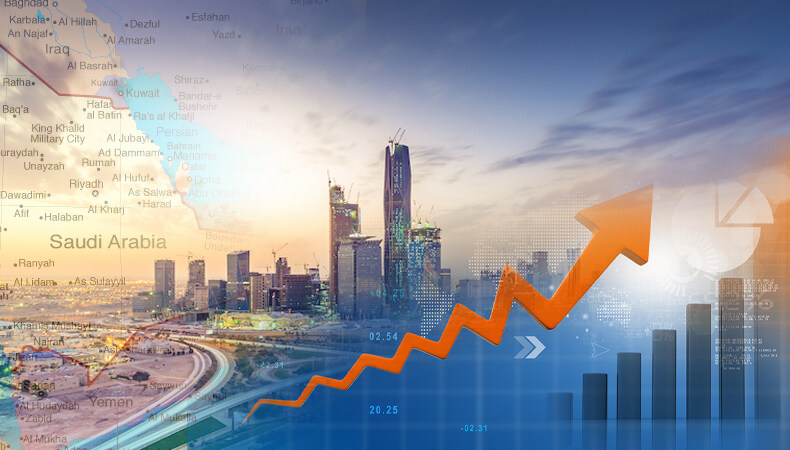
In terms of economic growth, the department predicts that with strong support from non oil economic activities, the actual GDP growth rate will reach 4.6% in 2026. For 2025, it is expected that GDP will expand by 4.4%, with the non oil sector expected to achieve 5% growth, mainly due to stronger domestic demand and continuously improving labor market conditions. Data shows that in the second quarter of 2025, the unemployment rate among Saudi citizens dropped to 6.8%, hitting a historic low.
Finance Minister Mohammad Aljadan stated that the core objective of the 2026 budget is to "consolidate the strength of the Kingdom's financial situation and ensure the sustainability of public finances while supporting economic growth". He added that the focus will continue to be on development and social projects, while the ongoing structural reforms have effectively improved fiscal and economic efficiency. Al Jadan pointed out that compared to other major economies, Saudi Arabia's public debt to GDP ratio is still relatively low, providing ample flexibility for fiscal policy to respond to external shocks and emergency needs. He also emphasized the efforts made by the government in balancing growth and sustainability needs.
Given the ongoing global uncertainty during the 2026 period and in the medium term, which stems from the possibility of continued geopolitical tensions and strengthened preventive policies, the government will continue to closely monitor and analyze these risks as a key factor in improving financial planning efficiency, "said Arjadan.
The pre budget statement released by Saudi Arabia this time demonstrates its firm determination and clear strategy to actively respond to challenges and promote sustained and stable economic growth in the complex international situation.Editor/Cheng Liting
Comment


 Praise
 Collect
 Comment

 Share
Share


Write something~