 Search


- At the Xi'an Silk Road Expo, Tencent signed a cooperation agreement with Erdi Bank in Kyrgyzstan

On May 22, 2026, Tencent TenPay Global signed a contract with Eldik Bank in Kyrgyzstan during the financial session of the Xi'an Silk Road Expo. This marks the official extension of WeChat Pay network to the Central Asian business district. In the future, Chinese tourists visiting Jilin will be able to scan the QR code and pay the bill at hotels, restaurants, and shops just like in China. At the same time, Tencent has recently reached cooperation with HUMO payment system and Uzum Bank in Uzbekistan, and the core payment network in Central Asia is accelerating its integration with Chinese standards
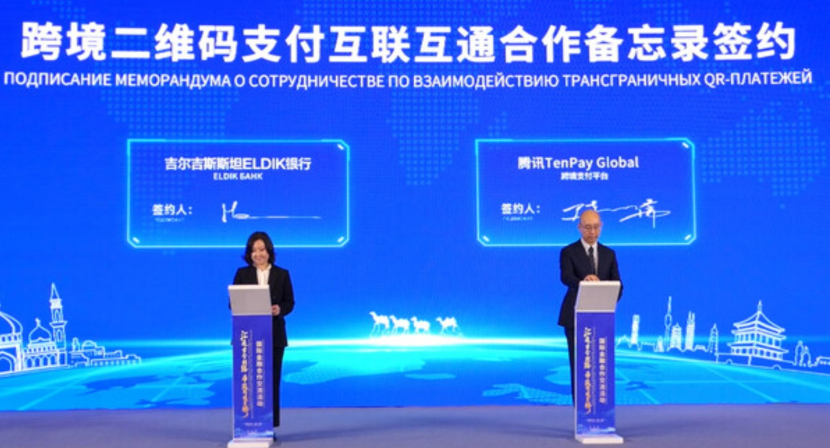
This cooperation is not only a one-way output, but also a two-way pursuit. On the one hand, Chinese tourists traveling to Jilin do not need to exchange cash and can directly use WeChat Pay; On the other hand, relying on the cross-border QR code unified gateway, travelers and business people from Central Asian countries such as Kyrgyzstan who come to China do not need to download new apps. They can open their own wallets and scan the WeChat Pay QR code to complete consumption. At present, WeChat Pay outsourcing supports 36 overseas wallets in 13 countries and regions, achieving a seamless closed-loop experience of payment and tax refund.
With the economic and trade along the the Belt and Road warming up, Central Asia has become a new growth point for China's financial technology overseas. Tencent's 2025 financial report shows that its revenue from financial technology and enterprise services reached 229.4 billion yuan, with cross-border payments becoming an important increment. For Central Asian countries, introducing a mature WeChat payment system is not only to serve Chinese tourists, but also to enhance the digitalization level of local businesses and transform payment capabilities into infrastructure for participating in regional economic cooperation.Editor/Yang Meiling
Comment






 Praise
 Collect
 Comment

 Share
Share


Write something~