 Search


- The project was undertaken by a Chinese company and will bring huge changes to Uganda's energy structure after completion
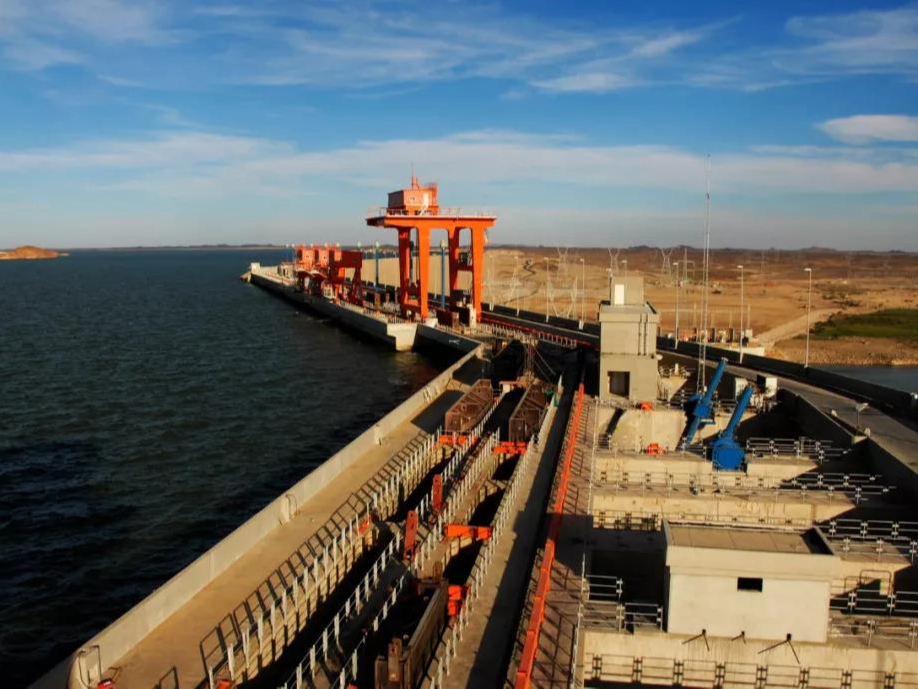
Near Muchson Falls National Park in Uganda, a 300-meter-wide dam traverses the White Nile River, and the turbulent water flows down through the tunnel. Engineers from China and Uzbekistan observe real-time data in the monitoring room and conduct various debugging for safe power supply.
This is the site of the Karuma Hydropower Station project undertaken by China Power Construction Group Co., Ltd. As one of Uganda's "Ten Major Infrastructure Projects", the Karuma Hydropower Station will become the country's largest hydropower station upon completion. Uganda President Museveni has inspected the project many times and stated that "I believe that the Karuma Hydropower Station will greatly increase Uganda's power generation capacity,'charge' for economic development, and accelerate the pace of Uganda's industrialization, thereby attracting more foreign investors." .
Must develop and live in a more sustainable way
Insufficient power is a major bottleneck restricting Uganda's economic development. Because the power supply capacity cannot meet the demand for electricity, many families still eat "firewood rice", and forest resources are seriously threatened.
"A lot of trees have been felled, floods and landslides occur from time to time. We must develop and live in a more sustainable way." Uganda Energy and Mineral Development Minister Mary Kittutu said that in recent years, the Uganda government has paid more attention to renewable energy. The development and utilization of the Karuma Hydropower Station will bring huge changes to Uganda’s energy structure-replacing thermal power plants of the same scale, saving about 1.31 million tons of raw coal each year, reducing electricity prices by 17.5%, and bringing more people to life Bring convenience.
At present, 98.5% of the hydropower station has been completed, and the completion progress of the transmission and transformation part has reached 95%. The project has entered the commissioning and finishing stage.
Looking at the magnificent Karuma Hydropower Station dam, Severino Opio, the mayor of Karuma Village, recalled the process of the project’s emergence from nothing: "This was once a remote village, but now hotels, shopping malls, and office buildings are built. In the future, hydropower stations will also promote eco-tourism, and our life will get better and better."
A long-term benefit to the local people
The Kaluma Hydropower Station in the plain has a small drop. The main project, generator sets, large transformers and other equipment are mainly "hidden" in a group of caverns 80 meters below the ground. Here is also the "ingenuity" of the Chinese engineers: by digging a shaft, diverting water into the ground, artificially raising the drop to achieve power generation, and then using two 8.6 kilometers long tailwater tunnels to divert the water back to the river.
"Using the design of an underground tunnel is very difficult to construct, but from the perspective of environmental protection, it is all worthwhile." Jiang Xiaodong, chief representative of China Power Construction in Uganda, said that the underground tunnel can prevent the power plant from occupying too much land and the reservoir. Problems such as too large flooded area after water storage. At present, the dams on the ground are in the form of low dams. After storing water, the hydropower station minimizes the impact on the flora and fauna in the dam area.
Overlooking the Kaluma Hydropower Station, there are lush vegetation and greenery on both sides of the dam. "From the preliminary design to the construction process, the project team has always put environmental protection at heart." Ugandan civil engineer Kenneth Geneji, who participated in the construction of the hydropower station, said in many details: the water flows through the generator and then flows back into the underground tailrace tunnel. In the river, the downstream water volume can be better guaranteed; special fish passages are designed to ensure the growth and reproduction of fish and reduce the impact of the dam on the barrier of migratory fish; the ecological flow hole is arranged on the right side of the dam, and the discharge flow is 100 cubic meters per second. The aquatic organisms in this section of the river provide adaptive flow for survival... Gene Ji said: "This is a long-term benefit for the local people."
Muchison Falls National Park is a wildlife sanctuary, where more than 70 wild animals live. During the construction of the project, a range of activities was reserved for hippos to make way for baboons passing by.
As the project drew to a close, the large concrete equipment erected during the construction of the project disappeared, replaced by a self-built combined small mixing plant; the exposed soil excavated during the construction process is being replanted little by little and restored to the pre-construction level Ecological outlook.
Proud of working hard to build the first line of the Belt and Road Initiative
Andrew Mvisije is a quality control engineer at Kaluma Hydropower Station. "I enjoy this job very much. Here, I can learn advanced tunnel construction technology, and I am also impressed by the innovative ability of Chinese engineers-they can always solve various problems ingeniously." For several years, Mvisijie has actively participated The Chinese class organized by the project, "This can help me better master technology, learn more about Chinese culture, and learn the spirit of Chinese enterprises."
The Kaluma Hydropower Station has created a large number of local jobs. During the peak period of the project, nearly 6,000 local employees were contracted, and a large number of professional excavators, concrete construction personnel, equipment operators, and hydropower industry managers were trained. Opio said: "Even if the project is over, the skills will always come in handy. As long as you have a skill, your life may change."
Chinese companies actively fulfill their social responsibilities by digging wells and repairing roads for local residents for free, conducting free consultations, and donating to build primary schools. During the holiday season, the Chinese and Uzbek employees did not relax the requirements for epidemic prevention and control: strictly implement the four-level grid area "contract responsibility system", implement decentralized office, office areas are eliminated no less than 6 times a day, and living camps are regularly scheduled every day Measure body temperature, disinfect public facilities, and ensure the normal operation of infirmary and isolation rooms.
Jiang Xiaodong said: "As a member of PowerChina, I can participate in the construction of the Kaluma Hydropower Station and successfully complete the task. It is a sense of accomplishment. We are here to celebrate the Chinese New Year together, and we are proud to fight for the construction of the Belt and Road. "Editor/Xu Shengpeng
Comment

 Praise
 Collect
 Comment

 Share
Share


Write something~