 Search


- Laos and Vietnam sign over 20 memorandums of cooperation to accelerate connectivity in the East West Economic Corridor
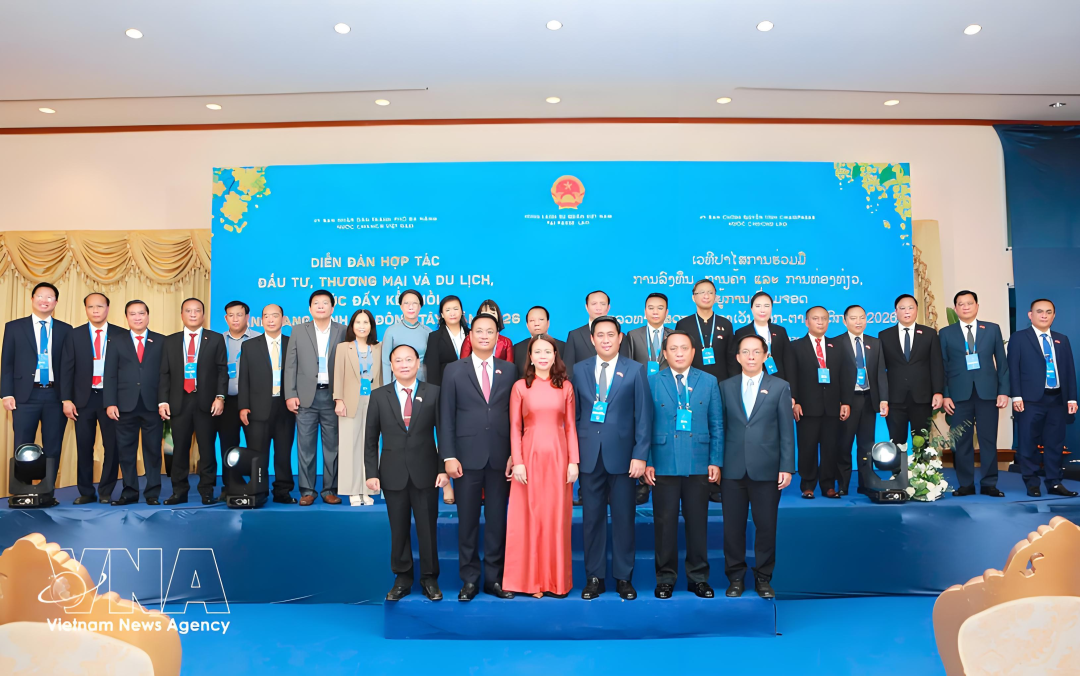
In early April, the air in Champasak Province, Laos was filled with a mixed heat wave of coffee aroma and industrial flavor. This used to be the border of the ancient Khmer Kingdom's "land locked" inland, and now it is trying to tear off the label of "landlocked country". On April 3, 2026, nearly 400 officials and entrepreneurs from Vietnam, Laos, and Thailand crowded the local forum venue, with only one goal: to open up the east-west economic corridor between Thailand, Laos, and Vietnam, so that Laos' minerals and agricultural products are no longer trapped in the mountains.
Open the door to the central and southern markets
The event, titled "2026 Forum on Promoting Investment, Trade, and Tourism Cooperation to Connect the East West Economic Corridor," is jointly organized by the city of Da Nang in Vietnam, the Consulate General of Vietnam in Pakse, and the government of Champasak Province in Laos. The attendees' lineup covers key nodes of the corridor: 12 provinces and cities in Vietnam, five provinces in central and southern Laos (Champasak, Attapeu, Sekong, Sarawak, and Savannakhet), and Ubon Province in Thailand.
At the forum, representatives engaged in heated debates around "opening the door to the market in central and southern Laos". The pain points for entrepreneurs are very direct: logistics delays and high policy barriers. A Vietnamese logistics provider admitted that "from Da Nang to Ubon, Thailand, goods often get stuck in the Laos section, and we urgently need unified customs clearance standards." After multiple rounds of negotiations, Da Nang City and various places in Vietnam signed more than 20 memorandums of understanding for cooperation from 2026-2030 with various provinces and enterprise associations in Laos, covering trade, tourism, and logistics. This means that in the next five years, the flow of goods along this corridor will have clearer "road markings".
Wanxiang Direct Port
If the forum is a 'soft connection', then the resolution approved by the Laotian parliament at the end of March is a real 'hard wall breaking'.
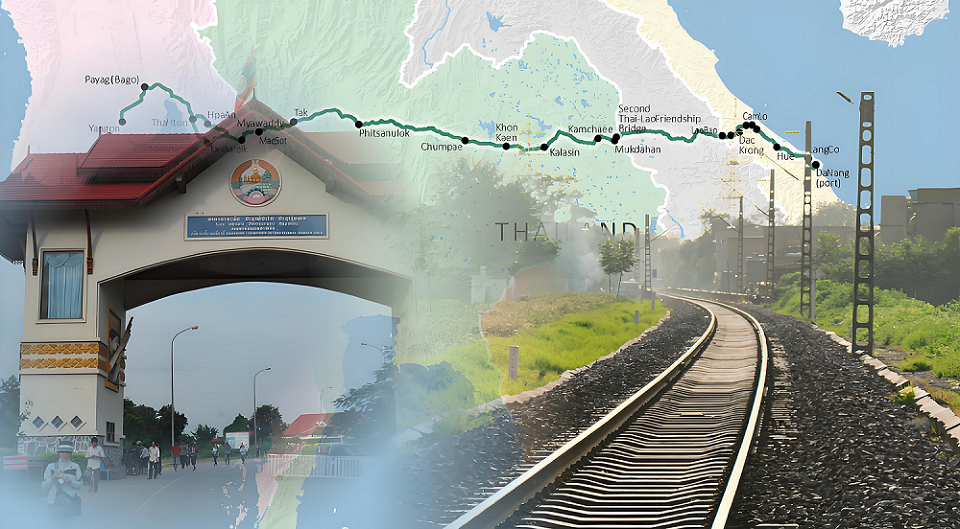
In March of this year, the Laotian parliament officially approved the railway project from Thammasat City in Gammon Province to the Muay Port on the Laos Vietnam border. This railway adopts BOT mode, with a total investment of about 1.339 billion dollars, a design total length of about 147 kilometers, a 1.435 meter standard gauge (the same standard as the China Laos Railway), and a design passenger speed of 150 kilometers per hour and a freight speed of 80 kilometers. Its ultimate mission is to connect the capital of Laos, Vientiane, with Da Nang in Vietnam, providing inland Laos with a 'land bridge' that leads directly to a deep-water port.
Lao Deputy Prime Minister Charente Gonmasi has characterized the project as the core lever for the country to transform from a "landlocked country" to a "land linked country". For Vietnam, Da Nang, as the eastern terminus of the East West Economic Corridor, will absorb logistics from Laos and northeastern Thailand, consolidating its regional hub position. After the completion of this railway, goods from Laos can be transported directly to Vietnam's Yong'an Port or Danang via railway, without the need to detour through Thailand, which will significantly reduce logistics costs and time.
The New Southbound Passage for Gansu Merchants
For merchants in Zhangye, Gansu Province, China, the opening of this corridor means that there is an additional path for "southbound" ASEAN. Although Gansu is deep in the northwest, with the completion of the China Laos Railway, goods can go south to Vientiane via the China Laos Railway in the future, and then go east to Danang, Vietnam, or west to Thailand via the East West Economic Corridor. This is more time efficient than traditional detours through the Strait of Malacca or ports along the southeast coast of China.
The East West Economic Corridor (EWEC), as the golden channel of the Greater Mekong Subregion, has a total length of about 1450 kilometers, starting from Mawlamyine, Myanmar in the west, passing through Thailand and Laos, and ending at Danang, Vietnam in the east. The five provinces in central and southern Laos are trying to replicate the successful experience of Savannakhet Province, using transportation advantages to attract foreign investment to build industrial parks. With the advancement of the Lao Yue Railway, this corridor will no longer be a blueprint on paper, but a true logistics artery in the Indochina Peninsula.Editor/Yang Meiling
Comment



 Praise
 Collect
 Comment

 Share
Share


Write something~