 Search


- Guangmingzhu Bay Bridge is a new artery of traffic in the Guangdong-Hong Kong-Macao Greater Bay Area
On June 28, the Pearl Bay Bridge in Nansha New District, Guangdong Free Trade Zone, China, was officially opened to traffic. This super bridge that combines "value" and "connotation" refreshed the maximum span of the world's three main truss steel truss arch double-layer bridge to 436 Meters, aspiring to be the "world's first span" of similar bridges

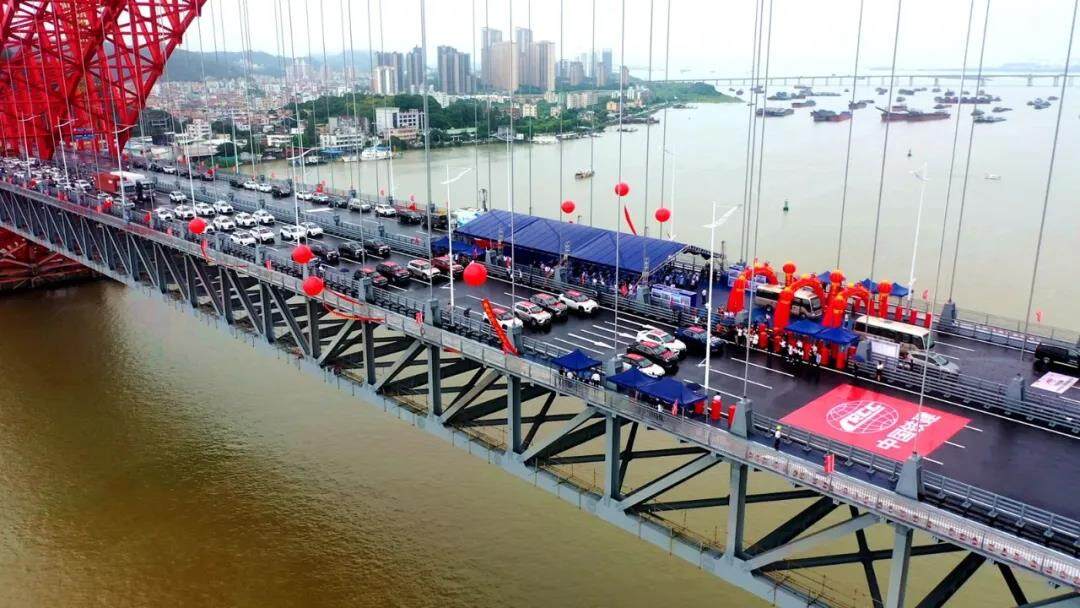
As a core landmark building facing the Guangdong-Hong Kong-Macao Greater Bay Area in Guangzhou, the bridge forms a high-speed transportation corridor between the main urban area of Guangzhou, Hong Kong International Airport, Shenzhen Bao'an International Airport, and Guangzhou South Railway Station, realizing a 30-minute direct access to major urban central areas in the Greater Bay Area.
New artery of traffic in Guangdong-Hong Kong-Macao Greater Bay Area
A bridge is like a flying rainbow, and cities are connected in the Bay Area. The Guangming Pearl Bay Bridge is a half-through six-span continuous steel truss arch bridge with a total length of 9.1 kilometers and a main bridge of 2.64 kilometers. The magnificent Mingzhu Bay Bridge stretches into the distance, connecting multiple core arterial roads in Nansha tightly together, constructing the inner core traffic ring of the Mingzhu Bay area, realizing the needs of Guangzhou's "Southern Extension" and the construction of "Urban Sub-center". At the same time, the Pearl Bay Bridge is located at the geometric center of the Guangdong-Hong Kong-Macao Greater Bay Area. It will effectively strengthen the transportation links between the Pearl Bay Start Area, the Guangdong-Hong Kong Intensive Cooperation Zone and the Nansha Bay Area, and become a new artery of traffic in the Guangdong-Hong Kong-Macao Greater Bay Area.
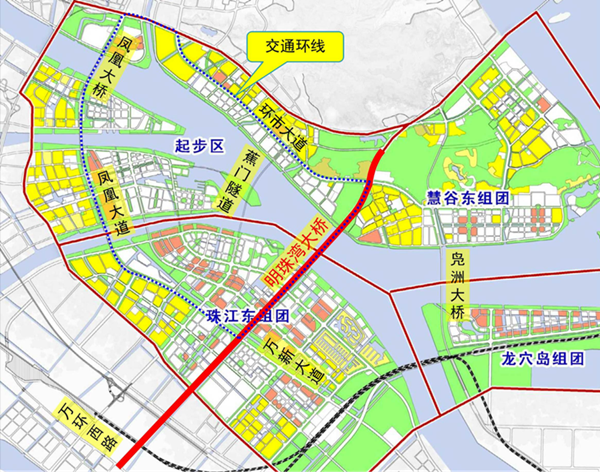
One bridge crosses both sides of the strait, and a city is renewed. The Pearl Bay Bridge has broken through the boundary between the Pearl River and the water, realizing the harmony of the other shore, and its majestic shape has also made it a beautiful landscape in Nansha. The Pearl Bay Bridge adopts "the dragon going out to sea" as the bridge type. The steel truss arch is majestic and beautiful in appearance. The straight main girder turns into an arc in the middle to form an arch, like a water dragon, wide water surface, beautiful mountain peaks and core area. The buildings complement each other and form a harmonious whole.
In addition, the Pearl Bay Bridge adopts a double deck layout. The upper layer is a two-way eight-lane road with sidewalks on both sides; the two sides of the lower layer are reserved for two-way four-lane urban traffic. The appearance of the steel truss arch bridge better echoes the characteristics of the natural geographical environment where the Wushuihuiwan and the mountains and rivers are connected.
Hardcore technology creates the world's first cross
Bridge construction has overcome the "five barriers". Technically, the three main truss steel truss arch was erected with double cantilever, and experienced many system conversions in the process. Geologically, there are multiple fault zones in the bridge site area, and the geological conditions are complex. Deep Water Pass, the maximum water depth at the bridge is about 30 meters. At the safety gate, the bridge is greatly affected by typhoons, with an average of 2 to 3 typhoons per year. Environmental protection, the bridge site has a significant oceanic climate and high environmental protection standards. Passing through the barriers is difficult. In more than 3 years of construction time, the bridge builders have applied for more than 30 national patents, 3 foreign patents, and more than 20 invention patents and scientific research results through scientific research and a number of key technologies. Reach the world's leading level.
Technological steel bridge from Pearl River to Changhong
To transport the "aircraft carrier", the double-walled steel cofferdam of over 1,000 tons was successfully launched into the water. The first major problem facing the construction of the bridge is the construction of the main pier steel cofferdam. The total weight is nearly 2,000 tons. The double-walled steel box cofferdam with the size of 3 basketball courts and a height of 5 stories needs to be launched, floated, and positioned by the airbag method.
There are 1500 horsepower tugs towing in the front, 36 airbags with a length of 12 meters and a diameter of 2 meters are laid underneath, and large excavators are used to assist the traction on both sides. During the entire launching and floating process, there is a sense of sight of the aircraft carrier launching.
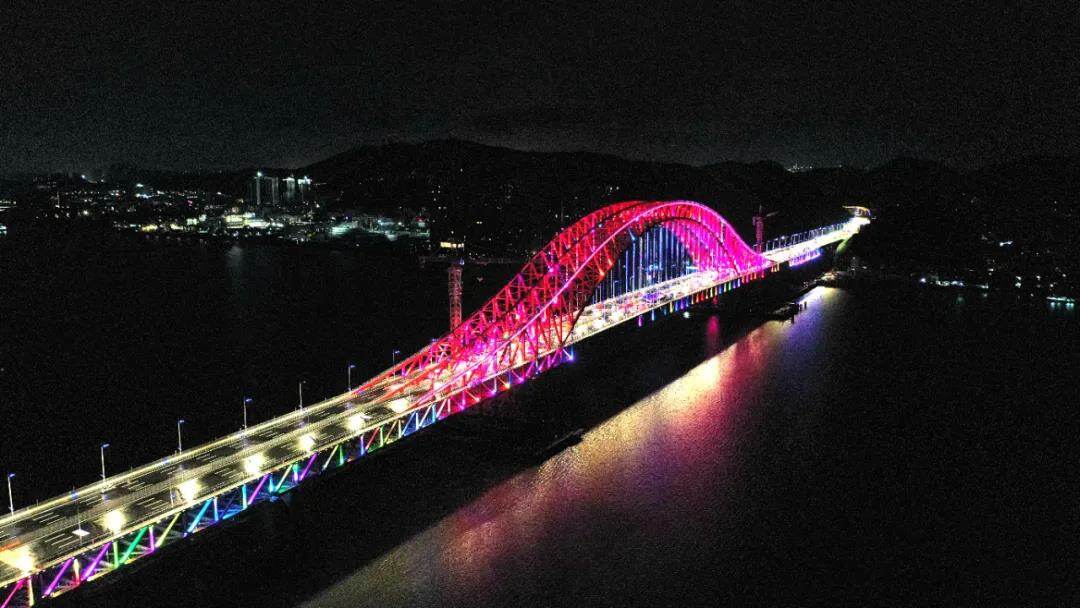
The erection of steel beams is a very critical link in starting the construction of the superstructure. The main bridge has 83 sections. Since the Pearl Bay Bridge is a double-deck bridge, each section is composed of 6 steel beams. The upper and lower decks are composed of six steel beams. The largest steel beam is 14 meters in length and weighs 67.1 tons. During the erection process, the lower steel beams must be erected first, and then the upper steel beams must be erected. The whole process is like "building blocks", which need to be gradually spliced from bottom to top and from outside to inside. In order to overcome the difficult control of the internal force and deformation of the steel beams during erection, the builders designed a 100-meter sling tower with a unit weight of 1,600 tons, setting the current record for the highest height and weight of the temporary steel tower.
The academician think tank comes to help
The Pearl Bay Bridge is located at the estuary of the Pearl River, and the typhoon has a huge impact on the construction of the project. Typhoons generally occur from June to October, with an average annual impact of 2.85 times. The maximum wind force is above 15 levels. During the construction period, the erection of the steel beams of the main bridge experienced two typhoon periods.
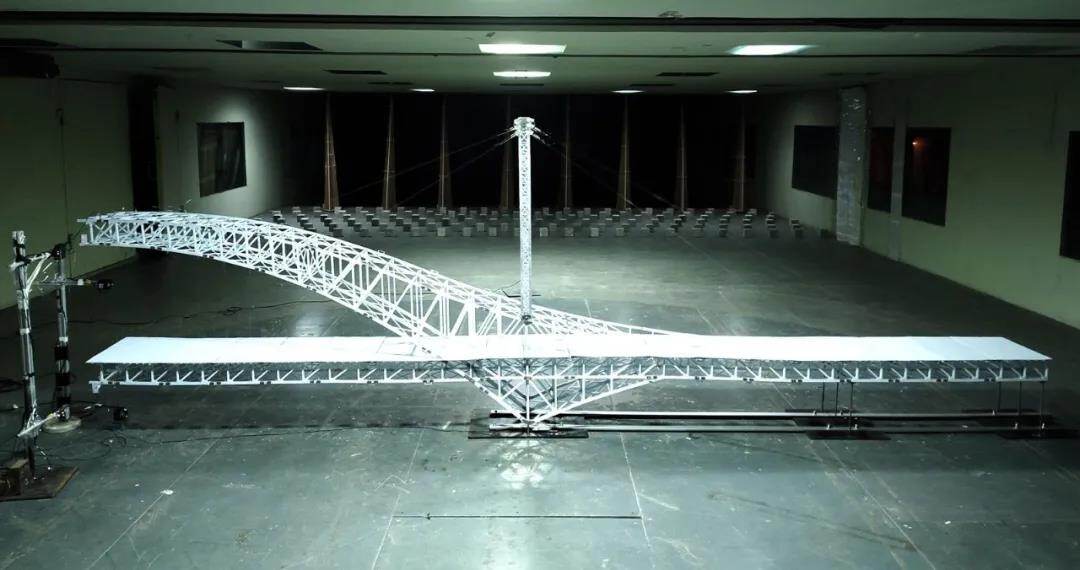
In order to ensure the reliability of the steel beam erection of the main bridge, especially the assembly of the buckle tower during typhoon periods, the technical team of the Pearl Bay Bridge repeatedly studied and demonstrated the reliability of the 100-meter buckle tower, and continuously optimized the structure type and cross-sectional size of the buckle tower. The strength, rigidity and stability of the buckle tower were calculated, and a "wind tunnel gas bomb test" was carried out in conjunction with the team of Academician Chen Zhengqing of Hunan University.
The experimental results show that the strength and stiffness of the bridge structure under the design wind load during the construction phase meet the requirements of the specification. The buckle tower of the bridge has successfully withstood the test of Typhoon "Hygos". Editor/Tian Zengpeng
Comment

 Praise
 Collect
 Comment

 Share
Share


Write something~