 Search


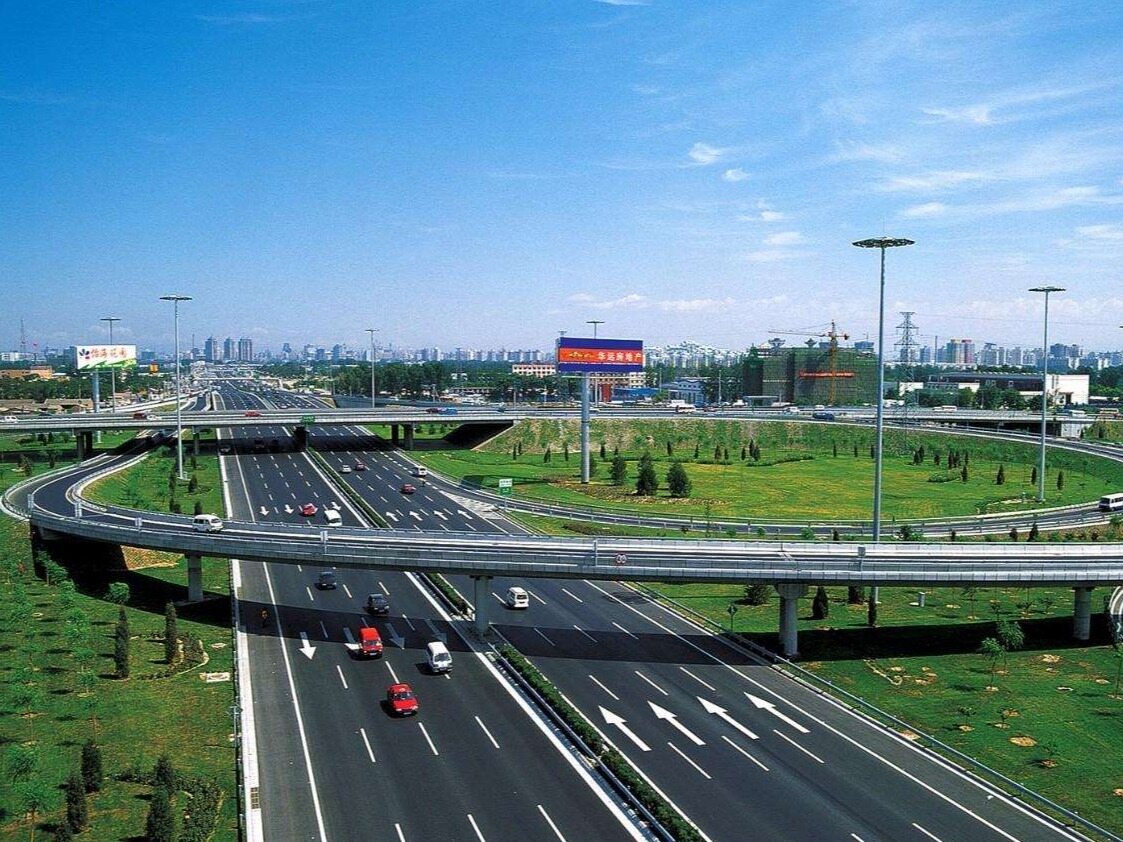
- By the end of 2020, the total mileage of Beijing-Tianjin-Hebei Expressway will reach 10,307 kilometers
In the context of accelerating the construction of a strong transportation country, investment in the field of transportation infrastructure has continued to expand. A few days ago, the "Beijing-Tianjin-Hebei Transportation Integrated Development White Paper (2014-2020)" jointly compiled by the Beijing Municipal Commission of Transportation, Tianjin Municipal Commission of Transportation and Hebei Provincial Department of Transportation was officially released. Since 2014, the three provinces and cities of Beijing-Tianjin-Hebei have firmly grasped the "bull nose" of easing Beijing's non-capital functions, and promoted the integrated development of Beijing-Tianjin-Hebei transportation from a "blueprint" to a "reality". So far, the main skeletons of arterial railways and inter-city railways have basically been established, multi-level rail transit networks have begun to take shape, road transportation networks have become more and more perfect and smooth, and the construction results of airport groups and port groups have reached the international advanced level. The Beijing-Tianjin-Hebei networked comprehensive transportation channel structure of “One Ring” has basically taken shape. The construction of a safe, convenient, efficient, green, and economic comprehensive transportation system in the region has achieved remarkable results. The level of coordinated development is at the forefront of the country, providing for the coordinated development of Beijing-Tianjin-Hebei A strong support.
In terms of rail transit, the "Beijing-Tianjin-Hebei on the rail" has taken shape and continues to play a role. The construction of regional national arterial railways has continued to improve. With Beijing and Tianjin as the core hubs, a national high-speed railway network that runs through various cities in Hebei Province has been basically completed. Neighboring cities have basically achieved a 1.5-hour railway connection, and the "1 hour traffic circle" of Beijing, Xiong, Tianjin and Bao has been formed. In terms of road traffic network, the national highway network construction task has been basically completed, and the "single center, radial" road network structure has been effectively improved. As of the end of 2020, the total mileage of expressways in the three provinces and cities of Beijing, Tianjin and Hebei reached 10,307 kilometers, an increase of 29.2% over 2014.
In terms of port clusters, Tianjin Port has initially established itself as a world-class hub port, Tianjin-Hebei ports have continuously deepened their coordination and division of labor and cooperation, and the business environment at the port has improved significantly. In the cargo throughput of Tianjin-Hebei port group in 2020, Hebei port accounted for 70.5% and Tianjin port accounted for 29.5%; in the container throughput of Tianjin-Hebei port group, Hebei port accounted for 19.6% and Tianjin port accounted for 80.4%. As for the aviation hub, the Beijing-Tianjin-Hebei airport cluster with "dual cores, two wings and multiple nodes" has been completed. The third-phase expansion project of Tianjin Binhai International Airport has accelerated, and multiple airport-type comprehensive protection zones, cross-border e-commerce comprehensive experimental zones, free trade experimental zones and other airport economic zones have landed in the three provinces and cities. The airport cluster has become a new economic growth in the Beijing-Tianjin-Hebei region engine.
In addition, in the past 7 years, the level of co-construction and sharing of basic public transportation services in the three provinces and cities has rapidly improved, and the level of intelligence, greenness, and equalization has greatly improved. The travel information of the three provinces and cities has been incorporated into the "travel cloud" platform and opened to the public, and the Beijing-Tianjin-Hebei transportation "all-in-one card" has been continuously promoted and used. As of the end of 2020, more than 7 million cards have been issued in the three provinces and cities, which are interconnected with 288 cities across the country, and a travel model for one card to travel across Beijing, Tianjin, Hebei and even the whole country has basically taken shape. The three provinces and cities are also focusing on the construction of freight railways, railway freight services, the "return to rail" of bulk cargo, and the promotion of new energy trucks, etc., to deepen the adjustment of the transportation structure in all aspects. By the end of 2020, the proportion of goods arriving and departing by rail in Beijing, Tianjin and Hebei reached 9.67%, 20.77% and 12.5% respectively. The proportion of coal and railway collection ports in Tianjin and Hebei ports has reached 100%, and the proportion of other bulk cargo collection ports such as ore is also increasing year by year. Editor/Xu Shengpeng
Comment


 Praise
 Collect
 Comment

 Share
Share


Write something~