 Search


- Qinghai Lake is a pearl on the snow-covered plateau and a holy lake in the hearts of people who live here
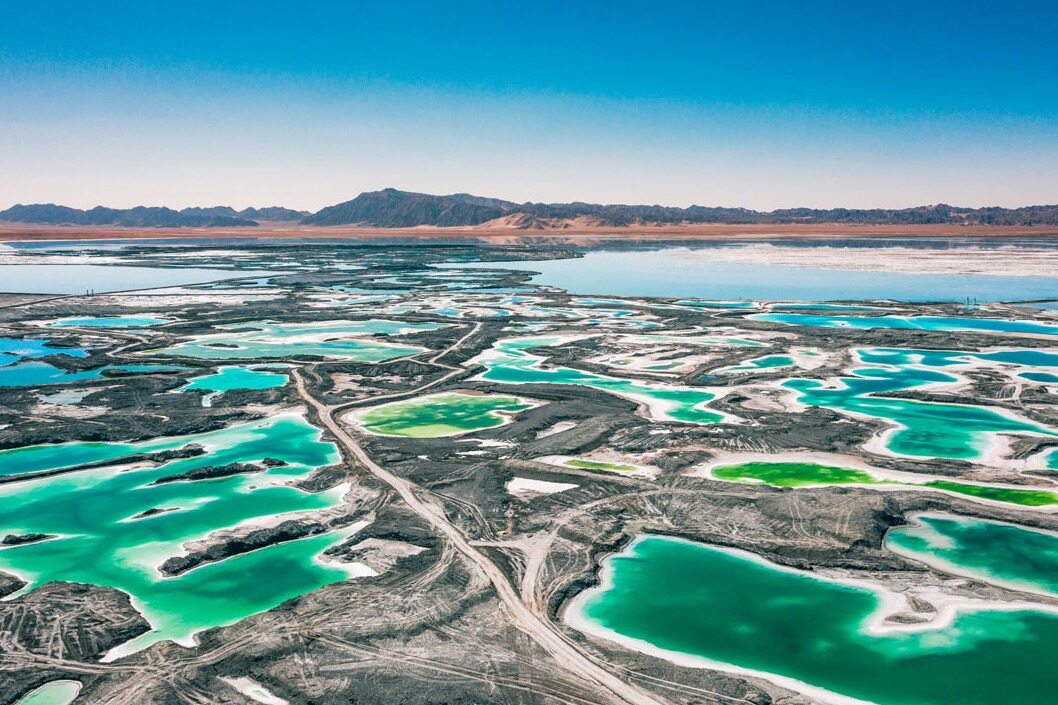
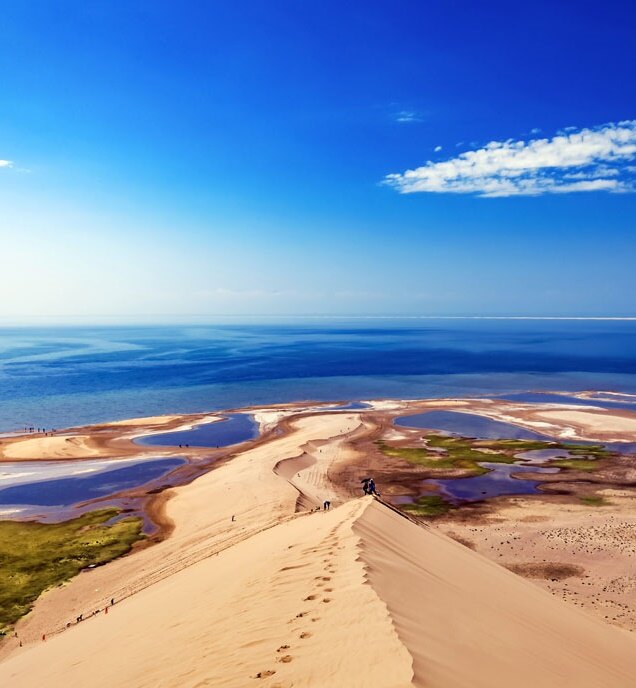
The latest satellite remote sensing monitoring data in 2022 shows that the water area of Qinghai Lake will reach 4,625.6 square kilometers, an increase of nearly 220 square kilometers compared with 10 years ago, which is equivalent to an increase of 34 West Lakes. The once large sandy land has now been submerged in water and turned into wetlands. The implementation of a series of ecological protection and ecological management measures such as wetland protection, degraded grassland management, and terrestrial biodiversity protection has enabled Qinghai Lake to achieve a magnificent butterfly change from ecological degradation to good.
General Secretary Xi Jinping once pointed out: "We must protect the ecological environment like we protect our eyes, and treat the ecological environment like we treat life." This is an improvement in the ecological concept and a new requirement for the construction of ecological civilization. General Secretary Xi Jinping emphasized when he inspected Qinghai in June 2021: "Qinghai's greatest value lies in ecology, its greatest responsibility lies in ecology, and its greatest potential lies in ecology. The construction of ecological civilization must be placed in a prominent position, respecting nature, and adapting to the environment. Nature, protect nature, build a national ecological security barrier, and realize the unity of economic, social and ecological benefits.”
At present, the water area of Qinghai Lake has increased by 2.9% compared with 2017, reaching 4,625.6 square kilometers; the reserves of naked carp resources in Qinghai Lake have increased by 33.6% compared with 2017, reaching 108,500 tons; the number of perching waterbirds has increased by 69.9% compared with 2017, reaching 571,000; the number of Przewalski's gazelle increased by 120.5% compared with 2017, reaching more than 2,800; the comprehensive vegetation coverage of grassland reached 60%, the protection rate of wetlands reached 69%, the protection rate of rare and endangered species reached more than 90%, and the water quality status was excellent ratio of 100%.
Qinghai Lake is the largest inland saltwater lake in China, a typical representative of inland lake wetlands in the Chinese plateau, and the main habitat and breeding ground for key protected species such as Przewalski's gazelle and naked carp. The Qinghai Lake Basin is an important water body for maintaining the ecological security of the northeastern Qinghai-Tibet Plateau and the ecological balance of the larger environment in northwestern China. It is a biological gene pool of the plateau and an important node of the international migration channel for migratory birds, forming a unique grass-river-lake-fish-bird. The symbiotic ecological chain is very nationally representative.
Reply to the truth
"It has been more than 4 years since Shadao was closed until 2021. Now the survival rate of forest trees in Shadao can basically reach more than 80%, and the coverage of forest and grass vegetation can reach 60% to 70%. It can be said that now It has returned to its best state," said Ma Wenhu, head of the forestry station in Haiyan County, Haibei Tibetan Autonomous Prefecture, Qinghai Province.
"The previous tourism business projects have destroyed the growth of vegetation, and coupled with the trampling of tourists, the entire scenic area is basically sand hills and no grass." Zhi worked in Shadao for 7 years, and recalled the Shadao scenic spot four years ago, with regret in his words.
"In recent years, through some national projects, including the desertification land landscape protection project, as well as some construction projects in the Qinghai Lake Basin, as well as a series of engineering construction projects such as the Three North Shelter Forest Project, the forest and grass vegetation in the forest area of Shadao has been improved. A certain amount of restoration is achieved. Mainly, a small amount of human intervention is carried out on the basis of natural restoration, and ecological restoration is carried out by replanting shrub species and some grass species suitable for planting in sandy areas. Judging from the current situation, restoration It's better, and it has reached the long-term goal we originally planned." Ma Wenhu said.
"After four years of restoration, the sand island has changed from grains of yellow sand to green plants. Looking around, one-third of the sand hills have been covered with green, and there is no human interference. It is now it. The real appearance." Renqing Dongzhi said.
"As the largest inland saltwater lake in China, Qinghai Lake is not only an important water body to maintain ecological security in the northeastern part of the Qinghai-Tibet Plateau, but also a natural barrier to control the eastward spread of desertification in the west. Its ecological status is outstanding, and its natural ecological value will far exceed The income of the scenic spot in the past.” Chen Dehui, director of the Tourism Management Office of the Qinghai Lake Scenic Spot Protection and Utilization Administration, said: “As of 2021, all tourism facilities with an investment of about 32.2 million yuan have been demolished, the sand island ecology has been restored to its original appearance, and the island’s greenery has appeared. The water level of the lake has risen, and the ecological environment has continued to improve."
Dunes become oasis
Haiyan County, Haibei Tibetan Autonomous Prefecture on the north shore of Qinghai Lake, is a key desertification county in the sand area surrounding Qinghai Lake. The sand dunes here once devoured the grasslands by Qinghai Lake, threatening railways and highways. For more than ten years, the local area has adopted the method of focusing on sealing and combining sealing with construction to control the desert in the Qinghai Lake area. Now a green landscape belt has been formed to protect the ecology of Qinghai Lake.
In the area around the lake, through the implementation of key forestry projects such as the Three-North Shelterbelt, returning farmland to forest, and the implementation of the Qinghai Lake Basin Ecological Environment Protection and Comprehensive Management Forestry Project, the artificially created shrub forests have gradually grown into forests, and the closed mountains and forests are protected by fences and managed by special personnel. Under the protection, vegetation has been restored naturally, and the ecological benefits of forest land for water conservation and soil and water conservation are gradually exerted, and the degree of desertification in the sandy area of the Qinghai Lake Basin is gradually reduced.
"In the past, when the wind blew, the yellow sand around Qinghai Lake filled the sky, and I couldn't get out of my house. After years of hard work, the sand dunes have been better managed, and springs have appeared." Rang Tashi, a herdsman who lives in the triangular town of Haiyan County, said.
Sang Tai, a herdsman who has benefited from the ecological protection subsidy and incentive policy, prohibits grazing in more than half of the pastures in the family, and implements a balance between grass and livestock for the rest. Sang Tai said that now the number of cattle and sheep has been reduced by half, but the income has doubled. What makes Sang Tai even more happy is that with the control of the desertified grassland, the grassland that had lost its vitality has regained its former vitality.
According to statistics, there are 1.707 million mu of desertified land in the surrounding area of Qinghai Lake, accounting for 11.7% of the total regional land area. Since the 13th Five-Year Plan period, the Provincial Forestry and Grassland Bureau has continued to strengthen desertification land management, and the area around Qinghai Lake has completed more than 500,000 mu of desertified land management tasks.
In order to ensure that the water quality of Qinghai Lake remains above Class III, Qinghai Province has built 3 small sewage treatment stations, 1 sewage treatment plant, and 7 sanitary landfills in key towns and towns, continuously improving infrastructure construction and improving the surrounding environment. Under the premise of improving the ecological environment, guide the green transformation of agricultural and animal husbandry production.
Steady increase in rare species
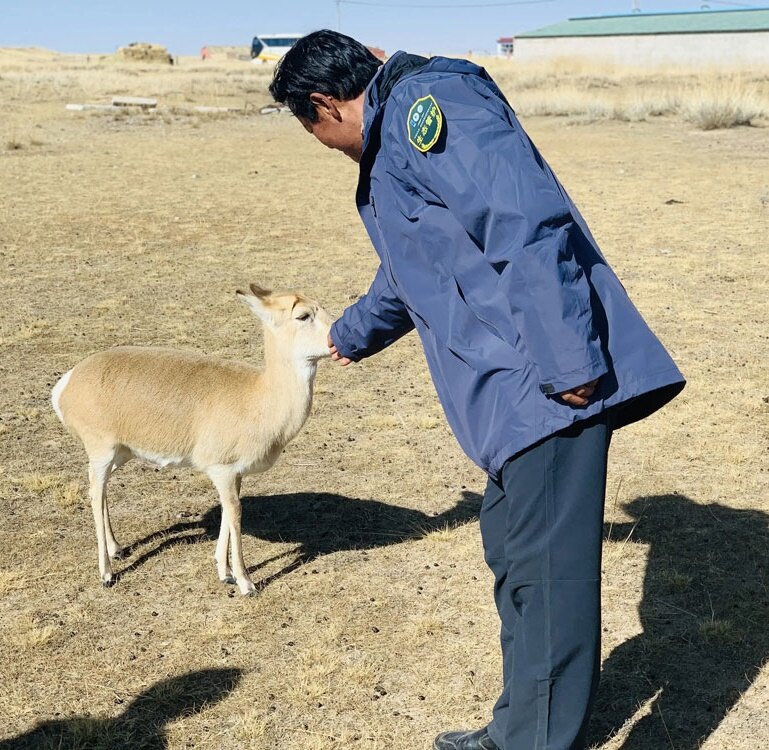
Relevant departments of Qinghai Province, the local government and the Qinghai Lake National Nature Reserve Administration have protected the living environment of Przewalski's gazelle through measures such as lowering the fence, setting up drinking water points and reserving passages. With the improvement of the ecological environment in the Qinghai Lake area and the lush vegetation growth, the habitat conditions of Przewalski's gazelle have been effectively improved, and the population of Przewalski's gazelle has continued to grow. Monitoring data show that the current population of Przewalski's gazelle has increased to more than 2,800.
At the same time, the reserves of naked carp resources in Qinghai Lake increased by 7,100 tons compared with the previous year, reaching 108,500 tons, a cumulative increase of more than 40 times compared with the initial stage of protection in 2002. In order to protect the naked carp resources, Qinghai Province has implemented several closures on Qinghai Lake for fish breeding. In the meantime, in the main inflow rivers of Qinghai Lake, a channel specially designed for naked carp to migrate and spawn will be constructed to ensure the smoothness of the spawning channel of naked carp. At the same time, the artificial proliferation experimental stations of Shaliu River and Quanji River will be built, the artificial proliferation experimental station of Buha River and Heima River, and the cultivation workshop of naked carp in Qinghai Lake with constant temperature circulating water. Up to now, nearly 180 million naked carp in Qinghai Lake have been artificially propagated and released, contributing more than 23% to the recovery of Qinghai Lake naked carp resources.
There is a huge wetland at the mouth of Buha River on the north side of Qinghai Lake, which is the core area of Qinghai Lake Bird Island Internationally Important Wetland. Among them, the black-necked crane, a national first-class protected animal, is the most precious. There are more than 8,000 black-necked cranes in the world, and more than 100 black-necked cranes are active in Qinghai Lake. Every year in late April, black-necked cranes fly here to give birth to new life.
"In April and May every year, black-necked cranes like to come here to breed their offspring, which is enough to show that the water quality of this wetland is good and suitable for waterfowl to live." A staff member of the Qinghai Lake National Nature Reserve Administration said that many wetlands in China are Qinghai Lake Bird Island Internationally Important Wetland is one of the important transit points for migratory birds in the northern and southern hemispheres. Every year, more than 200,000 migratory birds, such as whooper swans, bar-headed geese, brown-headed gulls, black-necked cranes, etc., fly far and wide from the south to live here.
For the Qinghai Lake wetland, many water birds such as black-necked cranes are an important part, and they play a pivotal role in maintaining the stability of the wetland ecosystem. Similarly, changes in wetland environment will directly affect the survival of water birds, so water birds can be used as an objective biological indicator for monitoring wetland environmental changes.
Since the 13th Five-Year Plan, Qinghai Province has invested a total of 108.88 million yuan in special funds for the protection and restoration of Qinghai Lake wetlands. The ecology of the island's internationally important wetlands tends to be good, and the biodiversity is more abundant.
Into the National Park Era
On June 7, 2022, Gao Jingyu, deputy director of the Qinghai Lake Scenic Spot Protection and Utilization Administration, announced at the press conference on the establishment of Qinghai Lake National Park that the National Park Administration has approved the establishment of Qinghai Lake National Park in Qinghai Province. Enter the creation and implementation phase.
"The establishment of Qinghai Lake National Park is of great significance to China's ecological security barrier and the ecological civilization of the Qinghai-Tibet Plateau." Gao Jingyu said that after years of hard work, the water storage capacity of Qinghai Lake has increased, the water quality of the basin has remained stable, the comprehensive vegetation coverage of grasslands has been improved, and biodiversity has been improved. The restoration of resources has been accelerated and the quality of the environment has been significantly improved, laying a good foundation for the establishment of Qinghai Lake National Park. In recent years, Qinghai Province has launched the construction of a demonstration province of a nature reserve system with national parks as the main body, taking the lead in completing the integration and optimization of nature reserves in China. At present, the two national park system pilot tasks of Sanjiangyuan and Qilian Mountains have been successfully completed.
"Ecology is our precious resource and wealth." General Secretary Xi Jinping emphasized during his inspection in Qinghai. The magnificent butterfly change of Qinghai Lake has witnessed the ecological improvement of the Qinghai-Tibet Plateau and the practice of ecological civilization, realizing the determination and action of China's green development. In the future, Qinghai Lake will continue to grow, shining like a sapphire sapphire inlaid on the Qinghai-Tibet Plateau.Editor/Ma Xue
Comment





 Praise
 Collect
 Comment

 Share
Share


Write something~