 Search


- Breakthrough the megawatt level charging limit with a 250 ton lithium-ion battery pack
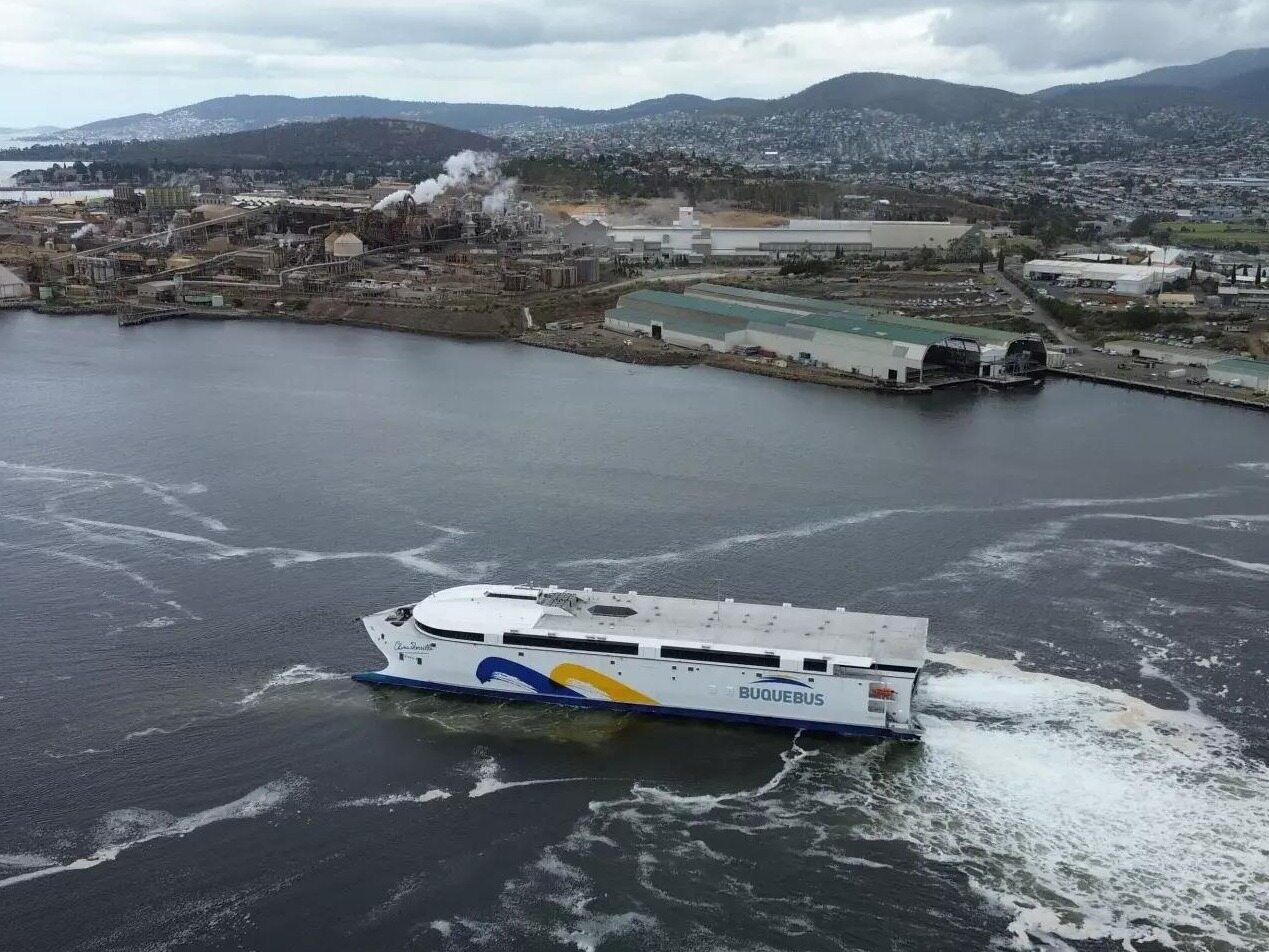
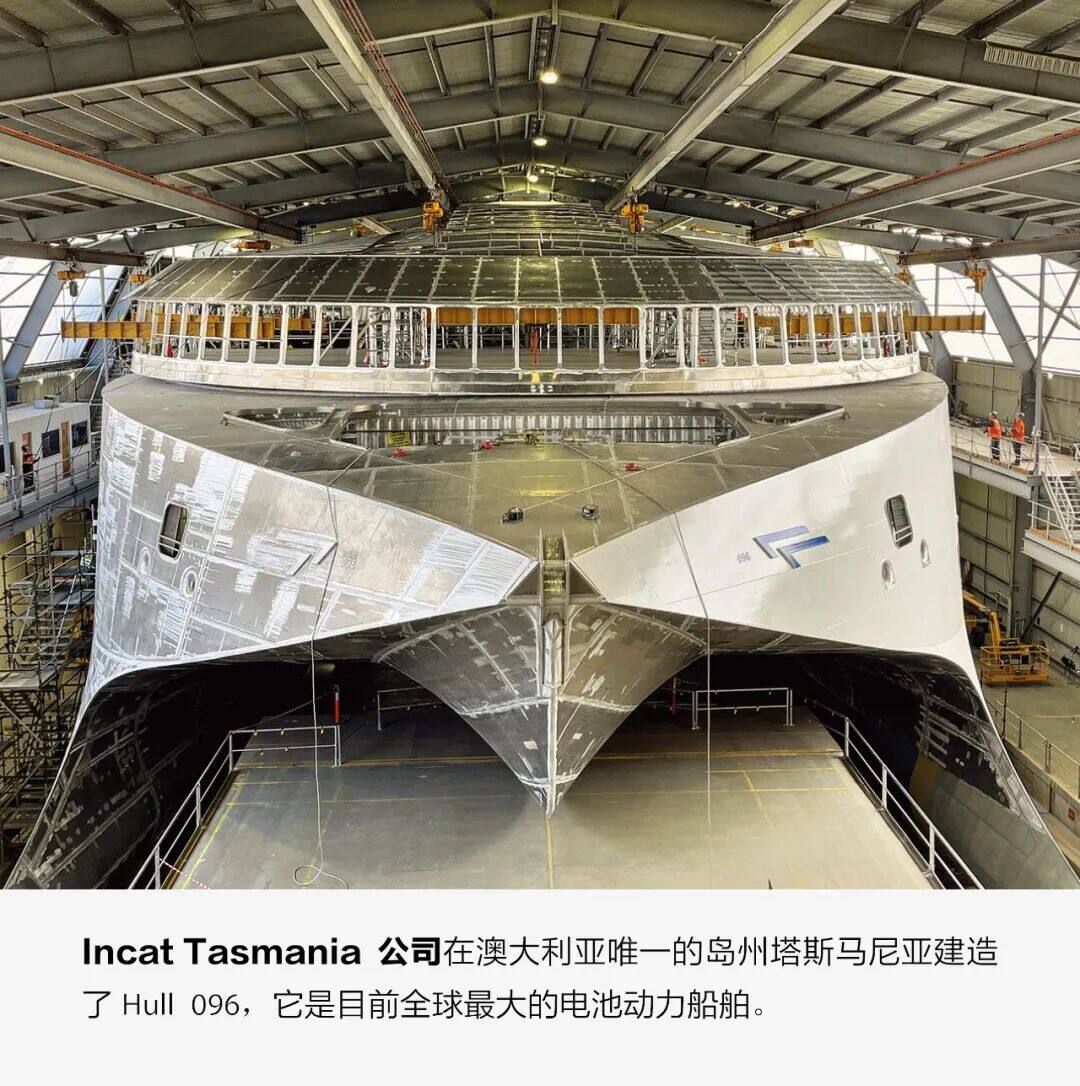
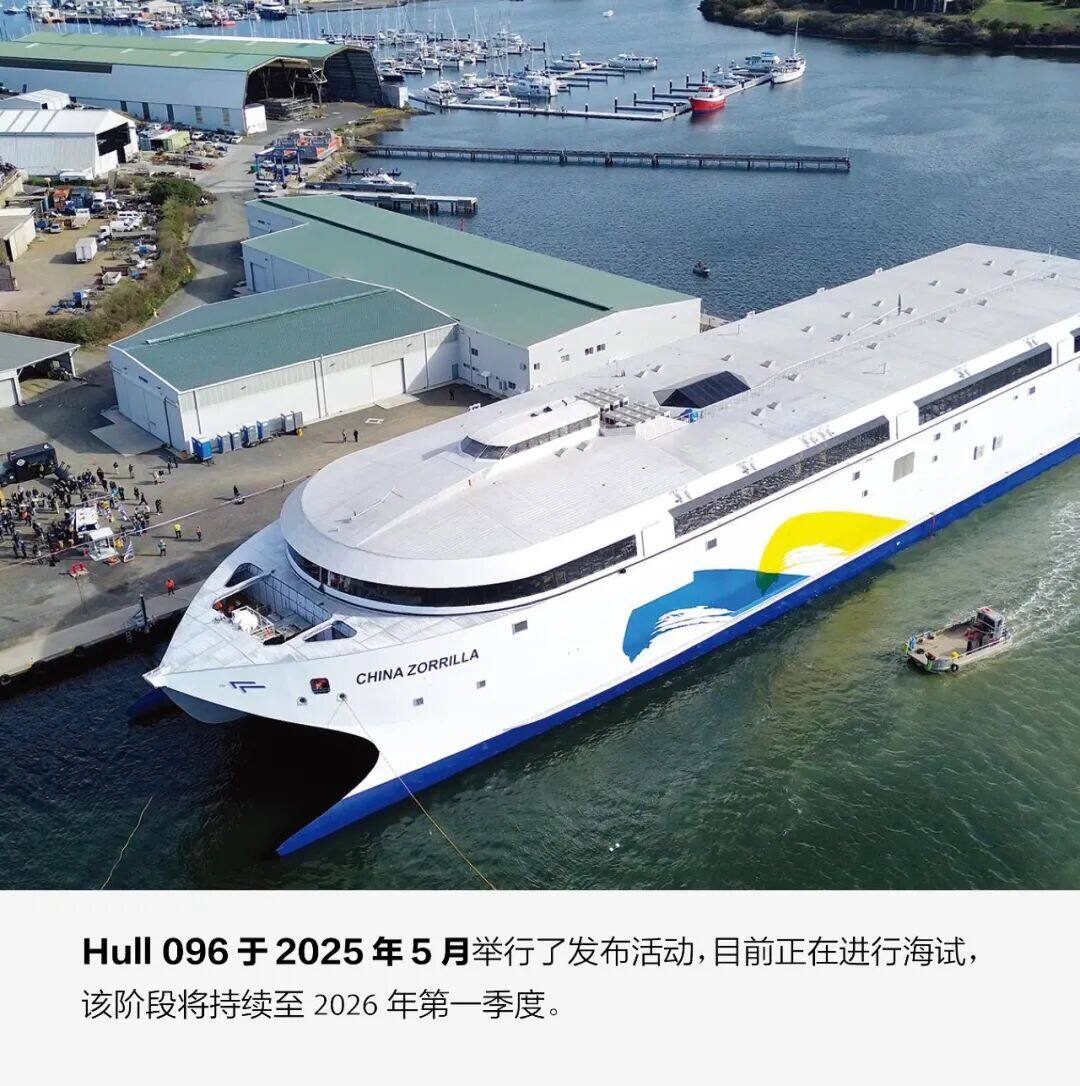
In October 2025, Hobart, the capital of southeastern Tasmania, Australia, broke the silence of its harbor with a low hum - the world's largest battery powered ship, Hull 096, was successfully electrified for the first time. This giant ship, built by Incat Tasmania shipyard, will soon be named after the legendary Uruguayan actress Cina Sorira and sail along the La Plata River in South America, connecting the cities of Buenos Aires and Colonia del Sacramento.
The hull is 130 meters long, yet as light as a swallow: the aluminum alloy material makes it half as light as a steel ship of the same size, and the "heart" hidden in the cabin - a 250 ton lithium-ion battery pack, carefully designed by Norwegian company Corvus Energy. 5016 battery modules are distributed in four compartments, injecting a green pulse into this sea monster.
The 'Extreme Challenge' of a 40 megawatt hour battery system
The energy storage system capacity of Hull 096 is four times that of existing electric ships, reaching 40 megawatt hours. Corvus Energy's Chief Technology Officer Lars Ole Valoran introduced that the battery pack adopts an air-cooled design, with each module equipped with an independent fan and implementing a "layered safety strategy": even if a single cell experiences thermal runaway, it will not affect adjacent cells.
Thermal management is the core challenge. Victor Becerra, a professor at the University of Portsmouth in the UK, pointed out that "this scale of system requires strict monitoring of temperature and cooling, and preventing thermal runaway is key." The eight electric motor-driven axial-flow water jet propellers provided by Finland's W ä rtsil ä company make ferries more energy-efficient when carrying cargo at low speeds.
60 kilometer range and 40 minute fast charging
Buenos Aires is 60 kilometers away from Colonia del Sacramento, and Hull 096 only takes 90 minutes one-way. Two ports will install DC charging stations that can be fully charged in 40 minutes and can carry 2100 passengers and 225 cars in a single trip.
More environmentally friendly power sources: Over 91% of Uruguay's power grid is renewable energy, with wind power accounting for one-third; Although the Argentine power grid is mainly based on natural gas, the combined proportion of hydro, wind, and nuclear energy accounts for 33%. This means that the ferry journey is almost entirely powered by clean energy.
Opportunities and Challenges of Electric Ships
Despite the rapid development of electric ships, long-distance shipping still faces bottlenecks. Becerra admitted, "The energy density of batteries is difficult to match diesel, and the cargo space is easily occupied by batteries." Professor Mehdi Zad from the Norwegian University of Science and Technology added that the problem of battery aging needs to be solved within the lifespan of the ship.
However, lifecycle cost analysis shows that electric ships can save over 60% on fuel costs and lower maintenance costs. The global electric fleet is rapidly expanding: 80 electric ferries in Norway rely on hydroelectric charging networks; Promote containerized battery swapping in the Yangtze River Basin of China; Amsterdam, Netherlands promotes electrification of canal fleets; Ports such as Seattle and San Diego in the United States are also piloting charging projects.
The trial voyage of Hull 096 is not only a technological milestone, but also marks a new chapter in the green transformation of the maritime industry.Editor/Yang Meiling
Comment




 Praise
 Collect
 Comment

 Share
Share


Write something~