 Search


- The total length of the Hungarian section under construction is 152 kilometers
- The project is expected to open in July 2025
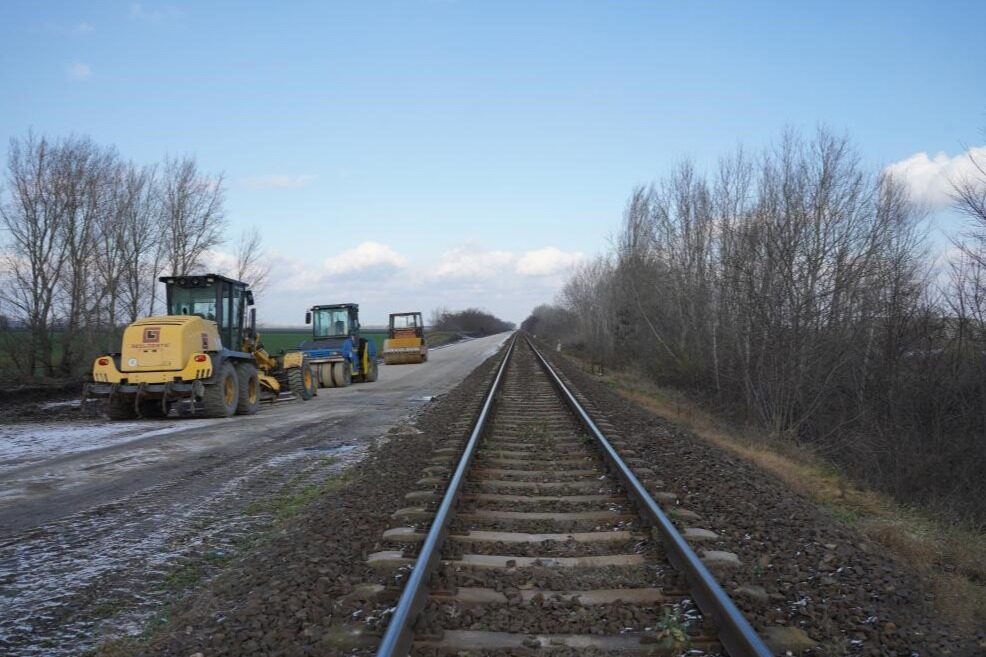
It was already very cold in Hungary in December, but intense and orderly construction was still going on at the construction site of the Takshoni Station of the Hungarian section of the Hungary-Serbia Railway, more than 20 kilometers south of the capital Budapest. The construction vehicles are working on the snow-covered road, and the workers are removing the old steel rails. The new steel rails and new sleepers to be laid have been placed along the railway line.
The Hungarian section of the Hungary-Serbia Railway Project is about 152 kilometers long. It is implemented by a consortium composed of China Railway No. 9 Bureau and China Railway Electrification Bureau under China Railway Group Co., Ltd. and Hungarian partners. It is planned to open and operate in July 2025. China Railway Group is responsible for 50% of the construction tasks, with a total of 9 stations, 1 landing station, and 9 sections.
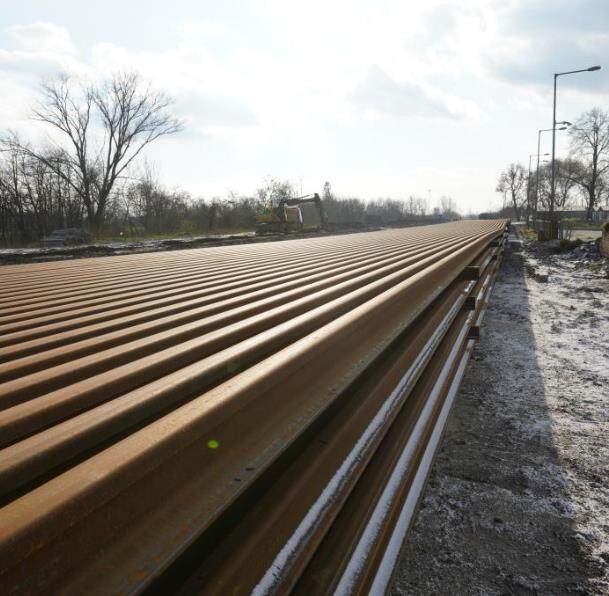
New rail tracks to be laid on the construction site of the Hungarian section of the Hungary-Serbia Railway
According to Song Ziwen, the project manager of the Hungary-Serbia Railway Project Branch of China Railway No. 9 Bureau, on February 1, 2022, the Chinese construction section began to promote archaeology, detonation and tree felling, marking that the project officially entered the physical construction stage. On May 1, the Chinese side started the on-site survey and other work, the construction of the roadbed, bridges and culverts, and the station yard started, and major materials such as ballast, sleepers, and steel rails began to enter the site, marking the official start of civil construction in front of the station.
The Hungarian section of the Hungary-Serbia Railway adopts the method of section management and simultaneous construction. Wang Pangke, project manager of the Hungary-Serbia Railway Project Division of China Railway Electrification Bureau, said: "On November 18, the first pole of the catenary pillar of the electrified railway was completed, marking the four majors of catenary, substation power, communication, and signaling. Construction has officially started and 121 shots have been completed so far.”
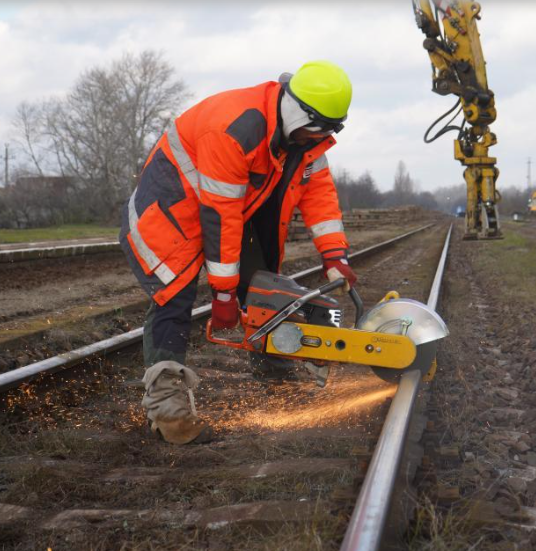
A worker cuts old railway tracks at the construction site of the Hungarian section of the Hungary-Serbia Railway
At this stage, 89% of the right line of relevant road construction has started subgrade construction. It is expected that in 2023, the track laying on the right line, the subgrade reconstruction of the left line, the main reconstruction of stations along the line, and bridge and culvert projects will be basically completed. In 2023, the project will focus on completing the erection of catenary pillars on the right line and the installation of wrist arms, the laying of communication signal cables and the civil construction of traction substations. Professional equipment that reflects the characteristics of electrified railways will be gradually constructed and installed.
According to reports, the project has been highly valued and supported by the governments of China and Hungary. Under the guidance and coordination of China National Railway Group Co., Ltd., China Railway Group made careful arrangements to establish the Hungary-Serbia Railway Project Manager Department, organize the Ninth Bureau, the Electrification Bureau, and the Shanghai Bureau Project Division, and continuously strengthen external and internal communication and coordination. More than a hundred CREC builders overcame various difficulties in the construction and continuously set off an upsurge in the construction of the Hungary-Serbia Railway. Liu Bo, Minister Counselor of the Chinese Embassy in Hungary, fully affirmed the progress and management of the project when he visited the railway construction site recently.

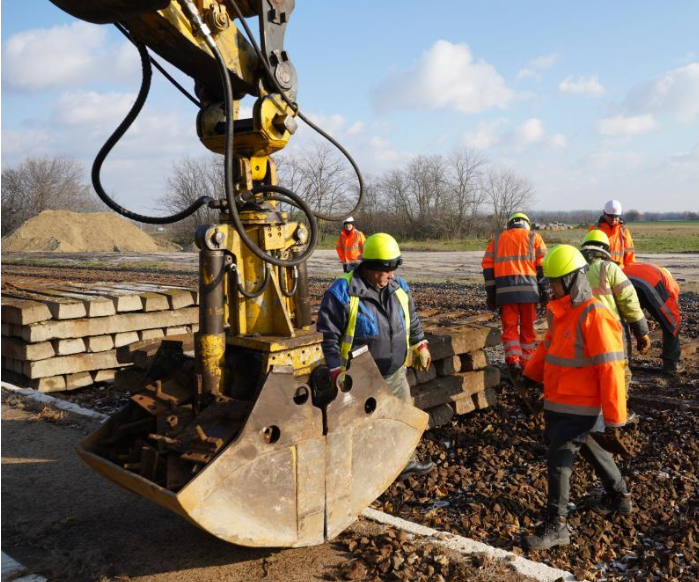
This is the construction site of the Hungarian section of the Hungarian-Serbian Railway taken in Kiskonlotzhaza, Hungary on December 12
The Hungary-Serbia Railway is a landmark project of cooperation between China and Central and Eastern European countries, and it is also the docking of China's railway technology and equipment with the European Union's railway interconnection technical specifications. The project has a total length of nearly 350 kilometers, connecting Budapest, the capital of Hungary, and Belgrade, the capital of Serbia, and is financed by the Export-Import Bank of China. Editor/He Yuting
Comment




 Praise
 Collect
 Comment

 Share
Share


Write something~