 Search


- This hydropower project has an installed capacity of 60 million kilowatts, setting a new world record for hydropower construction
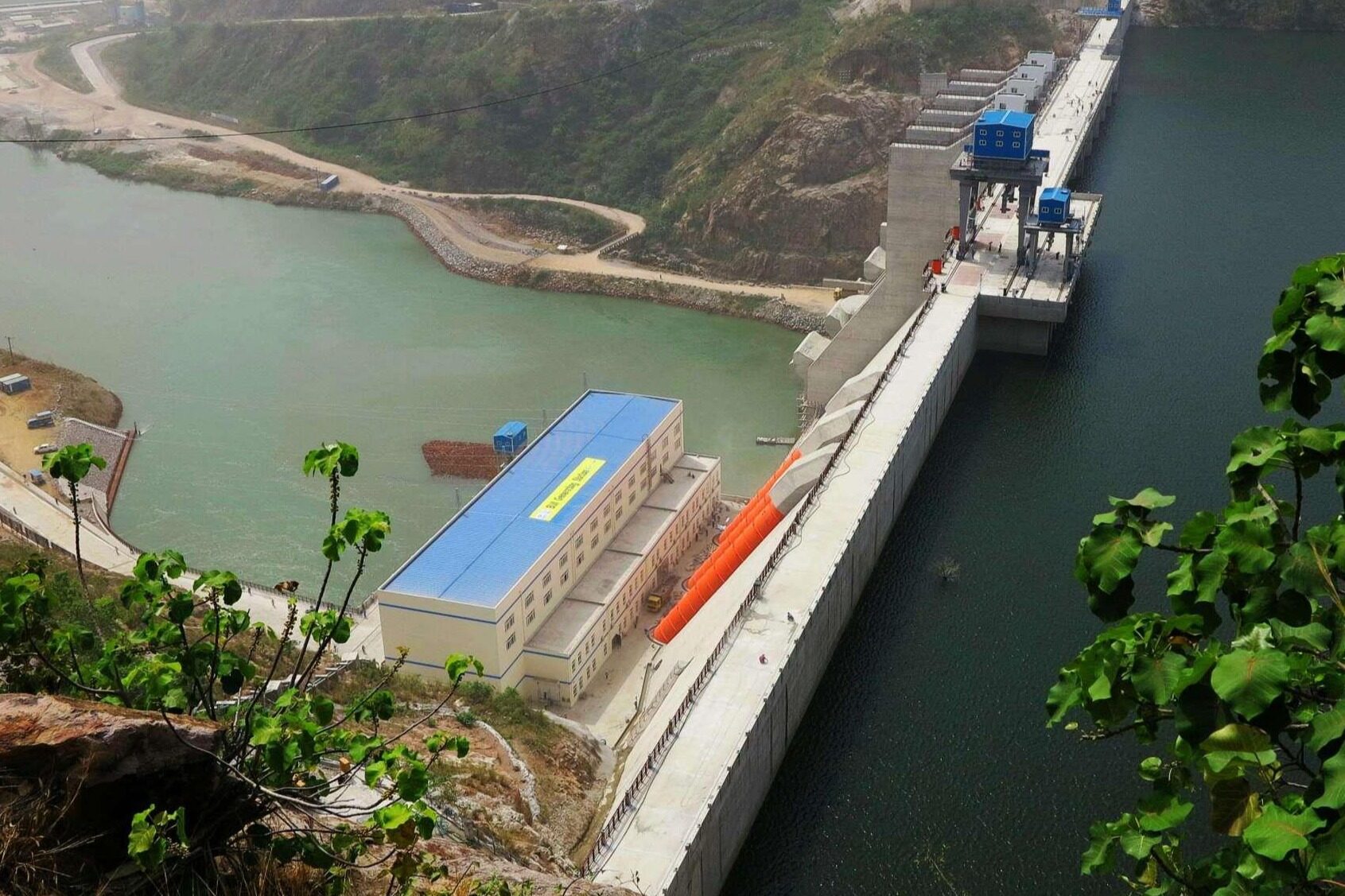
At 9:00 a.m. on July 19, 2025, the commencement ceremony of the hydropower project in the lower reaches of the the Yarlung Zangbo River was held in Milin County, Linzhi City, Xizang Autonomous Region. This super project with a total investment of about 1.2 trillion yuan has an installed capacity of 60 million kilowatts and an estimated annual power generation of 300 billion kilowatt hours, equivalent to the scale of three Three Gorges hydropower stations.
Motuo Hydropower Station, the core project of the project, is located in the Grand Bend Canyon of the the Yarlung Zangbo River and the core area of the Himalayan seismic belt. The construction faces three major challenges: firstly, the geological conditions are complex, with a maximum burial depth of 2500 meters; Secondly, the plateau environment is harsh, with an average altitude of 3000-4000 meters; Thirdly, the climate conditions are harsh, with winter temperatures as low as minus 23 degrees Celsius.
Technological innovation breaks through construction difficulties
The Chinese engineering team has developed innovative technologies such as flexible concrete seismic resistant tunnels and three-dimensional seismic isolation systems, achieving a construction speed of kilometers per year. The design scheme of "dam free water diversion+cascade regulation" not only ensures the utilization of water energy with a drop of 2300 meters, but also guarantees an ecological base flow of over 800 cubic meters per second.
To promote engineering construction, the State Council approved the establishment of China Yajiang Group Co., Ltd., becoming the 99th central enterprise under the supervision of the State owned Assets Supervision and Administration Commission of the State Council. The newly established group will be fully responsible for the development, construction and operation of hydropower projects in the lower reaches of the the Yarlung Zangbo River.
Engineering brings multiple benefits
After the completion of the project, it can replace 90 million tons of standard coal annually and reduce carbon dioxide emissions by 300 million tons. At the same time, through the project of "storing water into Xinjiang", 26 billion cubic meters of water can be transferred to the Tarim Basin of Xinjiang Uygur Autonomous Region every year, equivalent to 1.5 times of the annual runoff of the Yellow River.
During the design of the project, 10% of the ecological flow is reserved to ensure downstream water use, and a cross-border hydrological sharing mechanism is established to regularly report data to the Republic of India and the People's Republic of Bangladesh. Twelve ecological monitoring stations have been built along the the Yarlung Zangbo River basin.
The Indian side has a strong reaction
The media of the Republic of India continues to pay attention to the construction project, and The Times of India reported that it may affect the water volume of the Brahmaputra River. Chinese water conservancy experts have stated that the project strictly follows international river development guidelines, and the practices of the Republic of India in cross-border river management are even more questionable.
The commencement and construction of this century project will not only significantly enhance China's clean energy supply capacity, but also set a new example for regional ecological protection and international cooperation. (This article is from the official website www.seetao.com of Jian Dao. Reproduction without permission is prohibited, otherwise it will be prosecuted. Please indicate Jian Dao website+original link when reprinting.) Jian Dao website infrastructure engineering column editor/Yang Beihua
Comment

 Praise
 Collect
 Comment

 Share
Share


Write something~