 Search


- The technology of non negative sodium batteries is regarded as a revolutionary breakthrough in the sodium battery industry
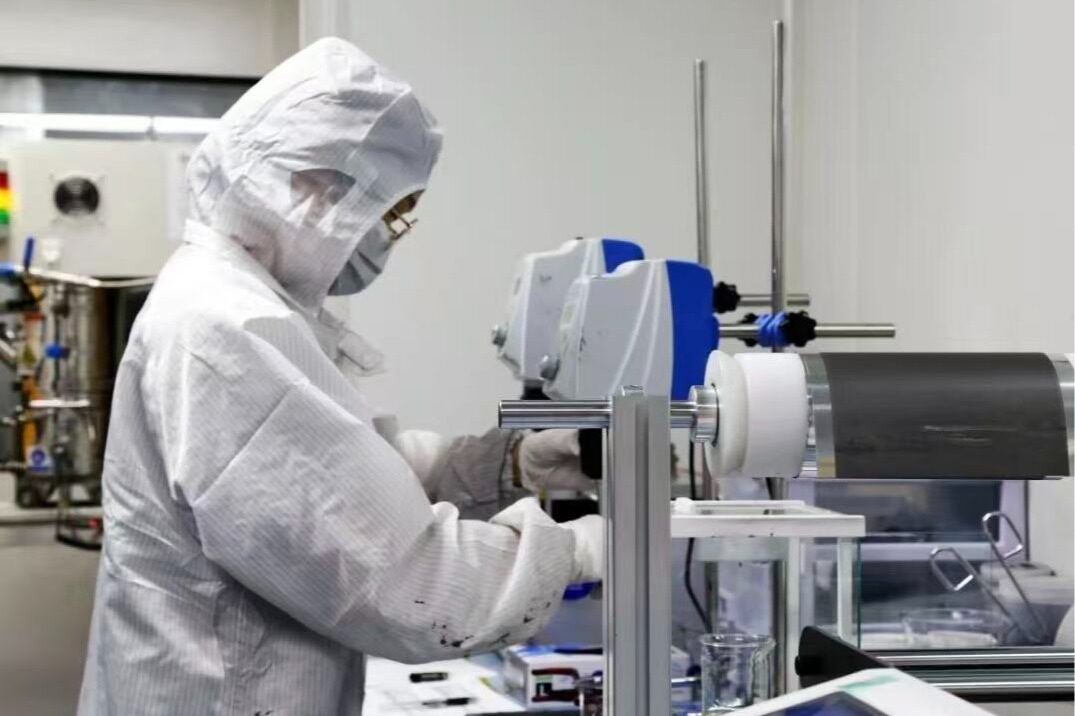
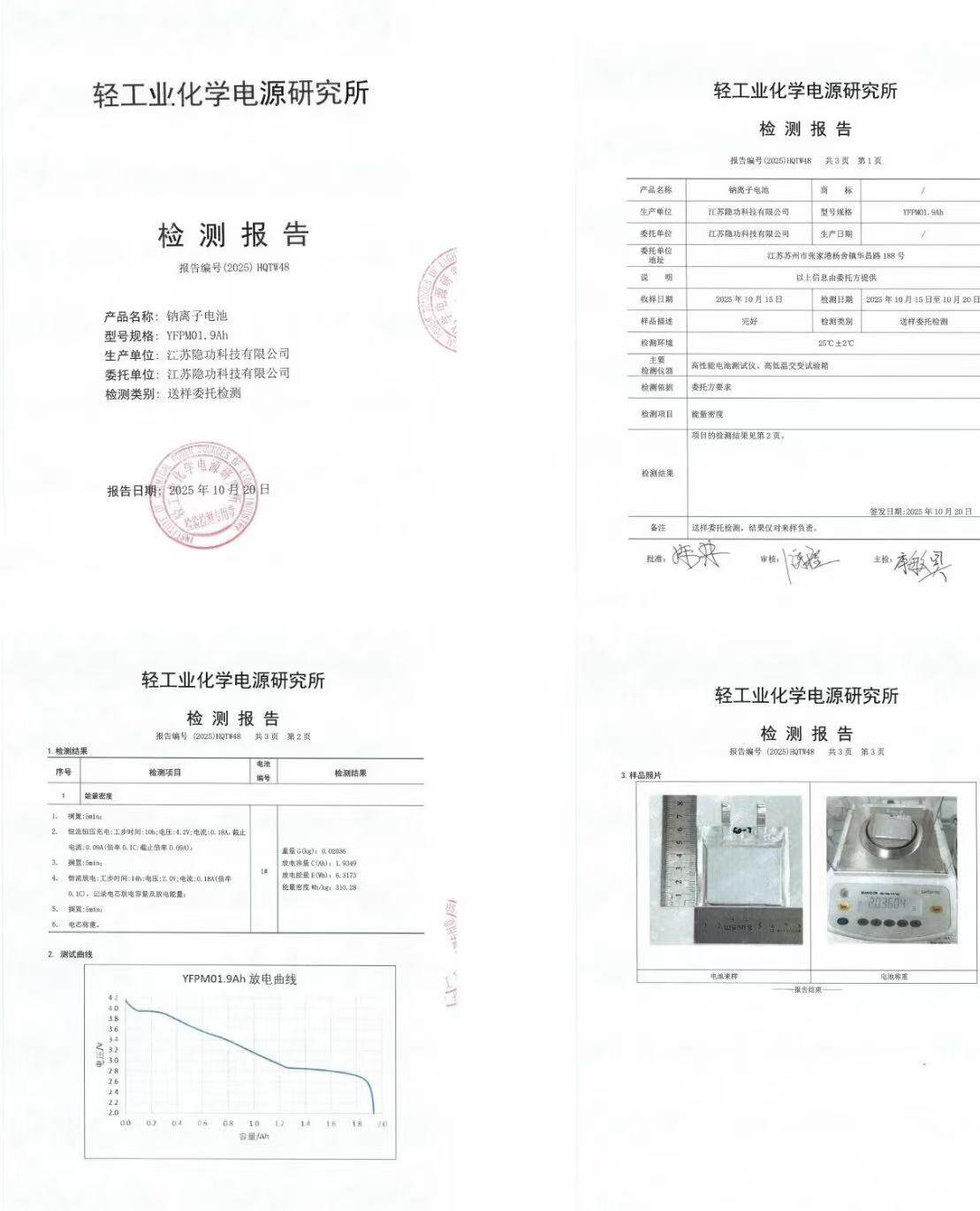
In the global race for next-generation batteries, Chinese companies continue to demonstrate leadership. Jiangsu Hid.Func. Technology Co., Ltd. (Hid.Func.) has achieved a major breakthrough with an anode-free semi-solid-state sodium battery boasting an energy density of 310 Wh/kg—surpassing current mainstream sodium-ion batteries and even some commercial lithium-ion cells.
By integrating anode-free design with semi-solid electrolytes, Hid.Func. overcomes the long-standing energy density bottleneck while simultaneously improving low-temperature performance, cycle life, and cost efficiency, enhancing the competitiveness and application potential of sodium-based systems.
The breakthrough has been validated through third-party certification by the Light Industry Chemical Power Research Institute, and large-scale mass production is expected to begin in 2026.
Breakthrough Technology: Anode-Free + Semi-Solid-State IntegrationAnode-free sodium battery technology is regarded as a revolutionary breakthrough in the battery industry. Unlike traditional sodium-ion batteries, this anode-free design eliminates the anode active material entirely, retaining only the anode current collector. During charging, metallic sodium is deposited in situ onto the current collector, thereby forming the anode directly within the cell. This architecture significantly simplifies the battery structure while improving both energy density and material utilization efficiency.
Through its self-developed high-stability electrolyte and ultra-thin functional coating technology, Hid.Func. has successfully addressed three core challenges of anode-free structures: low cycling efficiency of anode, unstable volume expansion, and non-uniform sodium metal deposition..
The incorporation of semi-solid electrolyte technology further enhances the safety performance of the battery and broadens its operating voltage range. Through the synergistic action of functional additives, stable electrode/electrolyte interfaces are formed on both the cathode and anode surfaces. This not only improves the reversibility of the self-forming anode, but also enhances the stability of the high-specific-energy cathode.
"The energy density milestone of 310 Wh/kg represents a critical step for sodium batteries entering high-end application markets," stated Wang Fei, Founder and Chief Scientist of Hid.Func.. Simultaneously, this technology achieves operational capability across a wide temperature range from -40°C to 60°C, satisfying performance requirements in extreme environments.
Performance Advantages: A Dual Breakthrough in Energy Density and Safety
Compared to current mainstream sodium-ion batteries based on polyanion/hard carbon systems—which typically offer energy densities of approximately 100 Wh/kg—Hid.Func.'s anode-free semi-solid-state sodium battery achieves a threefold increase in energy density. Moreover, even relative to conventional lithium-ion batteries with LFP or ternary cathodes, , this technology still exhibits a marked advantage, demonstrating its strong potential for deployment in high-performance and premium application scenarios.
In terms of safety, the semi-solid electrolyte significantly reduces the proportion of liquid electrolytes, thereby lowering combustibility risks. The battery has successfully passed safety tests including nail penetration, overcharge, and over-discharge, demonstrating exceptional stability and reliability under extreme conditions.
Cost competitiveness stands as another core advantage for Hid.Func.. The anode-free structure eliminates the need for hard carbon anode material and associated production steps, reducing overall manufacturing costs by more than 30% compared to the mainstream sodium-ion battery. Furthermore, the use of aluminum foil for both the cathode and anode current collectors further lowers raw material costs, strengthening the economic viability of large-scale application.
Commercialization Roadmap: From Core Technology R&D to Scaled Manufacturing
Hid.Func. has charted a clear industrialization roadmap, aiming to complete its first GWh-scale production line by 2025 and move into full-scale mass production in 2026.
Hid.Func. has developed three major product series: YinFeng (high specific energy), YinSu (high power), and YinHu (high safety). The newly launched 310 Wh/kg battery belongs to the high-specific-energy YinFeng series. These distinct product lines are designed to meet the application requirements of leading customers across various sectors, including low-altitude propulsion, light-duty mobility, automotive power systems, vehicle/motorcycle starting power, and engineering machinery. This differentiated product strategy enables Hid.Func. to effectively support the large-scale adoption of sodium-based energy solutions in multiple high-value markets.
According to Zhu Jian, Co-founder and General Manager of Hid.Func., the YinFeng series has received joint development invitations from leading enterprises in China's low-altitude economy and UAV sectors, marking a strong step forward in strategic market expansion.

Industry Impact: Reshaping the Market Competitiveness of Sodium Batteries
The breakthrough achieved by Hid.Func. has significantly enhanced the competitiveness of sodium batteries in both domestic and global energy innovation. With an energy density reaching 310 Wh/kg, sodium batteries now possess the competitive edge to rival mid-range lithium-ion batteries for the first time. This advancement is expected to accelerate their adoption in higher-end applications such as electric vehicles, low-altitude aircraft, and UAVs.

According to data from Qidian Research, China's sodium battery shipments reached 3.7 GWh in 2024, with energy storage being the primary application scenario, followed by light-duty power. With continuous improvements in energy density, sodium batteries are expected to progressively replace both lithium-ion and lead-acid batteries across an expanding range of application fields.
Industry experts believe that the combination of anode-free and semi-solid-state technologies will become a critical development path for the next generation of sodium batteries. Hid.Func. has taken a global pioneering role by achieving this breakthrough and advancing its industrialization.
As the global energy transition accelerates, sodium-ion batteries are gaining broad market prospects as a promising complement to lithium-ion batteries. According to GGII, China's actual sodium battery shipments are projected to reach the 100 GWh scale by 2030, creating a market valued at hundreds of billions of yuan within the next five years.
The mass production of this anode-free semi-solid-state sodium battery will significantly accelerate this market expansion. Concurrently, Hid.Func. is partnering with leading global universities and industrial partners to establish and co-build a Sodium Battery Innovation Alliance, aiming to drive industry standards and patent portfolio development
"The era of sodium batteries is no longer a distant vision," stated Zhu Jian, General Manager of Hid.Func.. "From 180 Wh/kg (our previous YinFeng product) to 310 Wh/kg, we anticipate advancing energy density to 400 Wh/kg within the next two years through continuous technological iteration, ultimately providing superior solutions for the global energy transition."
Comment


 Praise
 Collect
 Comment

 Share
Share


Write something~