 Search


- Under the century long changes, Central Asia is undergoing a profound transformation. In the process of reform
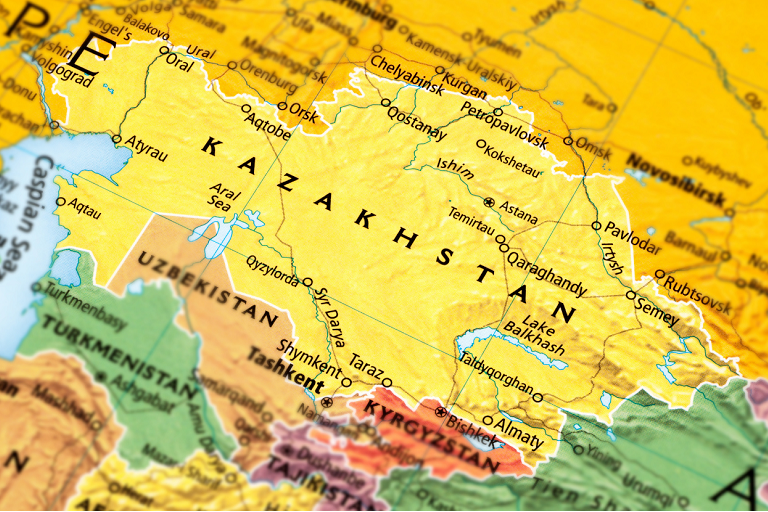
Currently, the Central Asian region is facing unprecedented development opportunities, but also numerous challenges. This once marginalized region is now integrating into the global development trend with a new attitude.
Under the century long changes, Central Asia is undergoing a profound transformation. Under the promotion of reform, cooperation, and diversified diplomacy, Central Asia has ushered in unprecedented development opportunities. Its position in the global geopolitical landscape continues to rise, and a "new Central Asia" is emerging at the center of the Eurasian continent.
New situation of economic development
Against the backdrop of an overall imbalance in global economic development, the economy of Central Asia has maintained a relatively strong growth momentum. The World Bank's October report stated that the total economic growth rate of Central Asia in 2025 will be about 5.9%, making it one of the fastest-growing regions in the world for the third consecutive year. At the same time, the population growth in Central Asia has also attracted attention. The population of the five Central Asian countries has exceeded 80 million, with an average age of over 20 years old. With abundant labor force and rapidly developing economy, the regional economy is full of vitality.
Kazakhstan's economic diversification has achieved significant results. From January to September 2025, the Gross Domestic Product (GDP) will grow by 6.3%, with non oil industries contributing over 70% of the growth. In September 2025, President Tokayev proposed to build a fully digitized country within three years. The economic structure of Uzbekistan is also undergoing positive changes, with industry accounting for 25% of total value added and agriculture accounting for 23% of GDP in 2023. The Uzbekistan 2030 Strategy sets the goal of doubling GDP to $160 billion by 2030. A large number of investment projects have landed in Central Asia, such as industrial manufacturing, infrastructure construction, new energy and hydropower projects, which have driven the economic growth of Central Asian countries. The tourism industry has become an important factor in regional economic growth. Uzbekistan provides visa free access for citizens of 93 countries, with over 10 million foreign tourists expected in 2024. Central Asian countries have made significant investments in areas related to human capital development. Significant progress has been made in the construction of regional interconnectivity. In 2024, the China Kyrgyzstan Uzbekistan railway project has started construction and will become another strategic channel connecting the Eurasian continent. Central Asian countries attach great importance to the construction of the "middle corridor", with a 90% increase in freight volume through the "middle corridor" in the past three years.
New Atmosphere of Political Stability
In recent years, the political situation in Central Asian countries has been relatively stable, the security situation is controllable, and there have been no major terrorist security incidents. Kazakhstan's President Tokayev is fully committed to promoting the construction of a "just Kazakhstan" and fully implementing the "2029 National Development Plan". The concept of transitioning Kazakhstan's parliament to a unicameral parliament in 2025 is proposed, with the core being to limit presidential power, expand the role of parliament, and lower the registration threshold for political parties. The relevant measures have laid a solid foundation for political stability.
The reforms in Uzbekistan are equally noteworthy. President Mirziyoyev initiated the "New Uzbekistan" reform and passed a constitutional amendment in 2023, which stipulates that Uzbekistan is a "rule of law, social, secular, and democratic country". Kyrgyzstan has strengthened social control, greatly improving the frequent political turmoil and chaos. At the end of November 2025, the ruling party won the early parliamentary elections with a significant advantage, further strengthening the presidential control ability. Tajikistan continues to implement its national development strategy and maintains stability in the country. The Russia-Ukraine conflict triggered geopolitical turbulence. Central Asian countries are more aware of the importance of political stability and reform. This internal reform impetus enables Central Asian countries to better respond to regional and global challenges.
New model of regional cooperation
The five Central Asian countries were once plagued by complex conflicts over water resources and border issues. In recent years, the complex international situation has promoted the "unity and self-improvement" of Central Asian countries, and the atmosphere of regional cooperation has significantly improved. On November 16, 2025, the Seventh Consultative Meeting of Central Asian Leaders was held in Tashkent, where the "Concept for Security, Stability, and Sustainable Development in Central Asia" and the "Central Asian Security Risk Catalogue and Preventive Measures for 2026-2028" were adopted. The inclusion of Azerbaijan in the Central Asia Summit is of milestone significance, which can further promote cooperation between Central Asia and the South Caucasus, integrate regional energy resources, accelerate the construction of the intermediate corridor, and comprehensively enhance the strategic position of Central Asia in the Eurasian continent. Azerbaijani President Aliyev stated that "Azerbaijan and Central Asia have formed a unified geopolitical and economic space.
In March 2025, Kyrgyzstan and Tajikistan completely resolved the border issue through negotiations; Tajikistan and Kyrgyzstan also signed the Treaty on the Boundary Points of the Three Kingdoms with Uzbekistan. Central Asian countries are transforming complex border disputes into a cornerstone for promoting regional stability and cooperation. The mechanism for water resource cooperation is constantly improving, and countries are committed to cross-border water resource governance, building a unified energy system in Central Asia, and jointly solving the ecological crisis in the Aral Sea. Against the backdrop of increasing uncertainty and instability in the current international situation, Central Asian countries are jointly responding to regional risks and challenges. Political mutual trust among countries has significantly strengthened, economic cooperation has continued to deepen, and they are also striving to "unite and warm up" on the international stage. Overall, the process of regional integration has begun and is gradually moving towards the goal of a "Central Asian Community".
New pattern of diversified diplomacy
The geopolitical landscape in the Eurasian region is accelerating its evolution, and major powers have also established the "Central Asia+" mechanism with Central Asia. Central Asian countries all pursue "diversified and balanced diplomacy", maintain cooperation with major powers outside the region, and avoid becoming a "battlefield" for great power competition.
The EU is seeking diversified energy and resource supply channels, and its emphasis on Central Asia has significantly increased. The Central Asia EU Summit will be held in April 2025, elevating the bilateral relationship to a strategic partnership level. In the past decade, the European Union has invested approximately 105 billion euros in Central Asia, accounting for over 40% of all investments in Central Asian countries. The EU will strengthen cooperation with Central Asia in four major areas. One is transportation and logistics. The EU will continue to invest in the Trans Caspian Transport Corridor and provide 12 billion euros in infrastructure development to Central Asia through the 'Global Gateway' program. The second is key minerals. The Central Asian region holds approximately 40% of the world's reserves of manganese, lithium, graphite, and other important minerals. The third is clean energy. The EU is participating in the investment and construction of the Rogun hydropower station in Tajikistan, helping to develop green energy such as wind power. The fourth is communication. The EU is committed to developing space-based Internet in Central Asia and accessing European satellites. In addition, Germany, France, Italy, and the United Kingdom all hope to expand their relations with Central Asian countries and establish a C5+cooperation mechanism.
The second "Russia Central Asia" summit will be held in Dushanbe, the capital of Tajikistan, in October 2025. Russia remains an important economic and security partner for Central Asian countries, especially in areas such as energy, labor markets, and security cooperation. Since the conflict between Russia-Ukraine conflict, Russia has supplied natural gas to Uzbekistan through Kazakhstan, achieving "win-win". Russia has continuously strengthened its military cooperation with Central Asia through the establishment of security organizations, with military bases in Kyrgyzstan and Tajikistan, and conducting multiple military and counter-terrorism exercises with Central Asian countries. But it should also be noted that Russia's control over Central Asia has declined, the West has increased its efforts to win over Central Asian and South Caucasus countries, Azerbaijan's relations with Russia are tense, and the United States is leading the operation of the Zangezur Corridor. Russia's continuous tightening of immigration policies has also caused dissatisfaction among some countries.
The United States is re examining its policy towards Central Asia. The Central Asia+US Summit will be held on November 6, 2025, and Trump stated that he will comprehensively enhance cooperation with Central Asia. The United States has signed a rare earth mining agreement with Kazakhstan, which requires rare earths and uranium to ensure the development of the nuclear and military industries, reduce dependence on China in key minerals, and integrate Central Asia into the US led supply chain system. Uzbekistan has promised to purchase Boeing aircraft from the United States for $8.5 billion, reaching a cooperation agreement worth billions of dollars. The United States also supports the construction of a "middle corridor" in Central Asian countries. Some analysts believe that Trump is likely to become the first US president in history to visit Central Asia.
Türkiye has promoted the deepening cooperation of the "Turkic Speaking Countries Organization" and enhanced its influence in Central Asia. In October 2025, the 12th Summit of the Organization of Turkic Speaking Countries adopted the Gabala Declaration, signed the "Turkic Speaking Countries+" model, and adopted a unified Turkic alphabet consisting of 34 letters. In addition to exerting its soft power, Türkiye also promotes military security cooperation with Central Asian countries. Azerbaijan proposes to hold military exercises of the organization in the country in 2026. India, Iran, Japan, South Korea, and others have also strengthened cooperation with Central Asia. In late December 2025, the first "Japan+Central Asia" summit will be held in Tokyo.
The cooperation between China and Central Asian countries continues to deepen. The second China Central Asia Summit will be held in Kazakhstan in June 2025, proposing the "China Central Asia Spirit" and pointing out the direction for building a closer China Central Asia community with a shared future. All parties have formed the "China Central Asia Spirit" with the basic content of "mutual respect, mutual trust, mutual benefit, and assistance, and promoting common modernization through high-quality development". China has signed the "Permanent Treaty of Good Neighborliness, Friendship and Cooperation" with five Central Asian countries, working together to build a closer China Central Asia community with a shared future. All parties have clearly identified trade facilitation, industrial investment, interconnectivity, green mineral resources, agricultural modernization, and personnel exchanges as the six priority cooperation directions. All countries agreed that the year 2025-2026 will be the "Year of High Quality Development of China Central Asia Cooperation" to promote high-quality joint construction of the "the Belt and Road". The Chinese side has decided to establish three major cooperation centers for poverty reduction, education exchange, and desertification prevention and control, as well as a trade facilitation cooperation platform within the framework of China Central Asia cooperation.
While achieving significant development achievements, it should also be noted that Central Asia still faces many challenges, such as population growth and environmental issues, water resource disputes, political stability, and power struggles, which will continue to be difficult problems for Central Asian countries to deal with. However, with internal reform momentum and a flexible and pragmatic diplomatic strategy of continuously strengthening regional cooperation, Central Asia is expected to play a more important role in the future global landscape. This once marginalized region is now integrating into the wave of world development with a new posture.Editor/ Bian Wenjun
Comment


 Praise
 Collect
 Comment

 Share
Share


Write something~