 Search


- Balendra Shah takes office and receives double track gift: China Nepal Himalayan Sky Road overcomes 3000 meter height difference
On March 27, 2026, 35 year old Balendra Shah was sworn in at the Nepalese Presidential Palace, becoming the youngest Prime Minister in the country's history. At the birth of the new government, the cross-border railway construction in Nepal, which has been dormant for many years, has reached a critical juncture: the feasibility study of the northern China Nepal railway is about to conclude, the detailed report of the southern Indonesia railway has been finalized, and the two major arteries are moving from blueprint to reality.

The Heavenly Road Across the Himalayas
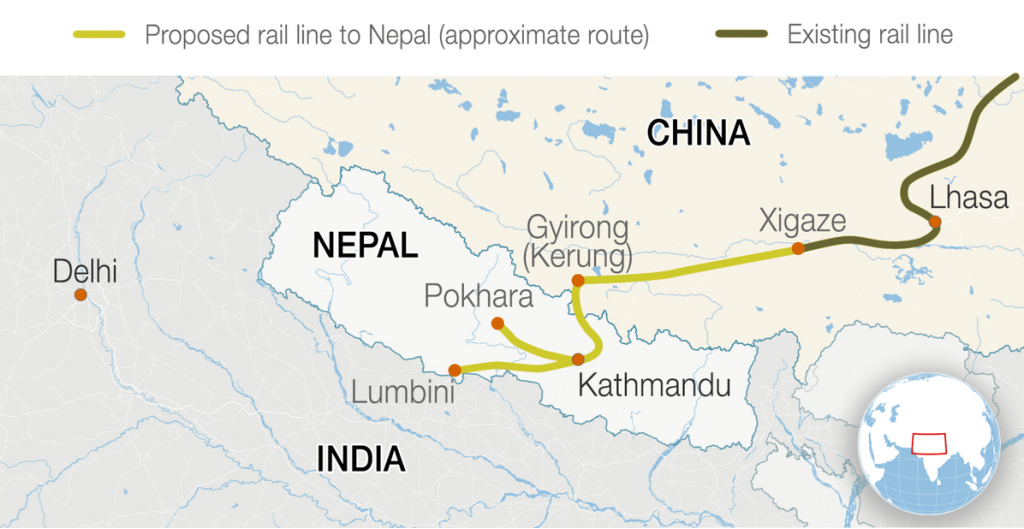
As the most difficult project in Nepal's planning, the Jilong Kathmandu railway (Nepal section of the China Nepal cross-border railway) is in the final sprint stage of feasibility study. The Nepal section of the line is 72.25km long, which is the southern extension of the Xigaze Jilong Xizang Railway.
According to the data, this railway can be called a cloud project: the line starts from the Jilong Port in Xizang at an altitude of 4000 meters, drops to 1400 meters in Kathmandu, and the height difference within the horizontal distance of less than 80 kilometers is nearly 3000 meters. To overcome the huge height difference, the project plans to set up a ramp for the exhibition line near Lake Palgu. According to the Nepal Railway Bureau, about 98.5% of the entire line must be constructed in the form of bridges or tunnels, with a construction cost of about 26 million US dollars per kilometer. The total cost of the Nepal section alone is 2.75 billion US dollars. At present, the Chinese side has completed the on-site investigation, and the feasibility report is expected to be completed by the end of June 2026. A systematic evaluation of the technical scheme and investment scale will be conducted.
The geopolitical chess game dominated by the Indian side
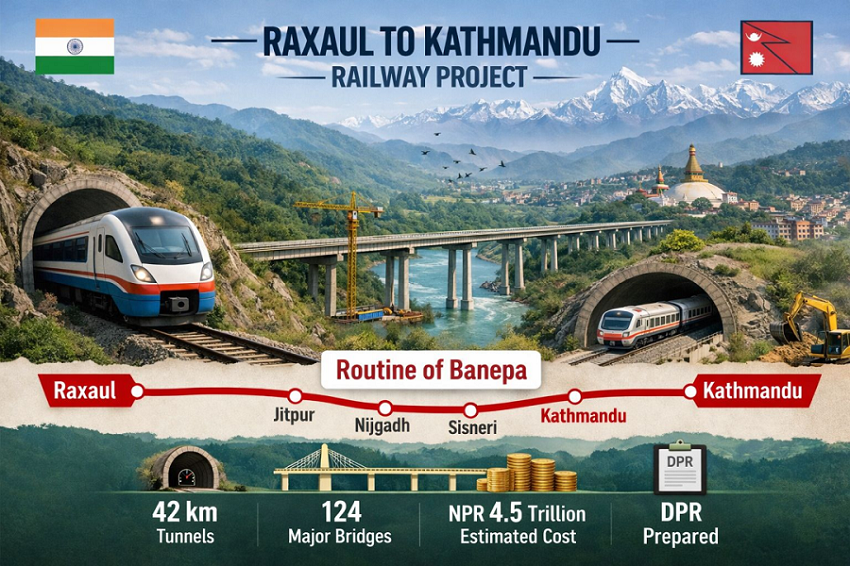
Unlike the difficulties of the northern line, the technical difficulty of the Laksaur Kathmandu railway on the southern line is relatively low, but it has a strong geographical color. The total length of the route is 136 kilometers, fully funded by India, starting from the Indian border city of Laksar, crossing the Terai Lowland and crossing the central Mahablatt Mountains.
The Indian Ministry of Railways officially confirmed the completion of the final route survey and detailed project report for the line on March 20, 2026. According to the plan, about 42 kilometers of tunnels and 124 large bridges need to be constructed along the entire line. Although not involving the main ridge of the Himalayas, hilly terrain still requires a large number of bridges and tunnels for support. This project originated from the joint statement between the two countries in 2018 and has completed all preliminary work at the technical level.
From paper to the ground
Two railways made breakthrough progress at the same time window, presenting a welcome gift for the Shah's new policies. However, the northern route still needs to go through lengthy financing negotiations and construction bidding after the feasibility study is completed; Although DPR is in hand for the southern line, it still takes time from approval to commencement. Keywords: interconnectivity, railway transportation
How to balance the game between China and India and promote the implementation of these two strategic channels with huge total investment will be the core challenge during the tenure of this youngest prime minister.Editor/Cheng Liting
Comment





 Praise
 Collect
 Comment

 Share
Share


Write something~