 Search


- The total investment is about 5.6 billion US dollars, and it is planned to be opened to traffic in 2028
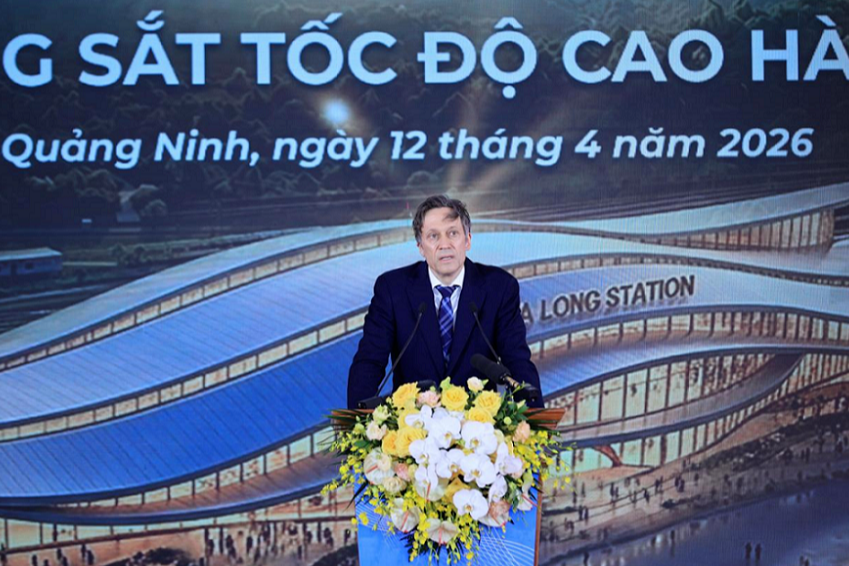
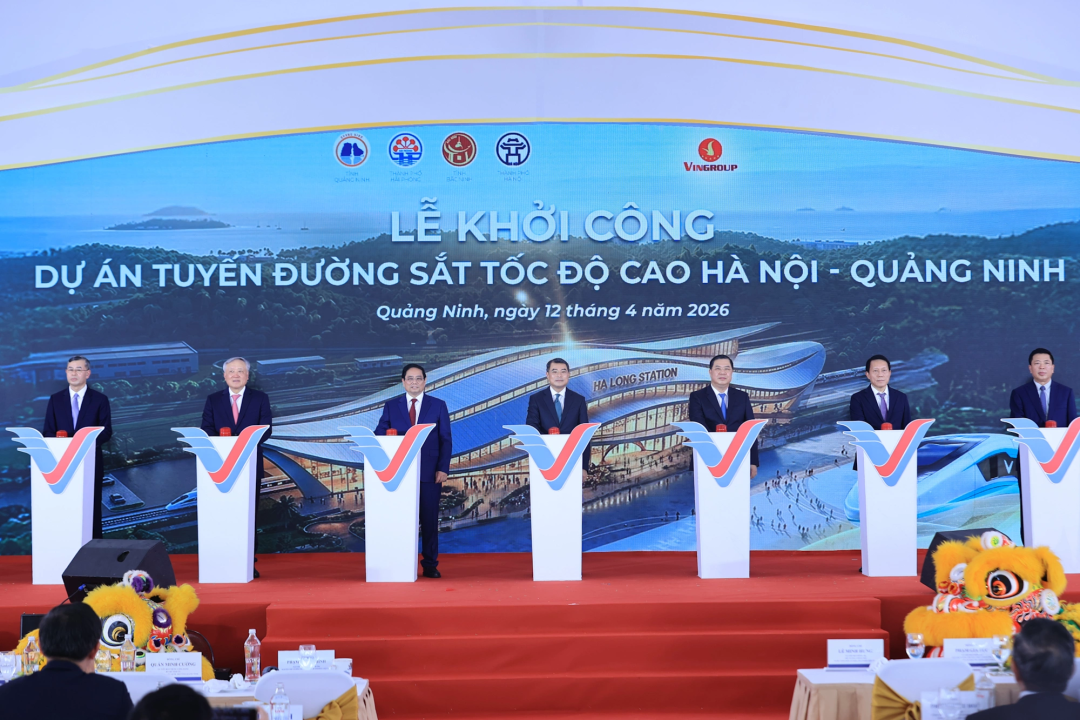
At the beginning of 2026 in Vietnam, a project to change the national transportation map is quietly underway in the Red River Delta. On the morning of April 12, in an open space on the outskirts of Hanoi, Vietnamese Prime Minister Le Mingxing held a shovel to lay the foundation for the Hanoi Guangning high-speed railway project.
At this moment, it marks the official start of construction for Vietnam's first high-speed railway designed to reach a speed of 350 kilometers per hour.
This is not only a railway, but also a milestone for Vietnam to become a modern transportation powerhouse, "said Le Minh hung at the groundbreaking ceremony. Behind this railway is the cross-border collaboration between Vietnamese local enterprise VinSpeed and German industrial giant Siemens Mobility, jointly outlining a new blueprint for ASEAN high-speed rail.
German Vietnamese cooperation
The total investment of the Hanoi Guangning high-speed railway project is as high as 147.37 trillion Vietnamese dong, approximately 5.6 billion US dollars. This does not include the 10.27 trillion Vietnamese dong land clearance cost borne by the national budget.
The general manager of VinSpeed Vietnam, the investment and construction party, promised at the ceremony, "We are committed to building modern transportation infrastructure that meets international standards, and making contributions to promoting social and economic development and improving people's quality of life
Siemens Mobility in Germany will provide its latest generation Velaro Novo high-speed trains, signal systems, and related technical equipment for this project.
The CEO of Siemens Mobility personally visited Vietnam and expressed a willingness to deepen cooperation: "We will provide globally recognized state-of-the-art, efficient, and safe high-speed railway technology
He hopes to deepen cooperation with VinSpeed in train assembly, maintenance, and technology transfer, and build a local high-speed rail ecosystem in Vietnam, turning this railway into a flagship project for Vietnam Germany relations in the coming decades.
This cooperation is also seen by the outside world as an important docking between Germany's "Indo Pacific strategy" and Vietnam's infrastructure modernization needs. In recent years, countries such as China and Japan have made layouts in the Southeast Asian railway market. Germany's entry with cutting-edge technology indicates that the competition in the ASEAN high-speed rail market will become more diversified.
Line connection
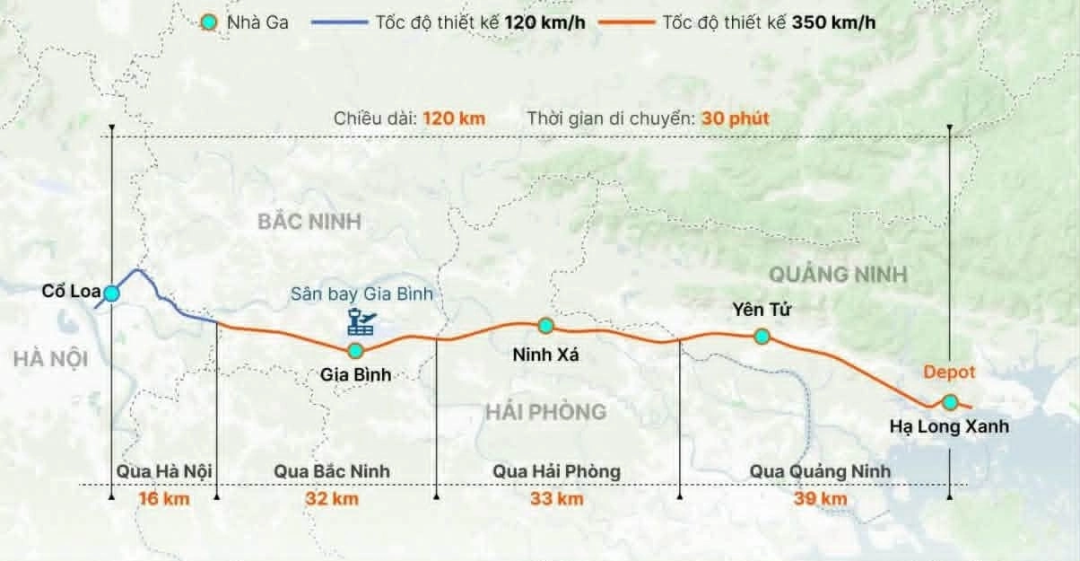
The Hanoi Guangning high-speed railway line has a total length of 120.2 kilometers, running through Hanoi, Beining, Haiphong, and Guangning. The line adopts a double track electrified railway with a standard gauge of 1435 millimeters.
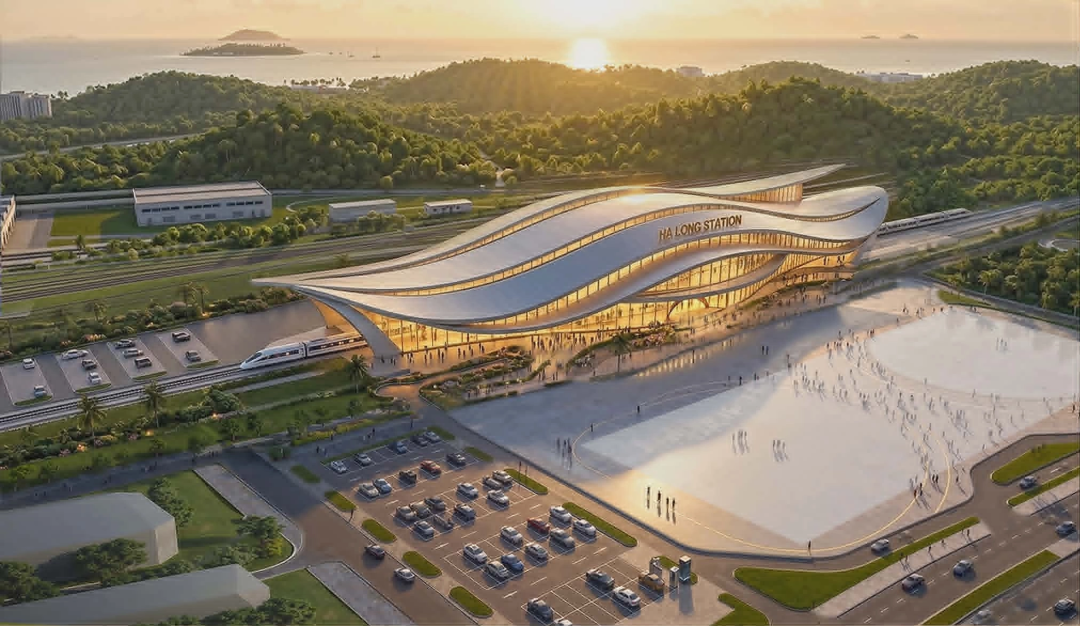
The main line design has a maximum speed of 350 kilometers per hour, with the Hanoi section reaching 120 kilometers per hour. The entire line has five stations: Guluo Station, Jiaping Station, Ningshe Station, Anzi Station, and Halong Station. Halong Station also has a supporting vehicle depot.
The project is expected to be completed and open to traffic in 2028. At that time, the travel time from Hanoi to Guangning will be shortened from the current 2 hours or more to about 23 minutes.
This is a regional strategic infrastructure, "commented the Chairman of Guangning Provincial People's Committee and Deputy Secretary of the Provincial Party Committee. The high-speed rail will greatly enhance the transportation connectivity of the Red River Delta and provide strong support for the development of key economic zones in northern Vietnam.
This railway will also become an important pilot section of Vietnam's planned North South high-speed railway (Hanoi Ho Chi Minh City), accumulating experience and laying the technical and management foundation for the future national trunk high-speed railway network.
Funds in place
In terms of funding preparation, the project has made substantial progress. The investor VinSpeed has invested approximately 22.11 trillion Vietnamese dong, and the remaining funds of over 125 trillion Vietnamese dong have been raised, accounting for approximately 85% of the total project investment.
This construction model, led by local enterprises and actively introducing international advanced technology and funds, provides a new paradigm for Vietnam's subsequent large-scale infrastructure projects.
In addition to hardware construction, Vietnam focuses more on a long-term technological ecosystem. Through cooperation with Siemens, Vietnam hopes to achieve technology transfer in train assembly, maintenance, personnel training, and even some manufacturing processes.
This will help Vietnam gradually establish localized high-speed rail industry capabilities, rather than just the operation of a single railway.
In the macro context of ASEAN regional connectivity and the the Belt and Road cooperation initiative, Vietnam's initiative to build a high standard high-speed railway is not only to meet the urgent needs of domestic economic development and people's travel, but also reflects its vision to improve the status of a regional transport hub.Editor/Yang Meiling
Comment



 Praise
 Collect
 Comment

 Share
Share


Write something~