 Search


- Chinese energy storage companies accelerate localization of factory construction and expand global production capacity layout
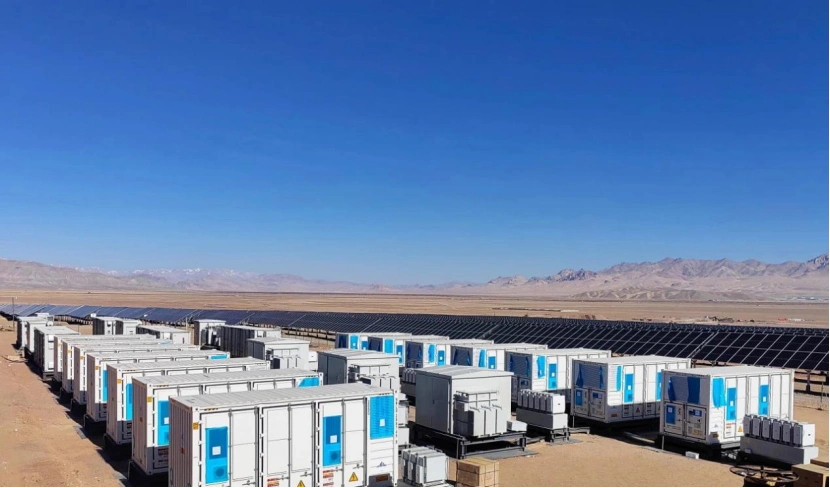
Driven by the dual factors of global energy transformation and the explosive demand for AI computing power, Chinese energy storage companies are entering a historic period of overseas expansion. In 2025, the scale of new overseas orders reached 366 GWh, a year-on-year increase of 144%. This figure not only broke the industry record, but also marked a qualitative change in China's energy storage from product output to capacity and standard output. With the implementation of the policy of reducing the export tax rebate rate to 6% on April 1st, this global competition that switches from policy dividends to technological dividends is entering a deep water zone.
Emerging markets take over from Europe and America
This round of growth is not driven by a single market, but by the blossoming of multiple global markets. Australia, the United States, Saudi Arabia, and Chile rank among the top four in terms of order size, with Australia leading the way; Emerging markets such as the Middle East, South America, and Southeast Asia are growing rapidly, becoming the "new engines" driving growth. Only in the first two months of 2026, Chinese energy storage companies won over 33.5GWh of orders overseas, a year-on-year increase of 45%, covering Europe, the Middle East, Africa, and Southeast Asia. More than 70 companies, including CATL, BYD, and Sunac, have gone global in all aspects. Battery companies remain the main force, but the proportion of system integration and EPC general contracting contracts has significantly increased.
From price competition to manufacturing competition
Faced with the challenge of phasing out export tax rebates by 2027, Chinese companies are accelerating the construction of overseas factories to avoid trade barriers. Haichen Energy Storage signed a 400 million euro contract with Spain to build a factory, Sunshine Power invested 230 million euros to manufacture energy storage systems in Europe, and China Innovation Aviation settled in Portugal. This "global manufacturing+local delivery" model can not only meet the strict requirements of Europe and America for local manufacturing, but also seize the high gross profit market through differentiated solutions such as Nordic extreme cold adaptation and Southeast Asian anti-corrosion and moisture-proof.
The rollback of tax refund policies may cause a rush to install and increase supply chain costs in the short term, but in the long run, it will force the industry to bid farewell to low price competition. As AI data centers and grid stability become a global necessity, Chinese energy storage companies are evolving from simply selling batteries to operators of global energy infrastructure, leveraging their full industry chain advantages and fast response delivery systems. This overseas battle is no longer about subsidy thickness, but about technological depth and global operational resilience.Editor/Cheng Liting
Comment



 Praise
 Collect
 Comment

 Share
Share


Write something~