 Search


- Botswana may not be a big player, but it hides the key logic of project implementation
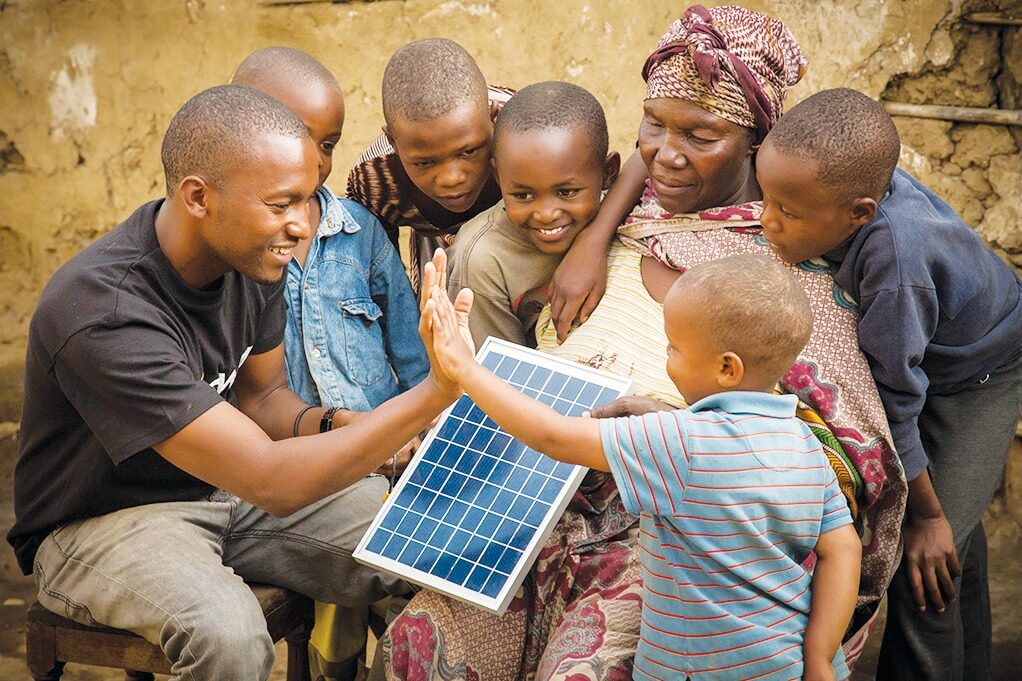
Why is Botswana worth paying attention to?
In the field of clean energy in Africa, investors often focus on countries with large market scales and abundant resources. However, when it comes to project implementation, many practical issues are more likely to emerge in seemingly "unremarkable" places - Botswana is a typical example.
From the perspective of investment, Botswana's market size is not particularly prominent due to its limited population, economic volume, and domestic electricity demand. However, its advantages are equally significant: clear and explicit energy policies, efficient government communication, and strong controllability in the approval process. More importantly, it does not have excessive historical baggage and adopts a pragmatic and flexible attitude towards foreign investment projects.
Such a market is precisely suitable for exploring a set of project operation logics that can be truly implemented and replicated.
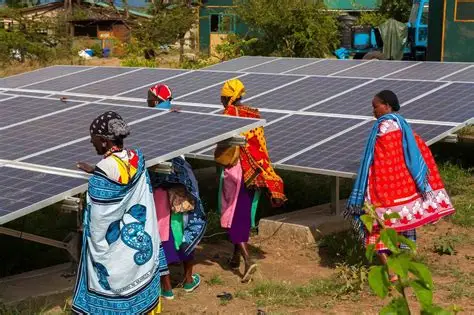
Taking Jwaneng as an example: Clean energy practices in Botswana
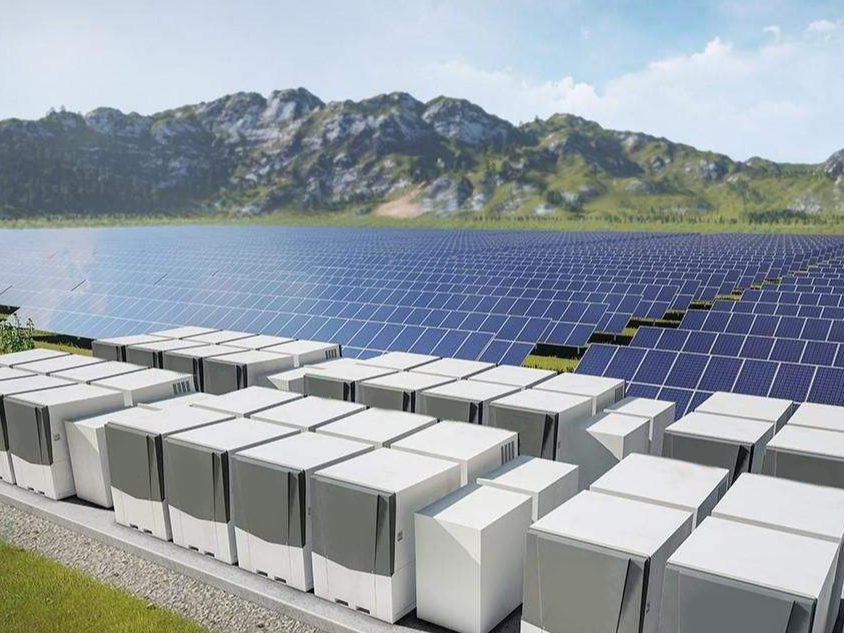
In recent years, Botswana has actively introduced foreign investment to participate in the clean energy transition. The Jwaneng 100 MW photovoltaic power station project, which was awarded to a consortium consisting of China Harbor and China International Water & Electric Corp., is a representative case.
The project, with a total investment of approximately USD 78.3 million, is jointly established by China Harbor (50%), China International Water & Electric Corp. (30%), and a local partner from Botswana (15%). It adopts a franchise model: the enterprise is responsible for financing, construction, and operation, while the government signs a 25-year long-term Power Purchase Agreement (PPA). Upon expiration, the project will be transferred to the government free of charge. This model not only alleviates the financial pressure on the government but also provides a stable and predictable return path for the enterprise.
The Jwaneng project, though not complex in its approach, is structurally complete and epitomizes Botswana's preference in energy cooperation - emphasizing clear mechanisms, equal risk sharing, and sustainable cooperation. It may not be a flagship project, but it provides an excellent window into observing Botswana's practical operational logic.
What kind of project can be considered "viable"?
Nowadays, when carrying out projects in Africa, the evaluation criteria are no longer just whether contracts can be signed and projects can be completed, but also whether they can be profitable and operate stably after completion.
A "viable" project needs to meet several basic conditions:
The revenue structure is clear, with long-term PPA guarantees, reasonable electricity prices, and predictable cash flow;
The development process is smooth, avoiding long-term stagnation in approval due to departmental barriers;
The financing structure is feasible, and it is best to introduce multilateral institutions to reduce financing costs;
The post-operation is guaranteed, and it is ensured through contracts and mechanisms that the enterprise is not "leaving after handing over the keys".
The Jwaneng project largely meets these criteria. It is neither a "flagship project" that relies on subsidies, nor is it a symbolic "flagship project". Instead, it achieves a full-cycle closed loop through its own structural design and operational capabilities.
What are the differences from traditional models?
Over the past decades, Chinese enterprises have participated in numerous infrastructure projects in Africa, establishing a mature model dominated by EPC (Engineering, Procurement and Construction), which has played a pivotal role in improving conditions in areas such as transportation, electricity, and water conservancy in African countries.
However, with the evolution of Africa's energy structure, financing environment, and market mechanisms, the role of enterprises is undergoing a subtle transformation. In markets such as Botswana, project portfolios featuring "corporate investment + long-term operation" are becoming more popular. These projects are of moderate scale and have a more compact development pace. Enterprises are not only responsible for construction but also for long-term revenue generation and risk management.
This transformation represents an extension and upgrade of the enterprise's capability structure and cooperation model in the new market phase.
What are the commonalities among markets similar to Botswana's?
Botswana is not an isolated case; countries in Southern Africa, such as Namibia and Zambia, also exhibit similar characteristics. Such countries typically share the following commonalities:
The policy direction is clear, actively promoting the development of renewable energy;
Government departments have limited manpower, so the approval process is relatively simplified;
The local financing capacity is insufficient, but we are willing to work with enterprises to connect with multilateral institutions, development banks, and climate funds;
We place greater emphasis on whether a project can be delivered, rather than on formal joint ventures or symbolic localization.
In these markets, projects with moderate scale, reasonable mechanisms, and controllable returns are easier to accumulate experience than large projects that often exceed 1,000 megawatts.
What should Chinese enterprises pay attention to when participating in such projects?
Select the right project type: 50-150 MW photovoltaic + energy storage projects, which offer a relatively high cost-performance ratio.
Pre-funding and transaction structure design: To avoid seeking funds only after the project is approved, it is necessary to plan the "source of funds and repayment path" from the initial stage.
Implementing the integration of "construction + operation": shifting from "selling immediately after completion" to "self-construction and self-operation for long-term benefits" will be one of the mainstream models in the future.
Strengthen local relationships: Hire local employees, comply with environmental regulations, and open up community participation. The more solidly you do these things, the stronger the stability of your project will be.
Creating a replicable model: The goal is not the success of a single project, but rather the formation of a standardized model that can be applied in multiple countries.
Limitations that need to be addressed
Although Botswana is relatively mature in terms of mechanism design and cooperative atmosphere, its limitations cannot be ignored:
Limited market scale: The local electricity load is relatively low, and the absorption capacity of a single project is limited;
Reliance on regional power grids: Some projects require cross-border power transmission through the Southern Power Pool (SAPP), involving more complex dispatch and settlement mechanisms;
Moderate income level: The expected income of the project is stable but relatively low, which is suitable for long-term holding enterprises rather than models that pursue high turnover or high IRR (internal rate of return);
Significant differences in local supporting facilities: Land, grid access, environmental assessment, and other aspects need to be tailored to local conditions, making it difficult to directly replicate successful experiences.
When evaluating such markets, it is more appropriate to view them as strategic springboards or mechanisms for testing, rather than as main battlefields for pursuing scale and speed.
The project in Botswana may not make international headlines, nor is it a so-called "demonstration mega-project", but it is genuine, solid, with clear mechanisms and quantifiable benefits.
The pace of business in Africa is shifting: from a core focus on construction to a new phase where comprehensive considerations of construction, investment, and operation are gradually integrated. Places like Botswana are ideal settings for enterprises to upgrade their models and hone their capabilities.
"Small" markets also hold great value. (This article is sourced from Seetao's official website www.seetao.com. Reproduction without permission is prohibited. If reproduced, please indicate "Seetao" + the original link.) Edited by Wang Xia, Belt and Road Column, Seetao
Comment



 Praise
 Collect
 Comment

 Share
Share


Write something~