 Search


- Technological Innovation and Policy Resonance Expected to Drive Photovoltaic Industry onto Recovery Track
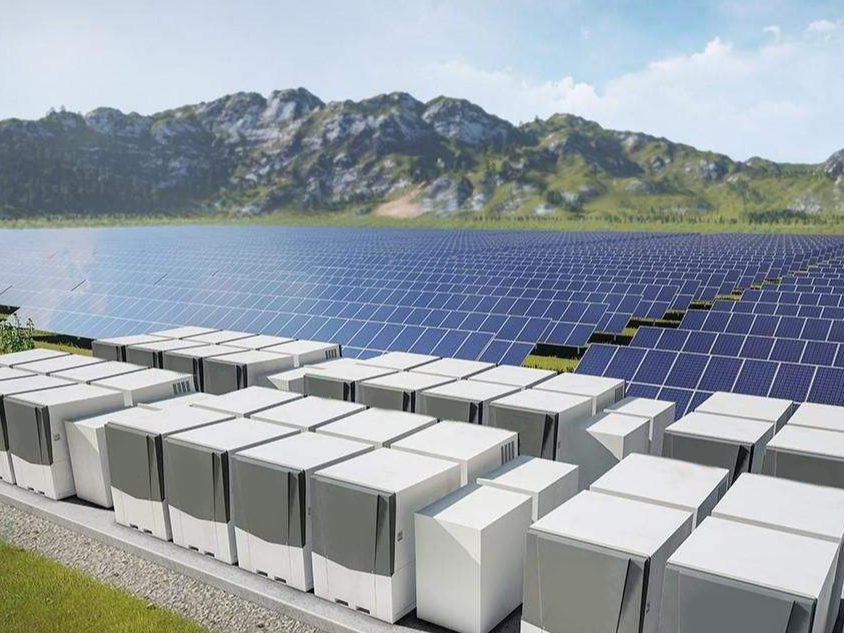
The 2025 semi-annual reports have been released, and although the photovoltaic industry is still generally under pressure, some companies are showing signs of bottoming out and rebounding. Industry differentiation continues to intensify, with leading companies possessing advantages in technology, capital, and channels gradually recovering their performance, while most second- and third-tier companies continue to face operational pressure. Qu Fang, investment advisor at Wanlian Securities, pointed out that the industry is still in a period of deep adjustment, but with further recovery in profitability, companies with technological innovation capabilities are expected to be the first to usher in a cyclical recovery.Early signs of profit improvement emerge, with BC technology leading to differentiated breakthroughs.
Although losses remain the norm in the industry, leading companies such as LONGi Green Energy and AIKO Solar have made progress in profit recovery. The interim report shows that LONGi Green Energy's losses narrowed by more than 50% year-on-year in the first half of the year, with a year-on-year reduction in losses of 60.66% in the second quarter and a sequential improvement of 21.10%. The companyattributes this to the differentiated advantages of BC technology and strict cost control - its BC products are selling well in more than 70 countries and regions around the world, especially in the high-end markets of Europe and Asia-Pacific.Aikang, which is also focused on BC technology, has also achieved a significant reduction in losses, with a year-on-year narrowing of losses by 86.38%, and turned a profit in the second quarter alone, achieving a net profit of 63 million yuan. Its N-type ABC module shipments reached 8.57GW in the first half of the year, a year-on-year increase of over 400%, demonstrating strong market penetration.
Qu Fang said that the current technological iteration is accelerating significantly, especially in the fields of BC, HJT, perovskite, and tandem technologies, and the BC route has entered the stage of mass production.Policy support continues to intensify, and "anti-involution" moves towards substantive governance.
Since July, multiple ministries have taken successive actions to push the photovoltaic industry to bid farewell to low-price, disorderly competition. The Central Financial and Economic Affairs Commission, the Ministry of Industry and Information Technology, the National Development and Reform Commission, and the State Administration for Market Regulation have successively voiced their opinions, proposing to govern vicious competition according to law, promote the withdrawal of backward production capacity, and include photovoltaics in the scope of strict management under the "Price Law," guiding the industry to shift from price wars to value competition.
This series of policy linkages demonstrates the determination of the entire industry to collaboratively govern "involution."Qu Fang believes that future policies are expected to be further refined, driving industry competition to fully shift towards a contest of comprehensive strengths such as technology, cost, and quality.
Reducing costs and increasing efficiency remains the main theme, with leading companies spearheading technological breakthroughs.
Driven by both policy and market forces, leading companies continue to achieve cost reduction and efficiency gains through technological innovation. GCL Technology's granular silicon average cash cost has been reduced to 25.31 yuan/kg, maintaining industry leadership and showing a continuous downward trend; LONGi Green Energy's BC cell R&D efficiency has reached 27.81%, and module efficiency has exceeded 26%, constantly breaking industry records."Only by continuously reducing the cost per kilowatt-hour can we better promote the energy transition," said Ding Bingzhong, partner of Shanghai Jimao Asset Management Co., Ltd. According to data from the National Energy Administration, China has helped reduce the global cost per kilowatt-hour of wind power and photovoltaics by 60% and 80% respectively in the past decade, making important contributions to the green transition.
Although the industry still faces challenges in the short term, with the release of policy effects, continuous technological breakthroughs, and the rise of emerging markets, companies that adhere to long-termism and focus on innovation capabilities are expected to navigate the cycle and continue to lead the global energy transition process. Edited by Xu Shengpeng.
Comment




 Praise
 Collect
 Comment

 Share
Share


Write something~