 Search


- This project provides strategic level infrastructure support for the diversified transformation of the Holy City's economy

The Royal Commission for Mecca and Holy Sites (RCMC) in Saudi Arabia recently issued an invitation to global contractors to initiate early market contacts for the planned four line metro network project in the holy city. The meeting scheduled for September 21st aims to assess industry interest in this multi billion dollar project and solicit feedback on the proposed phased procurement model. According to MEED's previous report, the Mecca Metro project, which had been stalled for over a decade, officially resumed in June this year. The project plan covers 89 stations and 3 vehicle depots, and is expected to be completed in three phases between 2032 and 2045.
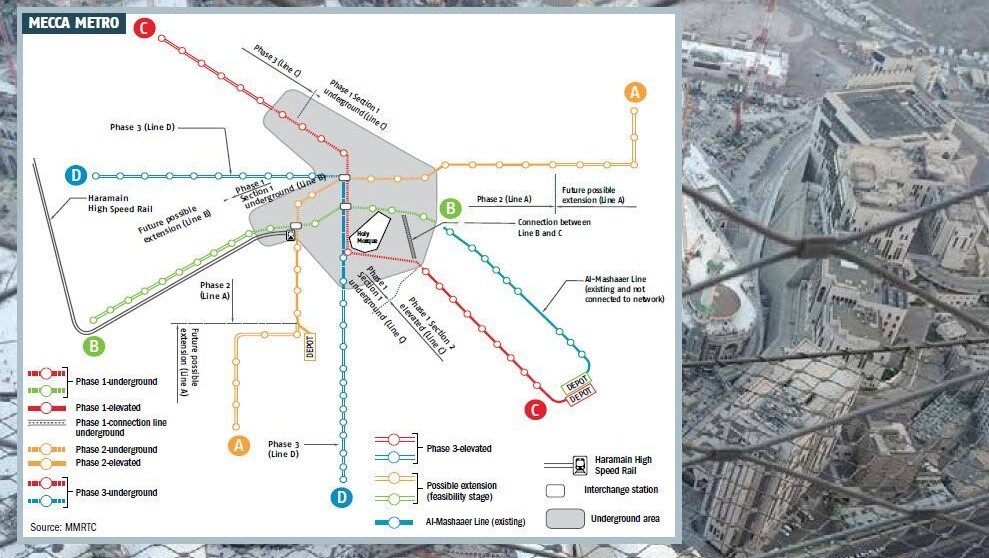
According to the disclosure plan, the first phase of the project will focus on the B and C double lines, connecting the existing Mashaer Pilgrimage Light Rail Line through a 2.4-kilometer tunnel to form a 62 kilometer operational network. The line includes 31 stations (including 3 landmark stations), of which 19.5 kilometers are underground and 41.2 kilometers are elevated. It is expected to be equipped with 66 trains, with an annual capacity of 171 million passengers. The second phase is planned to be put into operation in 2038, expanding the service area to the outskirts of Mecca through a 84.7-kilometer new line. At the same time, the construction of the core sections of lines A and D will be launched, with 45 new stations and 2 vehicle depots added. The expected annual passenger volume is expected to exceed 500 million. The final stage will be completed in 2045, achieving full network connectivity through a 36 kilometer elevated extension line, and increasing the total transportation capacity to 1.2 million passengers per day and 642 million passengers per year.
The project adopts the "Transit Oriented Development" (TOD) model for innovation, planning multiple commercial residential retail complexes along the route, and using land appreciation to support infrastructure investment. The procurement framework is designed for three major sections: civil engineering, TOD development, and operation and maintenance. In the initial stage, the public-private partnership (PPP) mechanism will be explored, and private capital will participate in the investment, construction, and operation of some lines through special purpose entities. RCMC stated that the market consultation results will be announced in early November, but the deterministic bidding is expected to commence 18 months later.
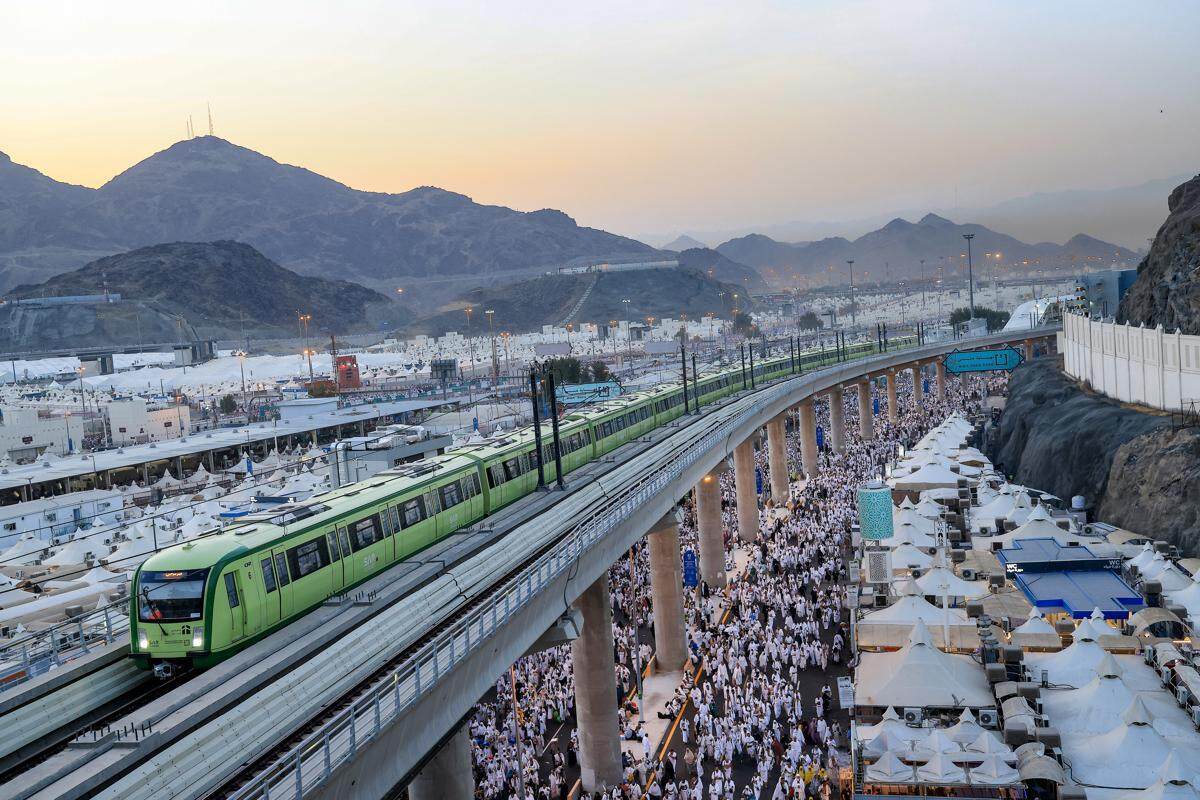
The restart of the Mecca Metro has special strategic value. As the location of Saudi Arabia's first subway (the 18 kilometer Mashaer Line, which was put into operation in 2010), this holy city receives 30 million pilgrims annually, and its transportation system needs to transport over 2 million people within just 7 days of the pilgrimage period. The successful operation of existing lines has verified the sustainability of market demand and provided a risk hedging foundation for the PPP model. The project planning particularly emphasizes the interface reservation with the Saudi Arabia Land Bridge Railway, highlighting its pivotal position in the national comprehensive transportation strategy.
From the first project proposal of the Mecca Mass Transit Corporation (MMRTC) in 2013 to the twists and turns of funding shortages and land acquisition disputes, this holy city transportation lifeline project has finally achieved breakthrough progress. Its phased implementation strategy not only alleviates fiscal pressure, but also leaves a window for technological innovation.Editor/Cheng Liting
Comment


 Praise
 Collect
 Comment

 Share
Share


Write something~