 Search


- Multiple bridge projects in Finland are actively advancing, providing strong support for future economic development

In Finland, the renovation and reconstruction projects of multiple bridges are becoming the focus of transportation construction, which is crucial for improving the efficiency and carrying capacity of local transportation operations.
The demolition and replacement of a bridge connection on the important circular road in Helsinki, the capital of Finland, is currently delayed. The existing bridge located on the Chuantikulila side of the circular road is no longer able to meet the current transportation needs, and the replacement work is very urgent. The project is planned by the Finnish Transport Infrastructure Agency (FTIA) and is expected to require an investment of 34 million euros to replace the bridge, but the necessary funds have not yet been secured.
The construction of the Tataranyoki Bridge on Highway 2, which connects the city of Poli on the west coast with the capital Helsinki, is proceeding in an orderly manner. To ensure construction safety and progress, speed limit measures have been implemented for the existing structure, and pile driving work for the new bridge support structure is about to begin. The demolition of the old bridge is scheduled for the future. This project is expected to be completed by mid-2026 as part of the Nagira Interchange Upgrade Project on Highway 2.
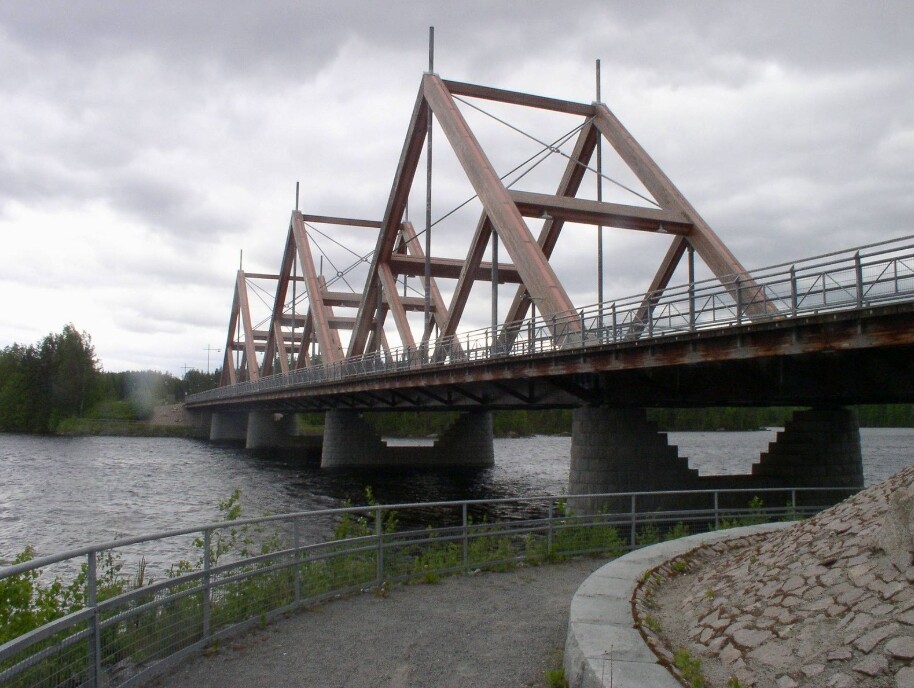
The town of Liska, located in eastern Finland near the Russian border, has also received good news for bridge construction. A new bridge spanning the Lixianjoki River and carrying Highway 73 is about to be completed. The replacement project of the bridge is undertaken by Kreate0y company, and the contract includes the demolition of the existing bridge and replacement with a new structure. The project cost is 5.4 million euros and is expected to be completed by the end of 2026.
The existing arched concrete bridge to be replaced this time was built in the 1930s, and its condition has deteriorated over the past decade. During this period, only pedestrians and cyclists were allowed to pass, and vehicles were prohibited from passing. The new bridge is 114 meters long and adopts a tensioned concrete beam structure, with a more spacious bridge deck and facilities specifically designed for pedestrians and cyclists. Compared with the old bridge, the new bridge adopts a more durable pile foundation support design, which can withstand heavier traffic loads. At the same time, corresponding measures have been designed to deal with the possible serious flood situations in the area. At present, the project has been approved by the Finnish Transport and Communications Authority. Editor/Cheng Liting
Comment





 Praise
 Collect
 Comment

 Share
Share


Write something~