 Search


- This project provides a dual solution for congestion control and zero carbon transformation in EU cross-border transportation corridors

Against the backdrop of accelerated European transportation integration, the Flemish government of Belgium recently officially approved the first phase of the Limburg Province North South Connection Project worth 1.4 billion euros, marking the countdown to the construction of this strategic transportation corridor spanning the two major economic zones of Eindhoven and Hasselt. As a key node of the EU TEN-T core network, the project is scheduled to start construction in 2027, aiming to build a safe, efficient, and sustainable integrated transportation system for the eastern region of Belgium through road upgrades, tunnel construction, and multimodal transport optimization.
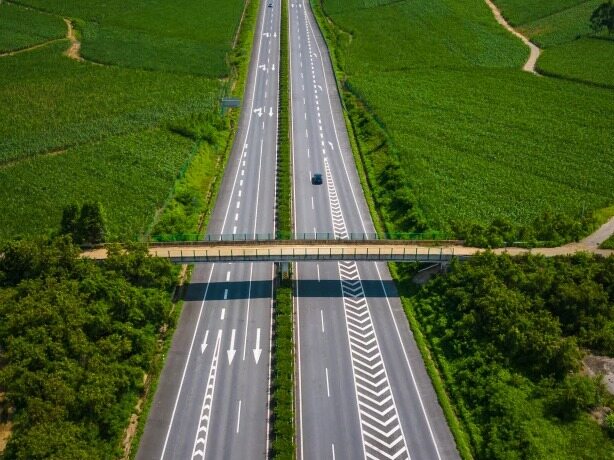
The core project of this project includes the upgrading of a total length of 8.8 kilometers of roads, with a focus on the renovation of the Nord Zede intersection (N74/N715) - a vital thoroughfare connecting Hasselt and Eindhoven, which currently faces long-term traffic congestion and safety hazards due to its location in the city of Hutaren Herckeren. The design scheme innovatively introduces vehicle traffic underground and builds two parallel tunnels with a total length of 3.2 kilometers, freeing up surface space for urban development. At the same time, the project will build a new E314 expressway connection line, 5 river crossing bridges, and 17 kilometers of continuous bicycle lanes, forming a three-dimensional traffic pattern of underground motor vehicle traffic and surface priority for non motor vehicles.
As a practical implementation of the EU's green transportation strategy, this project has achieved a leap in transportation efficiency through three major innovations: firstly, the tunnel project adopts BIM modeling and intelligent ventilation system, reducing the impact on residents by 40% during the construction period; Secondly, the bicycle lane is designed according to the highest standards of the European Union (EN 13849), equipped with night lighting and intelligent monitoring systems to ensure safe passage throughout the year; Thirdly, after the reconstruction of the intersection, the coverage of bus priority signals will be increased to 85%, which is expected to shorten the travel time of public transportation by 25%. According to simulations by the Flemish Transport Authority, the traffic accident rate in the area is expected to decrease by 30% after the completion of the project, with an annual reduction of 12000 tons of carbon dioxide emissions.
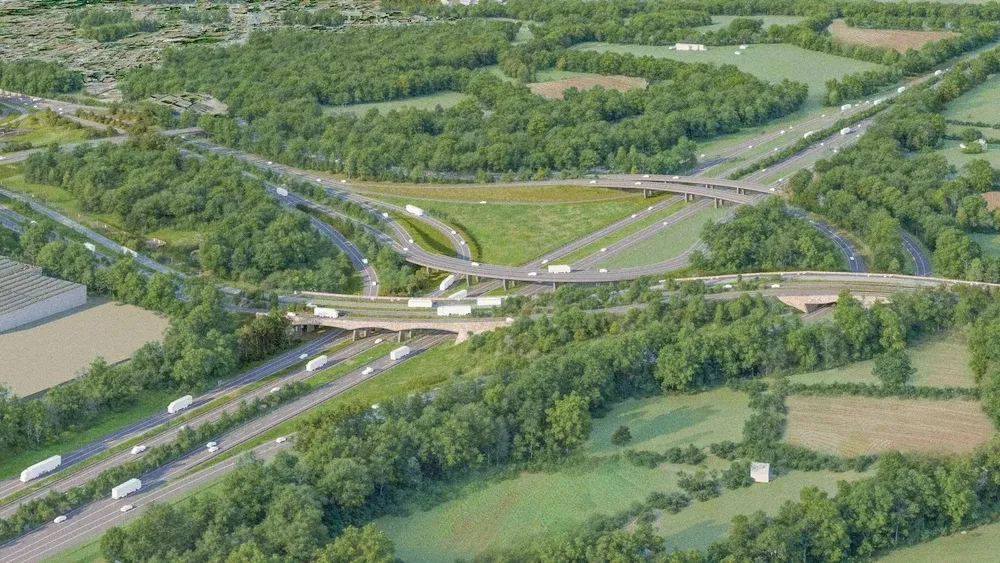
The project design is led by international engineering consulting giant Tractebel, whose team conducted stress tests on 12 traffic scenarios using digital twin technology and ultimately determined a dual tunnel+layered traffic plan. This plan not only solves the problem of daily traffic congestion of 40000 vehicles at the Nord Zede intersection, but also creates 28 hectares of undeveloped land for the city of Hutaren Herckerten through the release of surface space, providing key support for urban transformation. Keywords: International Engineering Construction, Foreign Engineering Construction News
From intelligent excavation of underground tunnels to ecological reconstruction of surface space, the Limburg Province North South Connection Project is reshaping the economic and geographical pattern of eastern Belgium with the dual drive of transportation upgrading and urban renewal. As a demonstration project of the EU TEN-T network in Low Countries, this project not only provides a triple solution of safety, efficiency, and sustainability for cross regional transportation infrastructure construction, but also indicates a new stage of European transportation investment shifting from single channel expansion to system resilience improvement in the post pandemic era. As the bell for the start of construction in 2027 approaches, this underground artery that connects the north and south will become a vivid footnote to Belgium's practice of green transformation.Editor/Cheng Liting
Comment

 Praise
 Collect
 Comment

 Share
Share


Write something~