 Search


- And lithium battery companies have become the core players in this competition with their technological accumulation in manufacturing
- The commercialization of humanoid robots first requires breaking through the application bottleneck of high-precision manufacturing scenarios
When AI technology is deeply integrated with intelligent manufacturing, humanoid robots are moving from laboratories to industrial landing, and this blue ocean track of over 10 trillion yuan is giving birth to a disruptive change in the power battery industry. Lithium battery giants represented by CATL and EVE Energy, together with robotics pioneers such as Tesla and Yushu Technology, are fiercely competing around specialized batteries with high energy density, long endurance, and high safety. A cross-border competition between new energy and artificial intelligence is fully underway.
Lithium battery faucet anchoring humanoid robot manufacturing scene
The commercialization of humanoid robots first requires breaking through the application bottleneck of high-precision manufacturing scenarios, and lithium battery companies have become the core players in this competition with their technological accumulation in the manufacturing end.
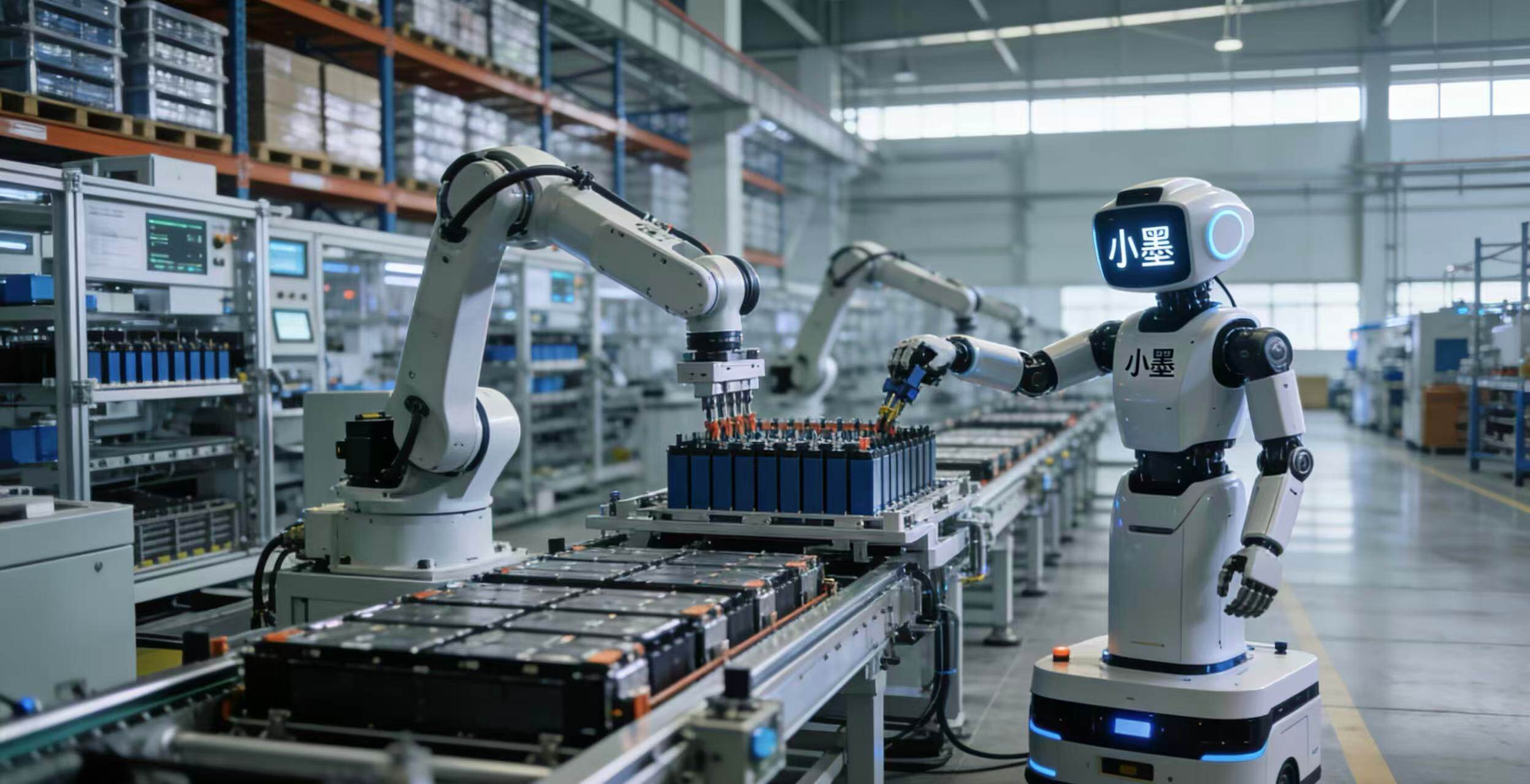
At the end of 2025, the Ningde Times Zhongzhou Base received a heavyweight news - the world's first large-scale power battery PACK production line for humanoid embodied intelligent robots was officially put into operation. The robot "Xiaomo" developed by its ecological enterprise Qianxun Intelligent is equipped with Ningde Times' self-developed batteries, which can accurately complete fine operations such as battery connector insertion, marking the formal formation of the intelligent manufacturing closed loop of "robot made batteries". It is worth noting that CATL previously led a financing of 1.1 billion yuan for Galaxy General Motors, which completed a new round of financing of over 300 million US dollars by the end of 2025, with a valuation soaring to 3 billion US dollars, setting a new record for single round financing in the field of embodied intelligent humanoid robots in China. Behind this is CATL's strategic consideration for the deployment of core robot technology.
Coincidentally, EVE Energy is driving industrial upgrading with a dual engine of "robot+generative AI", and the "EVE Sodium Energy Headquarters and Jinyuan Robot AI Center" project started simultaneously. This research and development base with a planned area of approximately 50000 square meters covers the entire process of "research and development trial production pilot testing final assembly skill training", aiming at the ultimate goal of "robots making batteries for robots", aiming to break down barriers to human-machine collaboration and build intelligent solutions for full stack scenarios. The strong entry of the two major lithium battery leaders not only solves the pain points of labor shortage and lack of process consistency in their own manufacturing end, but also lays a solid energy foundation for the large-scale production of humanoid robots.
The key leap from technology demonstration to order verification
In 2025, it can be regarded as the "watershed" of the global humanoid robot industry - the industry officially enters the "productization and order verification period" from the "technology demonstration period", and the market heat and commercialization process are growing exponentially.
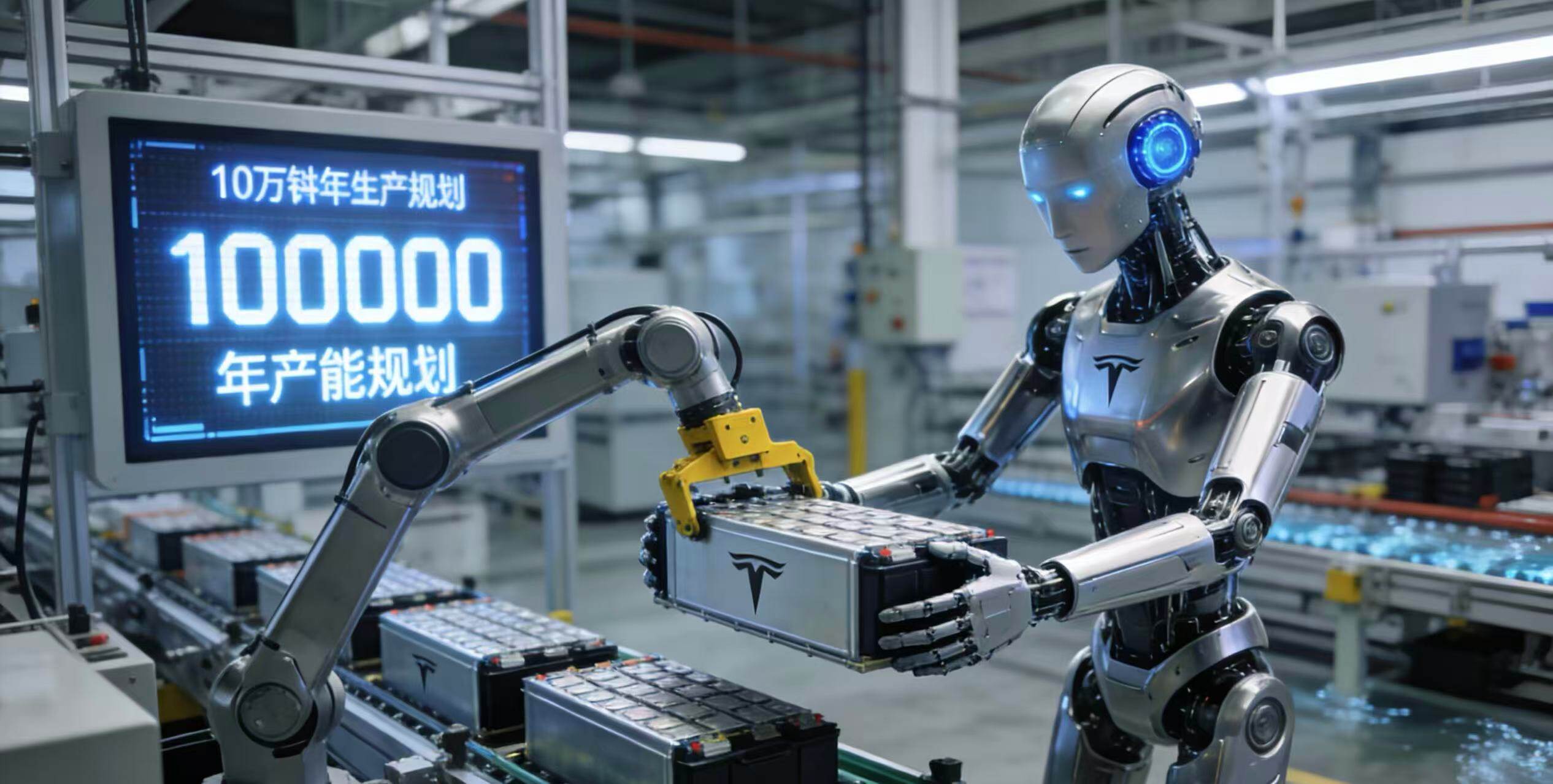
The car company camp is the first to sound the charge. Tesla CEO Musk bluntly stated that in the future, the humanoid robot business will account for 80% of Tesla's value. Its third-generation Optimus robot is planned to be launched in 2026, with a long-term production capacity target of producing 1 million units per year; Xiaopeng Motors' new humanoid robot IRON is equipped with three Turing AI chips and an all solid state battery, stunning the market with its anthropomorphic walking posture and interactive capabilities; Hyundai Motor is investing 50 trillion Korean won in the AI field and plans to build a robot manufacturing factory with an annual production capacity of 30000 units in the United States. Its acquisition of Atlas robots from Boston Dynamics has become the strongest competitor to Tesla Optimus.
Professional robot manufacturers are also unwilling to be outdone. Yushu Technology H1 bipedal robot completes high difficulty movements such as backflips, and the Yangge performance on the Spring Festival Gala stage is even more eye-catching; The 5000th universal embodied robot of Zhiyuan AGIBOT has been produced and exported to more than 30 countries in Europe, America, and Southeast Asia; The Zhongqing T800 humanoid robot starts at 180000 yuan and is equipped with the industry's first dedicated high-performance solid-state battery, which can achieve a stable range of 4-5 hours and meet high-intensity operational needs. According to UBS Group's prediction, the global market size of humanoid robots will reach $30-50 billion by 2035, and is expected to exceed $1.4-1.7 trillion by 2050, fully opening up the imagination space of the trillion dollar track.
Power battery becomes the key to breakthrough for humanoid robots
The industrialization process of humanoid robots cannot avoid the core bottleneck of power batteries. Compared to consumer electronics and new energy vehicle batteries, humanoid robots have strict performance requirements for batteries: they not only need to meet the needs of long endurance, small size, and high rate discharge, but also need to adapt to a wide temperature range of -20 ℃ to 60 ℃, with over 1000 cycles and a capacity retention rate of not less than 80%.
The current mainstream battery solutions are still unable to meet the demand. Taking Tesla Optimus as an example, its 52V, 2.3kWh battery can only support 2-4 hours of exercise, making it difficult to support high-intensity, high-frequency work scenarios. This pain point is driving power battery companies to accelerate technological iteration. BAK Battery launches RoPower series dedicated kinetic energy solution, accurately matching the power requirements of humanoid robots; Xinwangda has established a specialized research and development team, focusing on high-energy density batteries and customized solutions to improve space utilization and power stability; Azure Lithium ion directly enters the supply chain to supply lithium battery products for Yushu Technology's robotic dogs and humanoid robots.
Among numerous technological routes, all solid state batteries are regarded as the ultimate direction to break through. Yiwei Lithium Energy's "Longquan-2" all solid state battery has been successfully produced, with an energy density of 300Wh/kg and a volumetric energy density of 700Wh/L; Funeng Technology's first generation humanoid robot uses all solid state batteries to deliver samples to leading enterprises; Enli Power's all solid state batteries have entered the pilot stage, with a cumulative shipment of over 2 million semi-solid state cells. All solid state batteries, with their advantages of high energy density, high safety, and long cycle life, will clear the last hurdle for the large-scale commercialization of humanoid robots.
Dual opportunities of technological iteration and market expansion
The popularization of humanoid robots will bring unprecedented growth space to the power battery industry. According to industry insiders' calculations, the global shipment of humanoid robots will reach 5 million units by 2030, and the corresponding demand for lithium batteries will soar to 50G-80GWh. This incremental market will become a new growth pole for lithium battery companies.
At the same time, this industrial transformation will also drive the evolution of power battery technology towards higher dimensions. The demand for miniaturization, lightweighting, and intelligence of batteries in humanoid robots will force companies to develop more advanced material systems and manufacturing processes, and these technological breakthroughs will feed back into fields such as new energy vehicles and consumer electronics, forming cross industry technology spillover effects.
Under the temptation of the trillion dollar race track, technology, capital, and talent are accelerating towards the intersection of humanoid robots and power batteries. This industrial revolution driven by AI and new energy will not only reshape the competitive landscape of global intelligent manufacturing, but also have a profound impact on the production and lifestyle of human society.Editor/Bian Wenjun
Comment




 Praise
 Collect
 Comment

 Share
Share


Write something~