 Search


- China's forklift sales reached 1.4518 million units, breaking historical records for three consecutive years
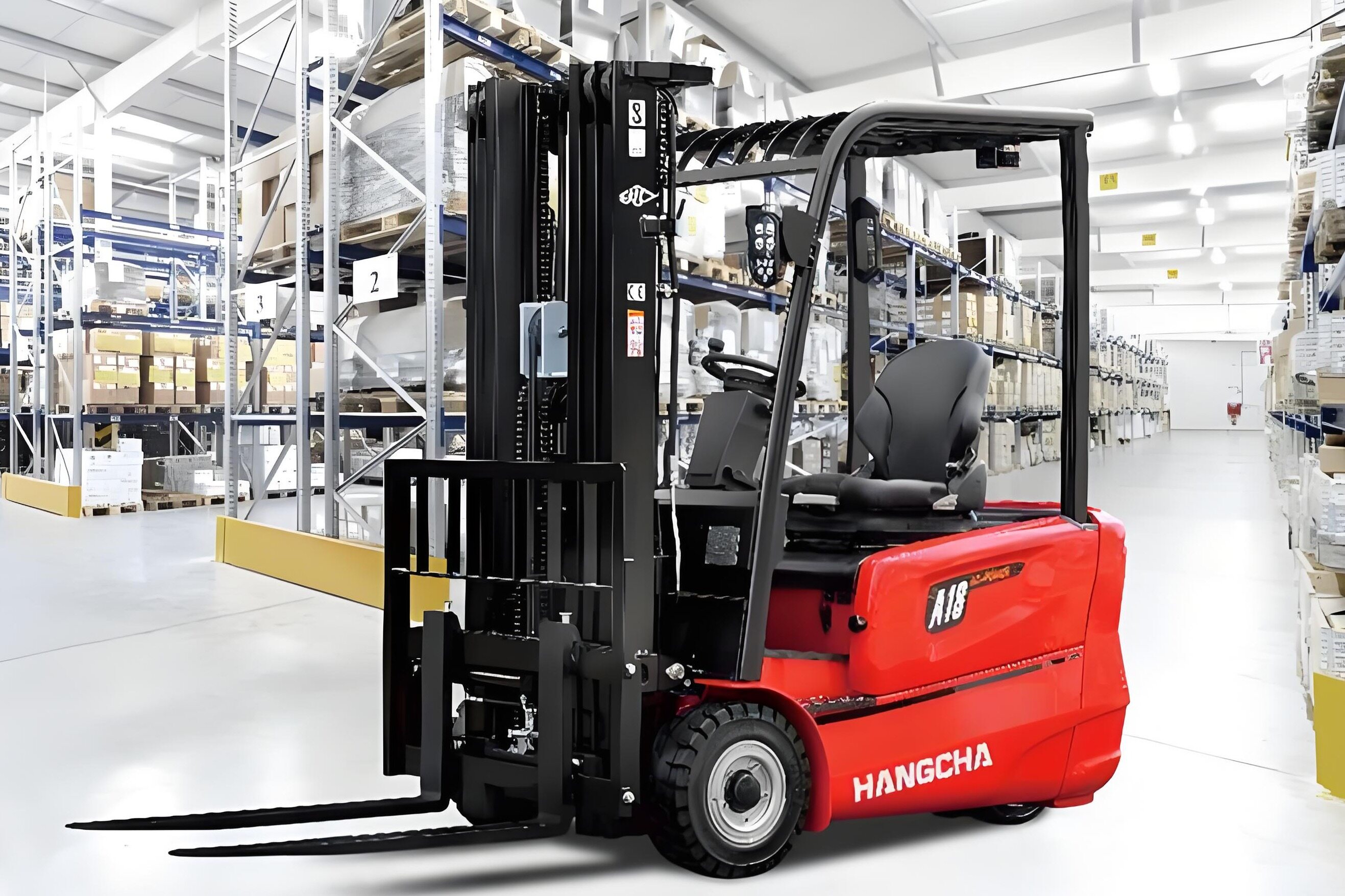
At the beginning of 2026, the China Construction Machinery Industry Association released annual data, revealing the milestone achievements of China's industrial vehicle industry in 2025. In the past year, the Chinese forklift market has sold a total of 1.4518 million industrial vehicles of various types, a year-on-year increase of 12.9%, setting a new historical sales record for the third consecutive year. This not only marks China's stable position as the world's largest forklift production and sales country, but also symbolizes the profound transformation of the entire industry from simple scale expansion to quality leap, from local cultivation to high-quality overseas expansion. Against the backdrop of the accelerated evolution of global industries towards greenization and intelligence, the Chinese forklift industry is reshaping the global industrial competition landscape with its strong manufacturing capabilities, rapid technological iteration, and keen market insights, adding vivid footnotes to the high-quality development of Chinese manufacturing.
Dual wheel drive is required both internally and externally, with deep structural optimization
The strong performance of China's forklift market in 2025 is attributed to the coordinated efforts of both domestic and international markets. In the domestic market, sales of 906800 units were achieved throughout the year, a year-on-year increase of 12.6%. Behind this is the strong endogenous driving force brought about by the sustained recovery and upgrading of the manufacturing industry. In December 2025, the manufacturing PMI new order index returned to the expansion range, reaching 50.8%, indicating a sustained demand for forklift equipment due to production line automation and lean production. At the same time, the explosive growth of modern logistics formats such as e-commerce, cold chain, and express delivery has spurred the demand for special equipment such as high-level forklifts and narrow aisle forklifts. The cost reduction brought about by equipment update policies and the maturity of lithium battery technology has effectively stimulated the replacement and upgrading of existing equipment. The total social logistics volume maintained a steady growth of 5% throughout the year, confirming the close linkage between forklift demand and macroeconomic factors.
The international market has become another major growth engine. In 2025, the export volume of forklifts in China reached 545000 units, a year-on-year increase of 13.4%, setting a new historical export record for the same period for 22 consecutive months. In the past decade, China's forklift exports have achieved a leap from 92000 units to 545000 units, with a growth rate of 492% and a compound annual growth rate of 19.47%. This is due to the significant global competitiveness of domestic forklifts in lithium battery technology, cost control, delivery cycles, and other aspects. In 2025, exports to Europe and Asia achieved significant growth of 36% and 23.88% respectively. More importantly, the export product structure continues to upgrade, with electric forklifts accounting for 78.81% of the total export volume, which precisely meets the urgent needs of global green transformation and demonstrates China's international discourse power in manufacturing.
Electric and intelligent leading, reshaping the industrial landscape
The most significant structural change in the industry in 2025 is the comprehensive rise of electric pedestrian storage vehicles (Class III), becoming the "hidden champion" of the market. The sales volume of this type of vehicle reached about 866600 units, accounting for 59.7% of the total sales volume, and its proportion in the total export volume reached 62.2%. In contrast, the growth rate of traditional forklifts without storage vehicles is only 5.46%, far below the industry average. This trend clearly indicates that lightweight, high-efficiency, and electrified warehousing equipment has become the absolute mainstream in the market, and is also driving Chinese enterprises to accelerate their transformation from traditional "equipment suppliers" to "intelligent logistics solution providers" in the global supply chain.
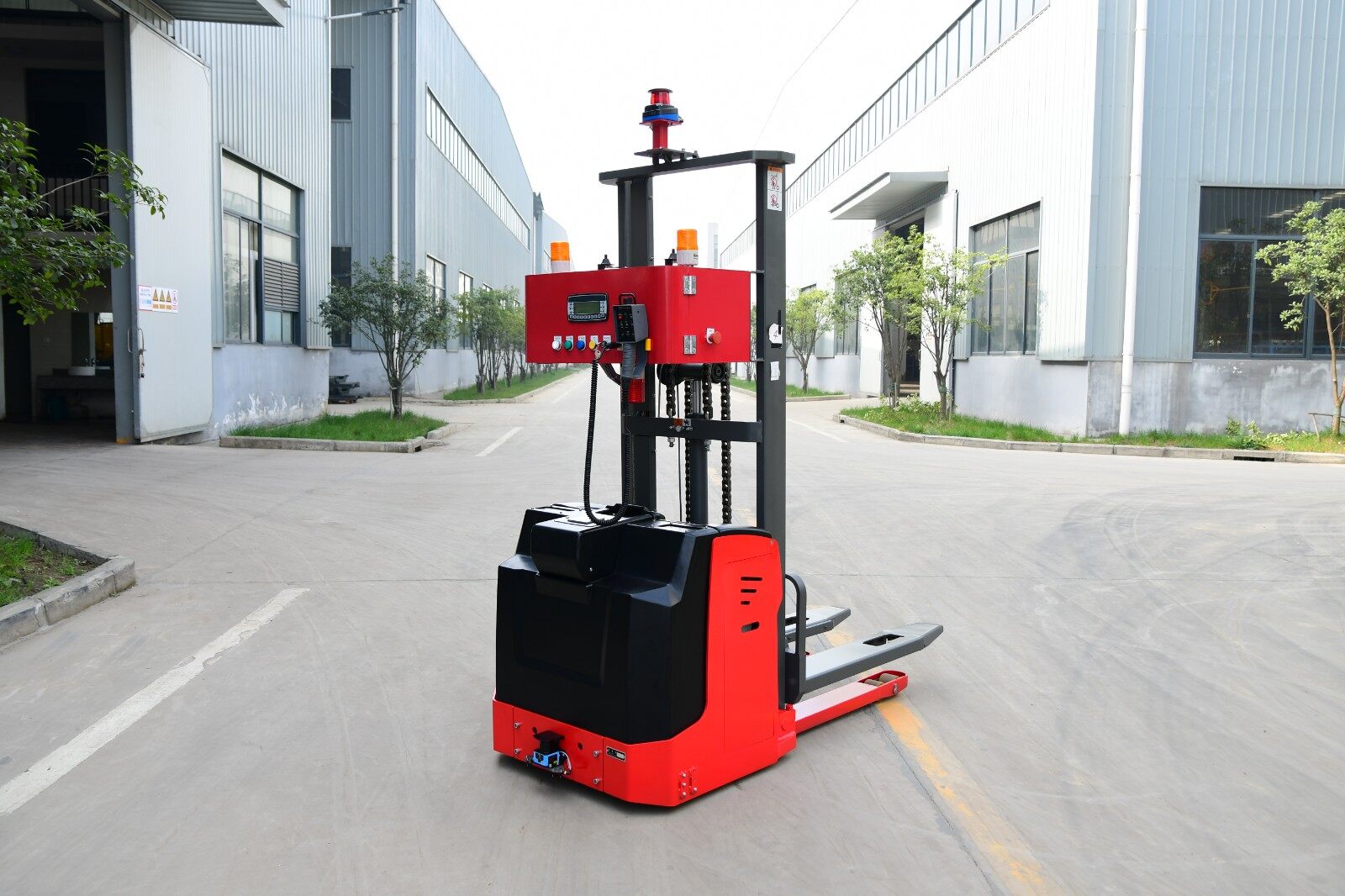
At the same time, the process of industry intelligence has reached a critical turning point. By 2025, the sales of autonomous forklift (AGV/AMR) will exceed 25000 units, with a penetration rate of 1.9%. Empowered by artificial intelligence technology, unmanned forklifts are rapidly moving from the past "pilot application" stage to a new stage of "large-scale deployment". Looking back at the period from 2019 to 2023, the compound annual growth rate of global unmanned forklift sales reached 52%, indicating the surging power of the intelligent wave. In terms of power systems, the process of replacing internal combustion engines with lithium batteries continues to accelerate. The penetration rate of lithium batteries in electric forklifts has reached 47.4%, and the cost curve continues to decline, providing economic feasibility for comprehensive replacement. According to data from international analysis firm Interact Analysis, China has taken the lead in achieving a key turning point of 50% lithium battery penetration rate for electric walking storage vehicles in major global markets, and is leading in the field of electric balance weight forklifts in sync with North America and Europe. This marks that China is not only the world's largest market, but also an important leader in the iteration of electrification technology and standard setting.
Profit model transformation, looking forward to future growth
The market practice in 2025 has brought profound enlightenment and foreshadowed a new direction for the future development of the industry. Firstly, there is a fundamental change in the profit model. With the popularization of electrification and intelligence, the industry is transforming from a single hardware sales model to a comprehensive profit model of "equipment sales+full lifecycle services+energy management". The aftermarket services brought by lithium battery forklifts, such as battery leasing, cascading utilization, intelligent operation and maintenance, are becoming a new profit growth point for enterprises.
Secondly, there is a trend towards high-end export structure. Despite a slight year-on-year decrease of 5.17% in domestic sales in December 2025, exports still maintained a growth rate of 7.97%. This indicates that overseas markets, especially developed economies, have an increasingly strong demand for high-end electric and intelligent forklifts, which is effectively driving Chinese enterprises to break away from the past "cost-effectiveness" label and move towards a new stage of relying on technological innovation and brand value to obtain "technology premium". Keywords: Macro News Network, Macro News Information
Looking ahead to 2026, the growth momentum of China's forklift market is expected to continue. In the domestic market, the new orders index of the manufacturing industry has rebounded to the expansion range, coupled with the continuous efforts of equipment renewal policies, providing support for demand. In terms of overseas markets, the infrastructure construction and manufacturing transfer of emerging economies such as Southeast Asia, the Middle East, and Africa will bring sustained incremental demand. In terms of product structure, high-end and intelligent products such as electric walking storage trucks, unmanned forklifts, and heavy-duty lithium-ion forklifts will continue to lead the growth. Multiple securities firms have analyzed that the forklift industry has a clear growth logic driven by the dual wheels of "high-quality overseas" and "intelligent logistics solutions". By deepening their global layout, leading enterprises have broad potential to increase the share of their high value-added vehicle models in overseas markets. From 320000 units ten years ago to 1.45 million units today, the Chinese forklift industry has completed a wonderful leap from "following" to "leading", and its development trajectory is a vivid reflection of China's manufacturing industry's transformation and upgrading towards the high-end of the global value chain.Editor/Gao Xue
Comment

 Praise
 Collect
 Comment

 Share
Share


Write something~