 Search


- At one point, green electricity went from selling for 40 to 50 cents to selling for 11 yuan through AI computing power.
- Electricity cannot cross borders, but computing power can. When Qinghai photovoltaics are converted into tokens and cross the Pacific
Late at night in San Francisco, a developer typed a line of code and asked an AI assistant a question. Request to cross the Pacific submarine cable and arrive at the data center in China. At this moment, photovoltaic power in Qinghai, wind power in Gansu, and hydropower in Yunnan are converted into computing power, generating codes and answers, and then traveling thousands of miles back to the United States. The whole process only takes one or two seconds.
Electricity has never left China's power grid. But the value of electricity is consumed globally through a digital carrier called Token. In February 2026, OpenRouter released data showing that the top ten models on the platform consumed approximately 8.7 trillion tokens per week, with Chinese models accounting for 5.3 trillion, or 61%. This means that China's new energy is finding a completely new export - not through the power grid, but through a never-ending 'digital grid'.
The value transition from 45 cents to 11 yuan
Many people believe that the biggest challenge for China's new energy is consumption. According to the data from the National New Energy Consumption Monitoring and Early Warning Center, in 2025, the utilization rate of photovoltaic power generation in Qinghai, Xizang, Xinjiang and Gansu will fall below 90%, of which the utilization rate of photovoltaic power in Xizang is only 64.9%, and the utilization rate of wind power is 68.6%. A large amount of clean electricity has been generated but not used.
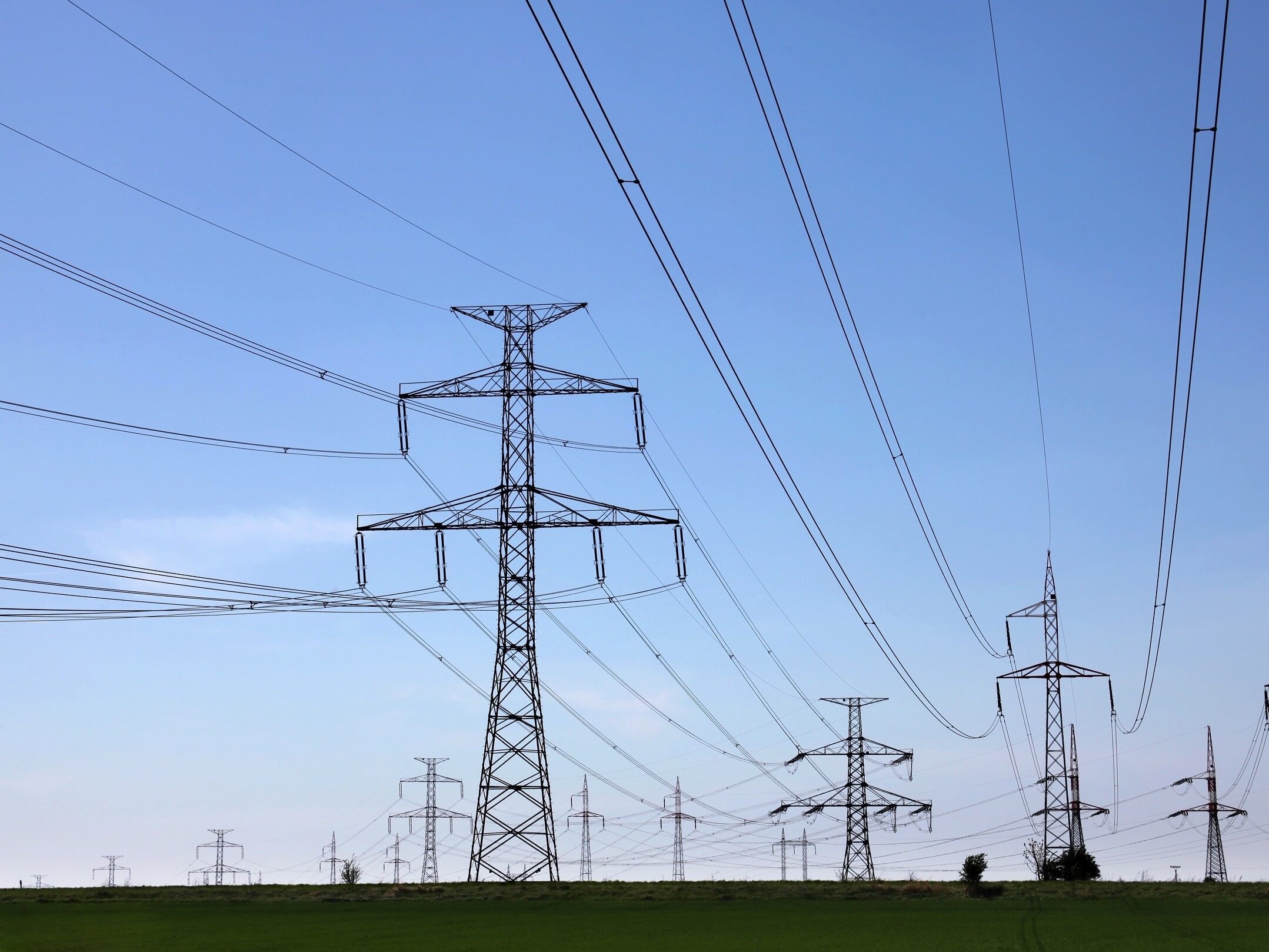
Traditionally, electricity is difficult to export. It cannot be stored like oil, cannot be packed and transported like commodities, and must be transported in real-time through the power grid. Even though China has the world's largest power grid system and leading ultra-high voltage technology, during the 13th Five Year Plan period, Yunnan was connected to Vietnam, Myanmar, and Laos through 21 transmission lines, and the cumulative cross-border transaction electricity was only 17.6 billion kilowatt hours - less than the annual electricity consumption of a medium-sized city. But AI computing power is changing the rules of this game.
One degree of electricity is equivalent to approximately 3.6 million joules. In the AI inference scenario, generating a Token from a NVIDIA GPU consumes approximately 0.39 joules. Considering factors such as heat dissipation and network loss, it is conservatively estimated that one kilowatt hour of electricity can generate approximately 5.5 million tokens. Based on the price of approximately 2 yuan per 1 million tokens for the Chinese model DeepSeek, 5.5 million tokens can be sold for 11 yuan. However, selling electricity directly once cost only four to five cents.
This' deep processing of electricity 'model is not new. Producing 1 ton of electrolytic aluminum requires approximately 13500 kWh of electricity, with an increase in electricity value of about 3 to 5 times; Producing 1 ton of polycrystalline silicon requires approximately 57000 kWh of electricity, with a value increase of about 2 times. And AI computing power has directly increased the value-added ratio to over 20 times.
Replace power flow with data flow
When the demand for AI computing power explodes, a new concept is increasingly being proposed: computing power collaboration.
The logic of the power system in the past was to 'deliver electricity wherever it is needed', for which China has built the world's largest ultra-high voltage network. But in the era of AI, a new idea has emerged: replacing the flow of electricity with the flow of data.
What if Qinghai experiences a surge in wind and solar power generation today, while Inner Mongolia happens to be cloudy with no wind but has a high demand for computing power? The idea of collaborative computing is to send data to Qinghai for computation, rather than using ultra-high voltage to send electricity to Inner Mongolia. The cost of data transmission is much lower than that of power transmission.
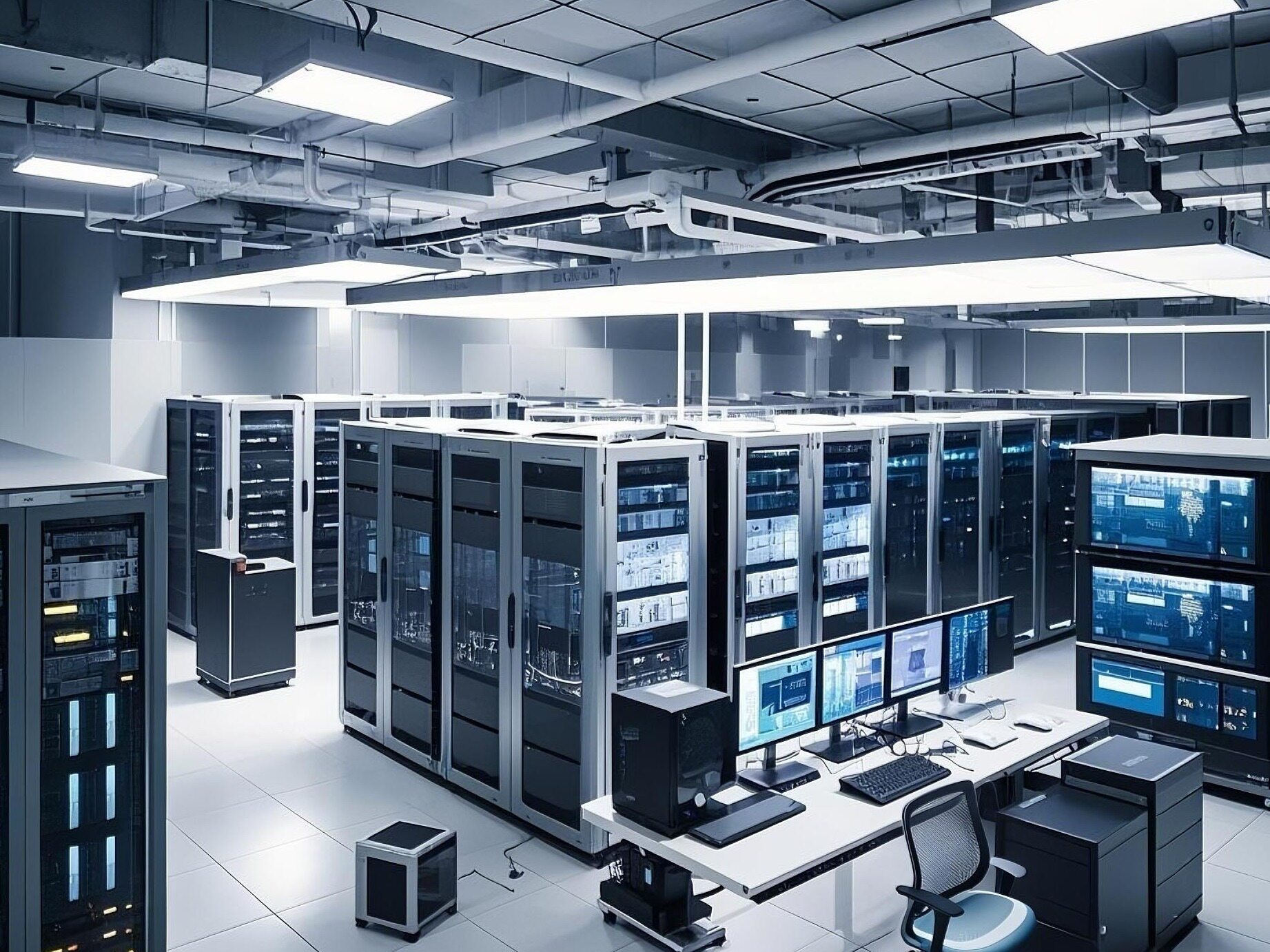
In 2022, China will launch the construction of eight national computing power hub nodes, which not only include the Beijing Tianjin Hebei, Yangtze River Delta, and Guangdong Hong Kong Macao Greater Bay Area, but also include regions with extremely rich scenic resources such as Inner Mongolia, Gansu, and Ningxia. In the layout of the national integrated big data center system, the computing power center is playing a new role: super adjustable load.
When there is a lot of new energy generation in the local area, the computing power center operates at full capacity; When there is a shortage of local new energy, the computational load decreases. This is an important component of the future new power system and a true 'super container' for the consumption of new energy.
Why does China seize the "digital power" track
Since AI computing power is so profitable, competition is bound to be fierce. China's advantage in this competition stems from three of the world's strongest capabilities.
The first is electricity. By 2025, the national industrial power generation above designated size will reach 9715.9 billion kilowatt hours, ranking first in the world in terms of new energy installed capacity. At present, green electricity accounts for nearly 40% of China's total electricity consumption, with nearly 4 out of every 10 kilowatt hours used being green electricity. This gives China the most competitive cost of green electricity in the world. The second is computing infrastructure. The East West Computing Project is building the world's largest computing power network. There is a lot of data in the east and electricity in the west, so sending data to the west for computing - Qinghai, Gansu, and Inner Mongolia are becoming important bases for China's computing infrastructure. The third is engineering capability. All the major Internet manufacturers in China have entered the big model track. The result of extreme introspection is that the AI price is extremely low, but the efficiency is getting higher and higher. This is almost the same as the path of Made in China to the sea: scale plus internal volume plus low cost.
In the 19th century, the British Empire laid submarine cables, and whoever controlled the cables controlled the trade. In the 20th century, the United States established the Internet, and whoever controls the platform controls the digital economy. Today, China is laying out a new network: the AI computing power network. The AI requests sent by global developers every day cross submarine cables and arrive at data centers in China. Electricity is consumed here, tokens are generated here, and then flow globally.
In the statistical data, China does not export electricity. But in reality, China's green electricity is being consumed globally in a new way. If in the past China exported toys, household appliances, and photovoltaic panels, then in the future, China may export smart products. Behind each token, there is once China's electricity hidden. When billions of developers make countless requests every day, China's new energy has found a brand new export - not through the power grid, not through ports, but through a truly "digital grid". Editor/Yang Beihua
Comment


 Praise
 Collect
 Comment

 Share
Share


Write something~