 Search


- On April 15, 2026, Chairman Dai Houliang of PetroChina paid a visit to Deputy Prime Minister Agazanov of Turkmenistan in Ashgabat
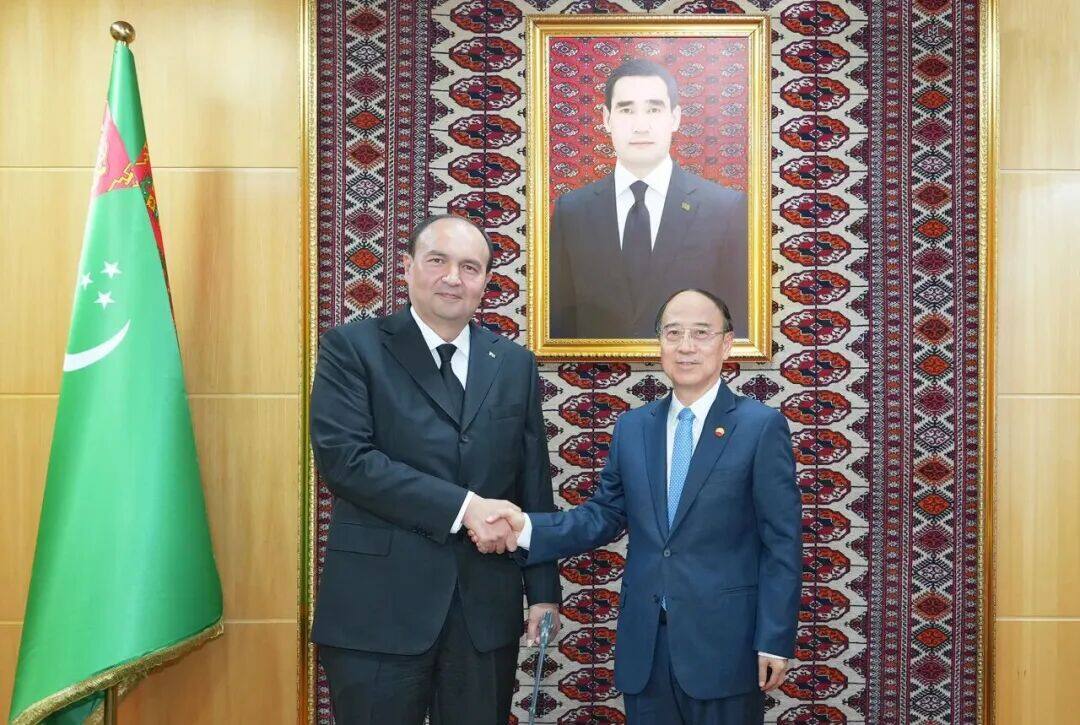
In April in Ashgabat, there is already a hint of warmth in the air. In this' city of white marble ', a dialogue about the future of energy between the two countries is unfolding. On April 15, 2026, Chairman Dai Houliang of China National Petroleum Corporation paid a special visit to Deputy Prime Minister Agazanov of Turkmenistan, marking the third high-level interaction between the two sides within six months after their two meetings in Beijing in March of this year.
During the meeting, Agazanov reviewed the achievements made by both sides in the construction of natural gas pipelines and the development of projects on the right bank of the Amu Darya River over the past 20 years, stating that "after 20 years of cooperation, we have laid not only pipelines, but also the path of friendship and development. Dai Houliang stated that PetroChina will continue to implement the consensus reached by the two heads of state and promote deeper and more practical cooperation.
Behind the frequent high-level exchanges is the real need for the deepening of China Turkmenistan energy cooperation, and it is also a vivid manifestation of the continuous connection between the the Belt and Road Initiative and Turkmenistan's strategy of "Revitalizing the Silk Road". The consensus reached at this meeting is closely linked to the recent implementation of multiple heavyweight projects, injecting new core momentum into energy cooperation between the two countries.
Breakthrough in the development of 27 trillion cubic meters of reserves
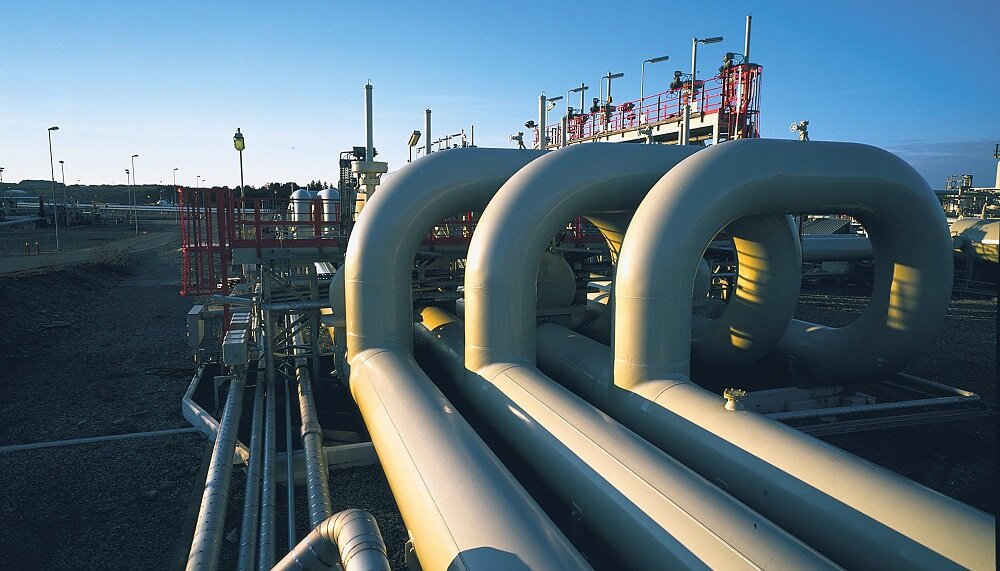
The Galjinesh gas field, located in the southeastern part of the Karakum Desert, covers an area of over 5000 square kilometers, equivalent to the size of 7 Singapore. The proven natural gas reserves here are as high as 27.4 trillion cubic meters, accounting for nearly one tenth of the world's proven reserves, making it the second largest gas field on the world's continent.
However, the development of this' energy treasure trove 'is not an easy task. The complex geological conditions of high pressure, high yield, and high sulfur content have posed long-term technical challenges for the development of some areas. Now, this challenge will be solved by the Chinese team - Turkmenistan has awarded the fourth phase development rights of the Galkynysh gas field to PetroChina.
According to the cooperation agreement, PetroChina will be fully responsible for the design and construction of the gas field treatment plant, as well as the entire process of drilling and production wells. After the project is completed, it will achieve the goal of producing 10 billion cubic meters of commercial gas annually, which is equivalent to about 3% of China's natural gas consumption in 2023. These clean energy sources will be transported to China through pipelines, providing a stable upstream gas source guarantee for the Central Asian natural gas pipeline D line.
Gas transmission capacity will increase by over 60%
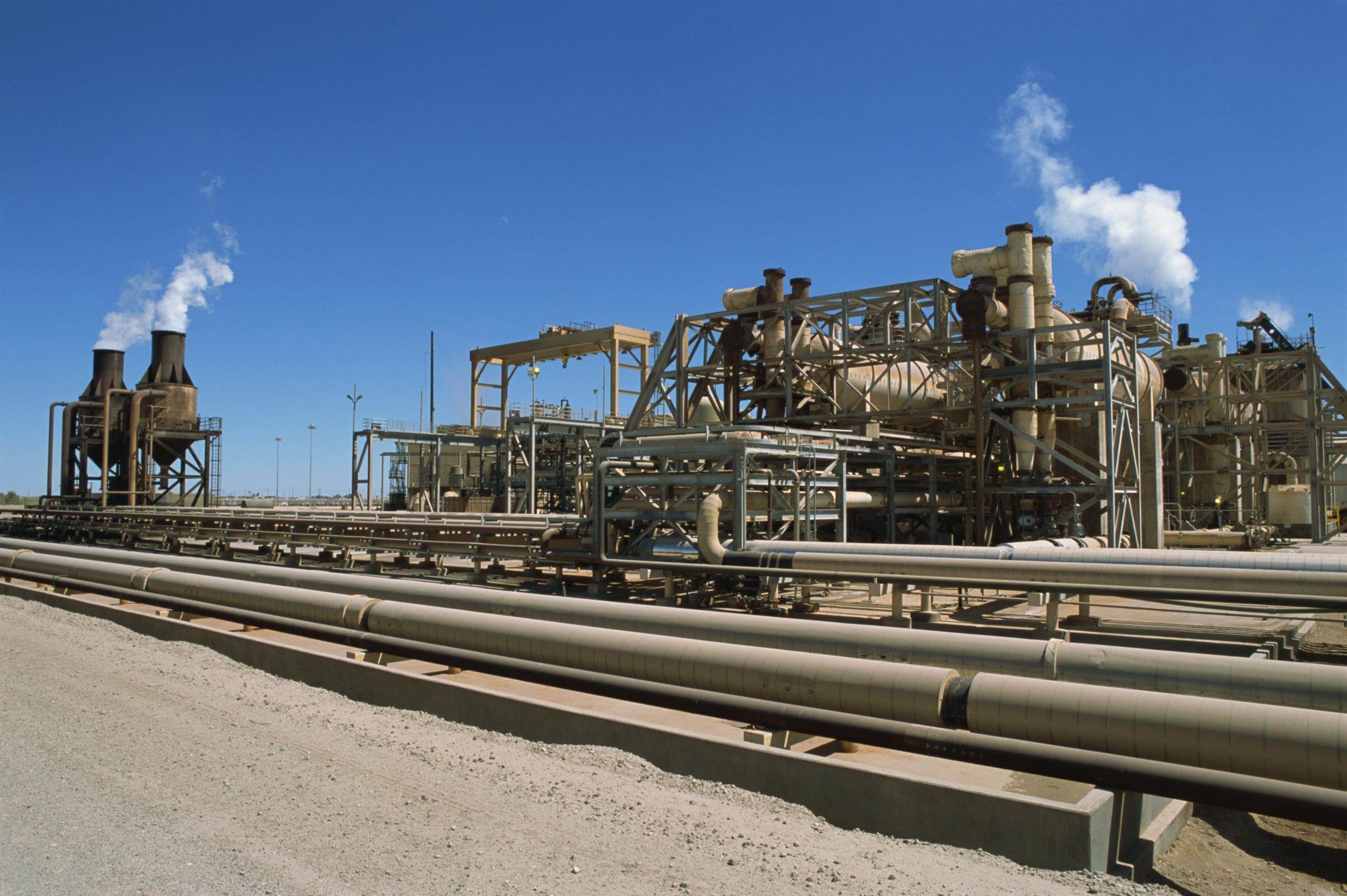
After natural gas is extracted, how to efficiently transport it becomes the key. At present, the Central Asian natural gas pipelines A, B, and C run parallel, with an annual gas transmission capacity of about 40 billion cubic meters, benefiting more than 500 million people in China. This energy 'Silk Road' has become the largest cross-border natural gas transportation system in Central Asia.
On this basis, both China and Turkey are planning to promote the expansion of the Central Asia Natural Gas Pipeline (Line D). After the completion and operation of Line D, the overall gas transmission capacity of the pipeline will be increased to 65 billion cubic meters per year, an increase of over 60%. This means that Turkmenistan's annual gas supply to China will achieve a leapfrog growth, China's diversified natural gas import pattern will be further consolidated, and the stability and security of energy supply will be significantly enhanced.
For Turkmenistan, this pipeline is equally significant. As one of the countries with the richest natural gas resources in Central Asia, Turkmenistan has proven natural gas reserves ranking fourth in the world. The export of natural gas to China has become an important pillar of its national economy, providing sustained impetus for its social development.
The upgrade path from project to model
Looking back at 2006, when China and Turkey signed the first natural gas cooperation framework agreement, perhaps few could have foreseen the scale of development today. Over the past twenty years, from initial trade exchanges, to later joint exploration and development, and to full industry chain cooperation, China Turkey natural gas cooperation has continuously deepened.
These twenty years have coincided with a critical period of China's energy structure transformation. China's resource endowment of being rich in coal, lacking in oil and gas has put long-term pressure on natural gas supply. The stable supply of natural gas through the Turkmenistan pipeline effectively fills this gap and provides important support for China's energy security.
For Turkmenistan, China's market demand and technological support help it transform its resource advantages into development advantages. The cooperation achievements such as the right bank project of the Amu Darya River have become classic cases of international energy cooperation, creating tens of thousands of job opportunities and driving the development of related industries.

"We hope to continue to expand the scale of cooperation, accelerate the docking of the the Belt and Road Initiative and the 'Revitalizing the Silk Road' strategy, and jointly promote industrial prosperity and share the fruits of development." Agazanov expressed his expectation of deepening cooperation at the meeting.
Dai Houliang responded that PetroChina will continue to promote high-quality cooperation projects, strive to achieve breakthroughs in new fields, and contribute more to the economic and social development of the two countries and the improvement of people's livelihoods.
After 20 years of joint efforts, the natural gas cooperation between China and Turkey has evolved from a single trade exchange to a comprehensive cooperation covering exploration and development, pipeline construction, and technological exchange. From the right bank of the Amu Darya River to Galkynysh, from the expansion of ABC Line 3 to Line D, each project is connected into a line, weaving together an energy cooperation network spanning Central Asia.Editor/Yang Meiling
Comment





 Praise
 Collect
 Comment

 Share
Share


Write something~