 Search


- Kazakhstan's Ambassador to China Nureshev revealed in Beijing on the 22nd that Kazakhstan is accelerating its digital transformation

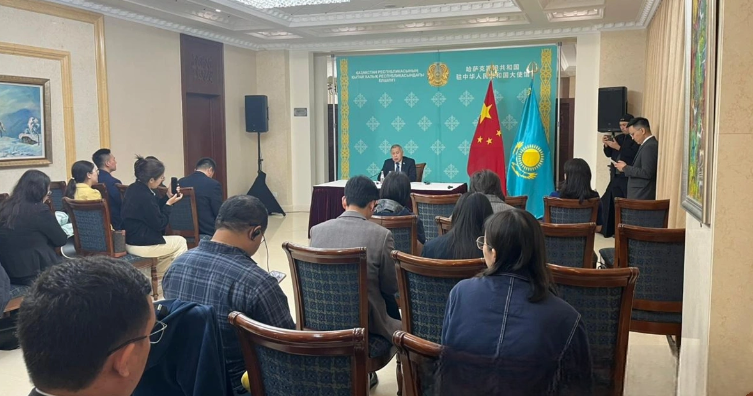
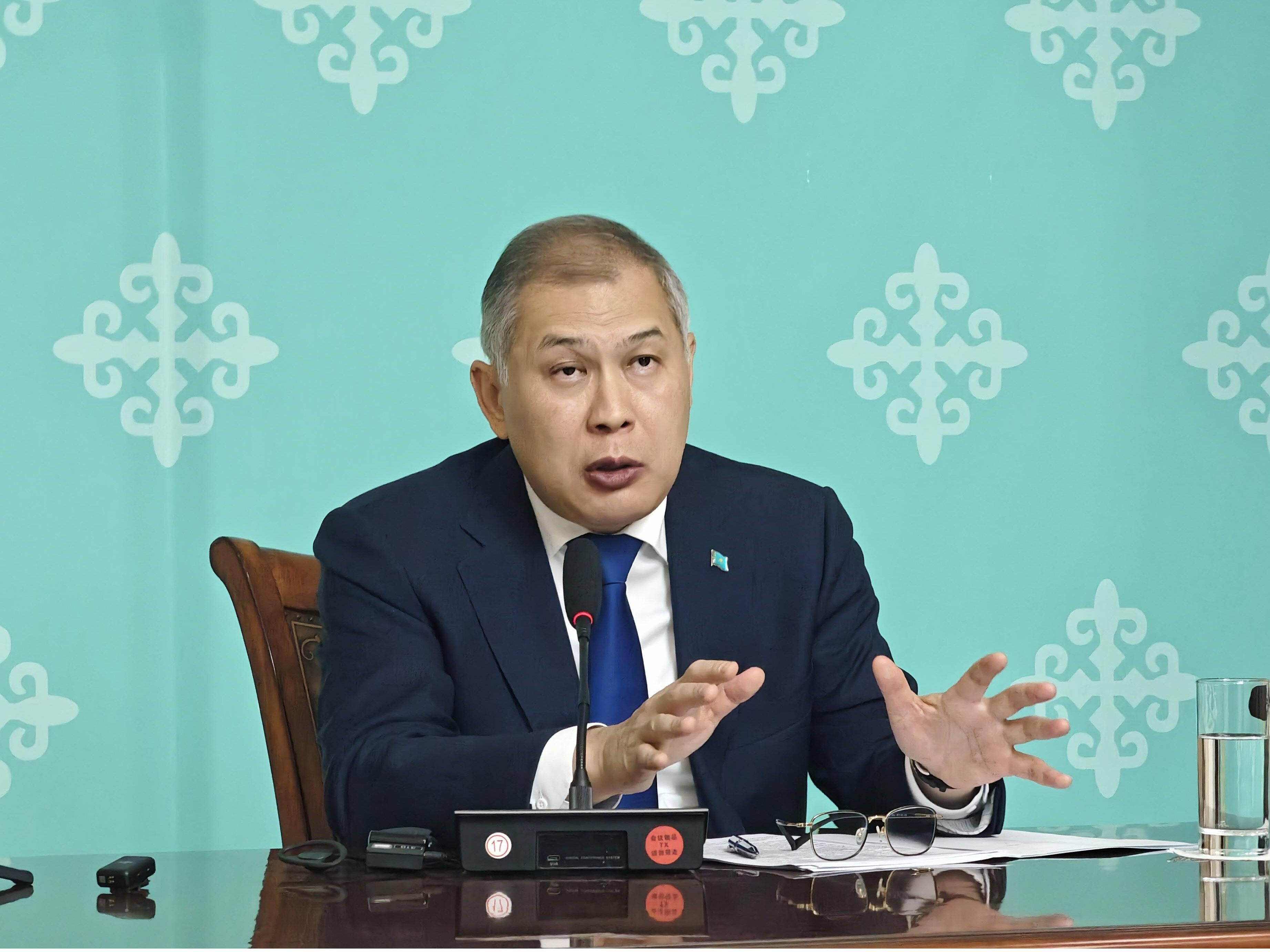
On April 22, 2026, a narrative about "modernization" was unfolding at the Embassy of Kazakhstan in Beijing. Facing Chinese and foreign journalists, Ambassador to China Shahrat Nureshev did not shy away from numbers - the country behind him is undergoing a profound transformation, with the goal of achieving a higher ranking in the global economy.
Our GDP has reached a historic high of $306 billion, firmly ranking among the top 50 economies in the world. ”Nureshev spoke firmly, "But President Tokayev has set a new goal: by 2029, we want to raise this number to $450 billion
Supporting this ambition is the result of the national referendum held on March 15th this year. Nureshev explained that over 87% of citizens voted in favor of the new constitution draft, paving the way for comprehensive modernization in the political, institutional, and socio-economic fields, aiming to build a stable development model centered on citizens.
Artificial Intelligence Year and Legal Protection
In Nureshev's description, 2026 is given special significance - Kazakhstan's' Year of Digitalization and Artificial Intelligence '. This is not an empty slogan, but a substantive follow-up with laws and infrastructure.
In January of this year, Kazakhstan officially passed and implemented the Digital Code, which provides a systematic legal framework for the country's digital transformation and AI applications. Nureshev emphasized that digital transformation is placed in a critical position for national development, which is not only related to technology, but also to governance efficiency. Currently, over 90% of government services in Kazakhstan have been processed online and are transitioning from fragmented digital solutions to systematic ones.
We are promoting the construction of computing infrastructure and the export of IT services, with the goal of truly empowering the real economy with technology. ”Nureshev added. It is reported that Kazakhstan has invested over 3 billion US dollars in the digital field to improve its intelligent manufacturing infrastructure and strive to build an industrial and digital hub in Central Asia.
Hard and soft connectivity behind $48.7 billion
As a country that has established a permanent comprehensive strategic partnership with China, Kazakhstan regards China as one of its most important trade and investment partners. Data is the most powerful proof: by 2025, the bilateral trade volume between China and Kazakhstan will reach 48.7 billion US dollars, a year-on-year increase of 11%, setting a new historical high; In the first quarter of 2026, the growth rate soared to 46.6%.

Nureshev focused on reviewing last year's cooperation achievements: "The leaders of the two countries exchanged visits and carried out about 600 joint activities throughout the year." In specific areas, he outlined three clear growth paths:
Hard connectivity between industry and logistics: Both sides are focusing on deepening industrial cooperation, especially in the fields of machinery manufacturing and transportation logistics. Nureshev specifically mentioned his hope to increase the freight volume between the two countries to 100 million tons in the future, and the railway project currently underway is expected to add 20 to 25 million tons of capacity.
Digitalization of Trade: In response to Kazakhstan's own digital transformation, the two countries will focus on promoting trade facilitation and reducing intermediate costs.
Energy and Ecological "Green Power": Nureshev mentioned the regional ecological summit being held in Astana, and the attendance of Chinese Minister of Ecology and Environment Huang Runqiu indicates that both sides share the same position on addressing climate change. In the field of energy, cooperation is transitioning from traditional oil and gas extraction to deep processing and renewable energy.

In addition, cultural exchanges have become a highlight. In 2025, Kazakhstan's first official cultural center established overseas will open in Beijing; In the same year, nearly one million Chinese tourists visited Kazakhstan, and about 730000 Kazakhstani tourists went to China. The visa free policy and convenient payment became the "golden signboard" that attracted Kazakhstani people to travel to China.
With 2026 designated as the 'China Kazakhstan Cultural Exchange Year', the interaction between the two countries on the dual track of digital and cultural exchange is injecting more certainty into the GDP target of 450 billion US dollars.Editor/Yang Meiling
Comment





 Praise
 Collect
 Comment

 Share
Share


Write something~