 Search


- Jiuquan Ejina Railway plays a vital role in promoting the rapid development of China's aerospace industry
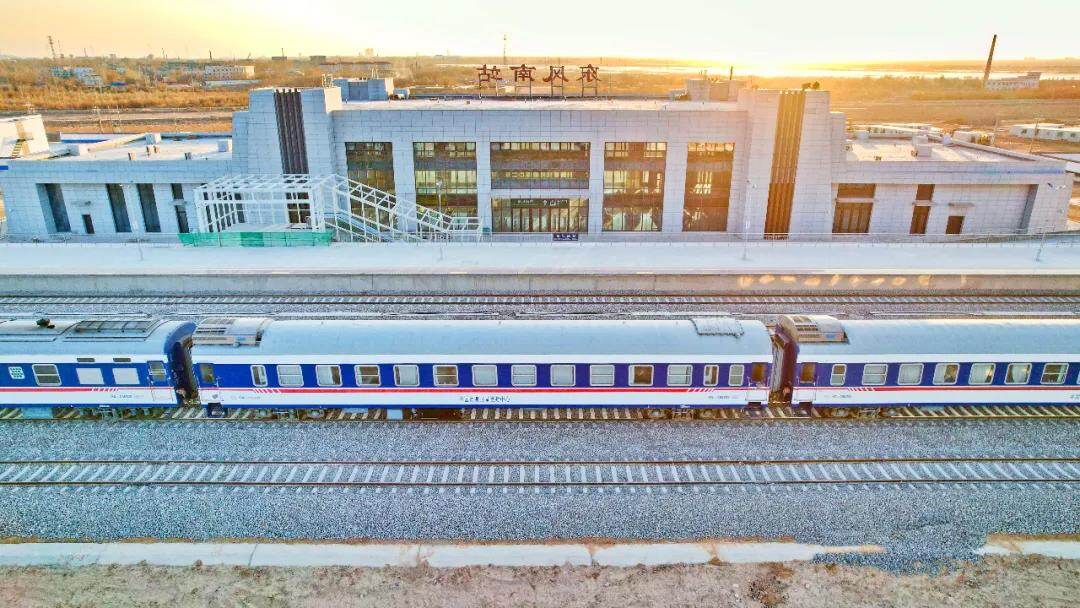
On December 26, 2021, a train drove along the brand new track to the Dongfeng South Railway Station of Jiuquan Satellite Launch Center, marking the opening of the Jiuquan-Dongfeng section of the Jiuquan (Quan)-E (Jina) Railway. Since then, the Jiu-e Railway has taken over the relay baton of the space mission undertaken by the existing Qing-Green Railway and continues to contribute to the aerospace dream.
Zhao Hongying, Secretary of the Party Committee and Chairman of China Railway 22nd Bureau Group, and Xu Dongqing, Deputy General Manager, attended the opening ceremony at the invitation of the Gansu Provincial People's Government and Jiuquan Satellite Launch Center.
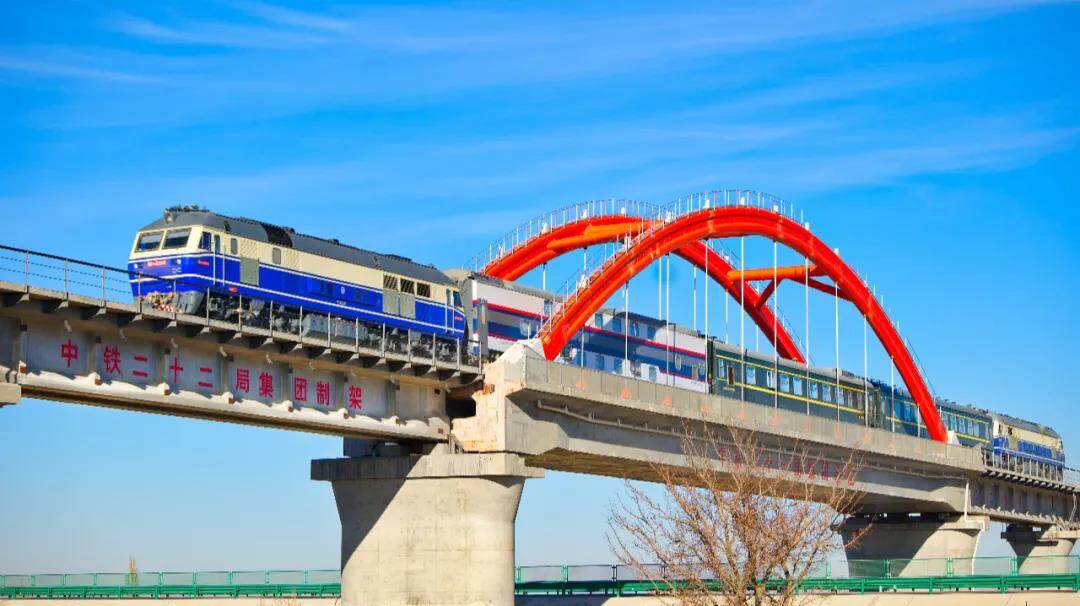
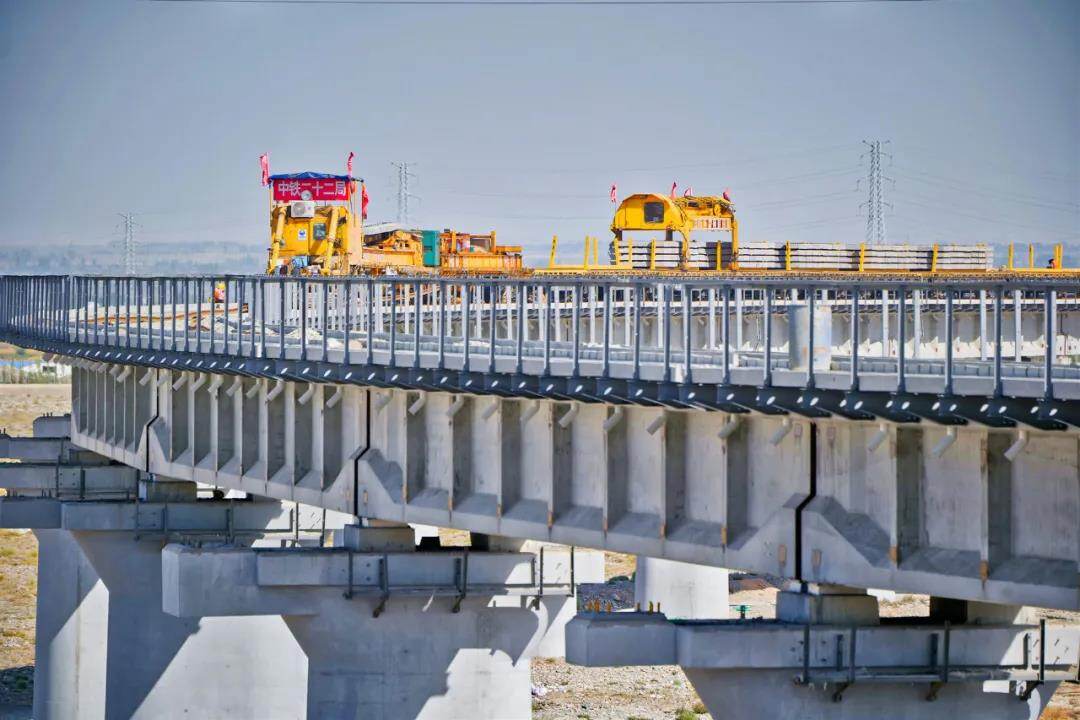
The total length of the Jiuquan-Dongfeng section of the Jiuquan-Dongfeng section of the Jiuquan Railway is 241.675 kilometers in length, of which 122.583 kilometers are newly built from the Jiuquan-Shangyuan section, and 109.152 kilometers of the existing Qinglv line is rebuilt from the Shangyuan-Dongfeng section. It is a Class II non-electrified railway of the National Railway. The design speed is 120 kilometers per hour, with 8 stations including Jiuquan, Suzhou, Jinta, Hedongli, and Dongfeng South. The project is located in Jinta County, Jiuquan, on the north side of the middle section of the Hexi Corridor, on the edge of the Mengxin Desert and the Badain Jaran Desert. China Railway 22nd Bureau Group undertook the task of laying the track of the whole line, upgrading and transforming the existing line of 109 kilometers, and prefabricating and erecting 586 pieces of T beams on the whole line.
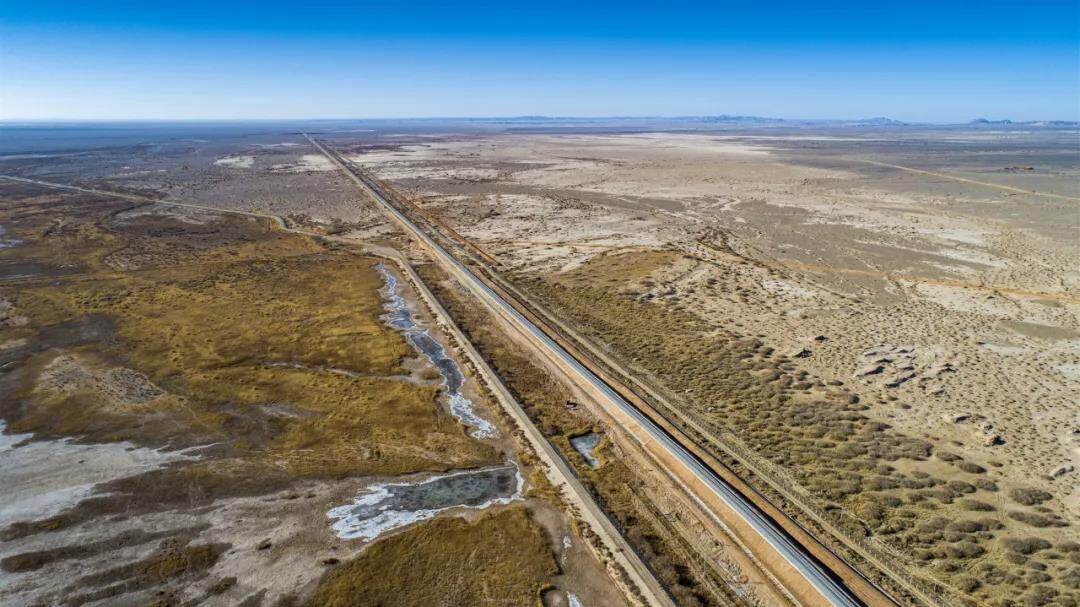
During the construction of the project, more than 2,200 construction participants overcame unfavorable factors such as strong solar radiation, large temperature difference between day and night, drought and water shortage, heavy wind and sand, and extremely fragile ecological environment, and promoted the construction process efficiently and successfully realized the scheduled opening to traffic.
China Railway 22nd Bureau Group undertakes the task of prefabricating T beams on the whole line. As the "main battlefield" for beam erection, the Jinta beam manufacturing field has passed the national industrial product production license certification at one time. It uses the more advanced DJ180 road-rail bridge erection machine for T beam erection, and uses professional transportation and management. The mode, transport at night during the day, without stopping people, to ensure double-shift operation, effectively solve the problem of long lines, long transport distances and tight schedules caused by the epidemic.
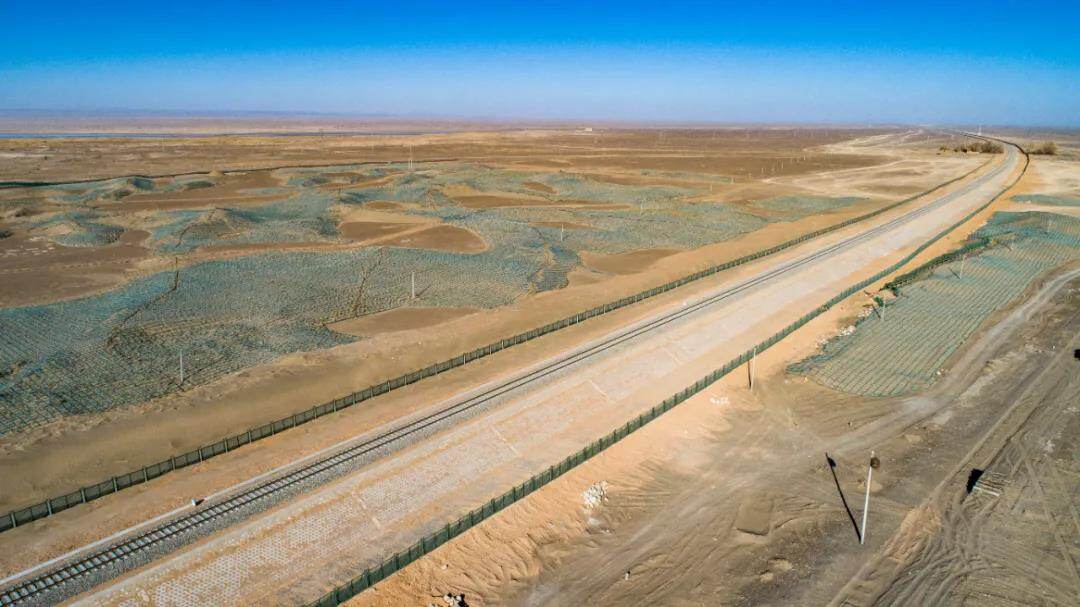
Since offline construction is carried out on the deserted Gobi desert, the sand flow in the Gobi has become the biggest threat to the project. At the same time, due to the large buried depth of the groundwater level and the small amount of water, it is difficult for plants to survive and there is no plant protection conditions. Starting from prevention, the project department effectively protects the gravel protective film and vegetation that has formed on the existing surface during construction, flexibly adopts a variety of construction methods, and spreads pebble soil and gravel soil in areas with extremely severe wind and sand flow or areas with severe water shortages. , Set up grass grids and sand barriers to play a dual effect of wind prevention and sand fixation.
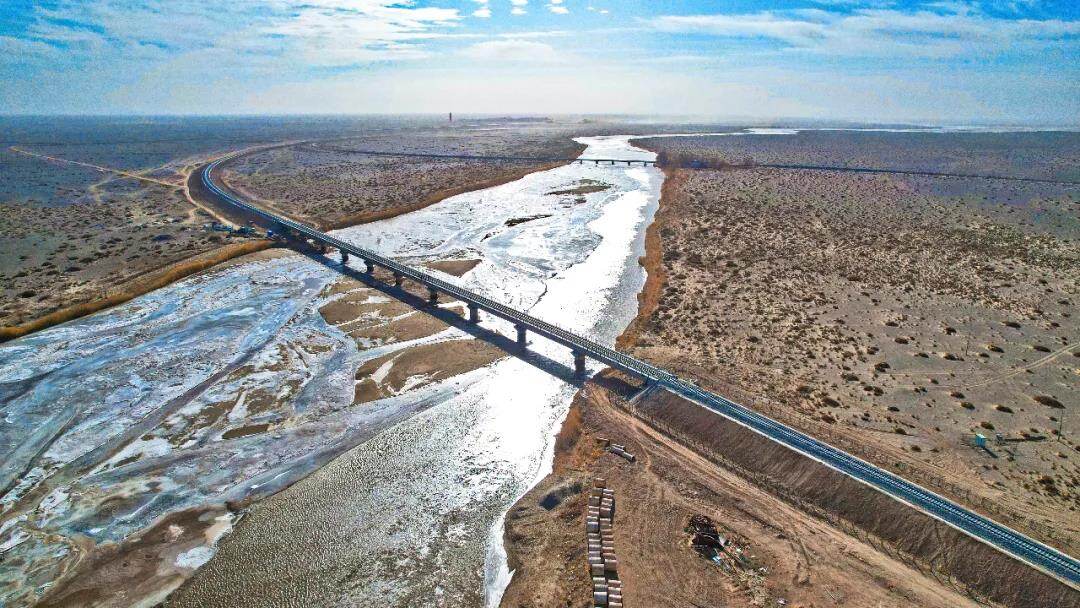
The Heihe No. 2 Bridge is a key project of the Jiu'e Railway, and it is also the most arduous project on the entire line. At the initial stage of construction, the construction site is located at the air outlet, with no obstructions in a radius of hundreds of kilometers. When a strong wind arrives, the maximum wind force can reach ten, and the visibility is less than two meters. At the same time, the Heihe water with a flow rate of 40 cubic meters per second brings great pressure and unsafe factors to the construction. The thickness of the underwater quicksand layer at this place is 7 to 8 meters. In order to prevent the occurrence of hole collapse, the project department has adopted protective measures to increase the height and number of steel sheet piles, implemented static pressure of the cut, and equipped with a long-arm excavator to cooperate with manual excavation. Effectively reduce the construction difficulty and safety risks, and accelerate the construction progress. In December 2020, the Heihe No. 2 Bridge completed the task of laying beams.
During the railway laying process, while ensuring the transportation of equipment and materials for the troops, the project department worked hard to eliminate the cumbersome construction procedures and the difficulty of organizing the construction. Under the harsh natural conditions and special construction requirements, the project department followed the two-cross policy of "apply in advance, accelerate organization, ensure safety, improve quality, and do more and more quickly" to challenge construction operations to the limit within the limited operating time. For more than 100 sleepless nights, the construction workers have been on the front line of construction with a temperature difference of 20 degrees Celsius in the morning and night. The longest continuous operation lasted 168 hours, and the entire track laying project on September 26, 2021 was successfully completed. Staged construction tasks that are connected.
As the "lifeline" and "aerospace artery" of the aerospace city, the Jiu-e Railway will undertake the mission of aerospace material transportation after its opening and operation, which is vital to enhancing the logistics support capabilities of the Jiuquan Satellite Launch Center and promoting the rapid development of China's aerospace industry. effect.
The Jiu-e Railway is also a bridge and link connecting the Central Plains with Xinjiang, Qinghai, Inner Mongolia, and Mongolia. It undertakes a large number of transit transportation tasks. It will serve as an important energy transportation channel from Jiuquan to Ceke Port and has important strategic significance.Editor/Ma Xue
Comment


 Praise
 Collect
 Comment

 Share
Share


Write something~