 Search


- Hamburg Port also places great emphasis on environmental protection and sustainable development
Hamburg Port is located on the right bank of the lower Elbe River in northern Germany, about 76 nautical miles from the mouth of the river, adjacent to the Gulf of Helgoland. It is the largest port in Germany and the second largest container port in Europe. Hamburg Port is not only an important port in Germany, but also one of the most modern ports internationally, known as the "gateway of Germany to the world".
Hamburg Port has multiple terminals and deep-water berths, capable of handling various types of cargo, including bulk cargo, containers, liquid cargo, etc. Its superior geographical location and advanced facilities make Hamburg Port a key hub connecting inland and overseas markets in Europe. Hamburg Port is also equipped with modern loading and unloading equipment and information systems, ensuring efficient cargo handling and transportation.
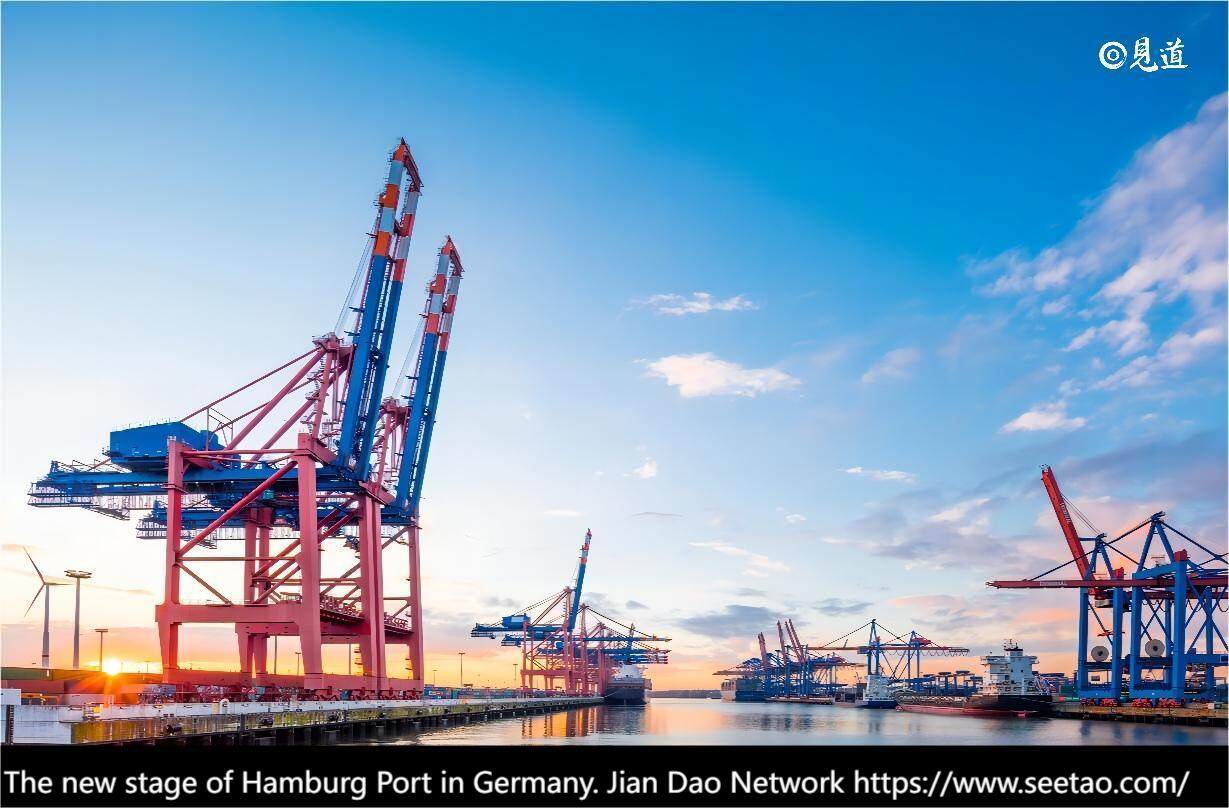
The initial construction of Hamburg Port in Germany mainly focused on the construction of infrastructure, including the construction of docks, berths, warehouses, and roads. The main goal of this period was to ensure that the basic functions of the port were realized and to meet the trade and logistics needs at that time. With the continuous development of global trade, Hamburg Port gradually recognizes the necessity of modernization and expansion. At this stage, the port begins to introduce advanced loading and unloading equipment, information systems, and automation technology to improve operational efficiency and service quality. At the same time, in order to meet the docking needs of large ships, Hamburg Port has also carried out berth expansion and deepwater transformation. Keywords: the Belt and Road news, the Belt and Road project, overseas project
In this stage of smart port construction, the port utilizes technologies such as the Internet of Things, big data, and artificial intelligence to achieve real-time monitoring and management of ships, goods, and port equipment. This not only improves operational efficiency, but also reduces operating costs and provides strong support for port safety and environmental management. In order to further expand its logistics coverage, Hamburg Port has also strengthened its linkage with inland areas. Through the construction of a comprehensive railway, road, and waterway intermodal transportation system, Hamburg Port has achieved seamless integration with the inland regions of Europe.
Hamburg Port also emphasizes environmental protection and sustainable development. It adopts advanced environmental protection technologies and measures to reduce its impact on the environment. At the same time, Hamburg Port actively promotes the use of green logistics and renewable energy, making contributions to sustainable development. (This article is from the official website of Jiandao: www.seetao. com. Reproduction without permission is not allowed, otherwise it will be punished. Please indicate Jiandao's website and the original link when reprinting.) Jiandao's mechanical column editor/Zhou Yingwen
Comment






 Praise
 Collect
 Comment

 Share
Share


Write something~