 Search


- The project will adhere to the concept of "technology-based and quality-oriented engineering"
- The project not only focuses on improving traffic efficiency, but also pays more attention to the deep linkage of regional development
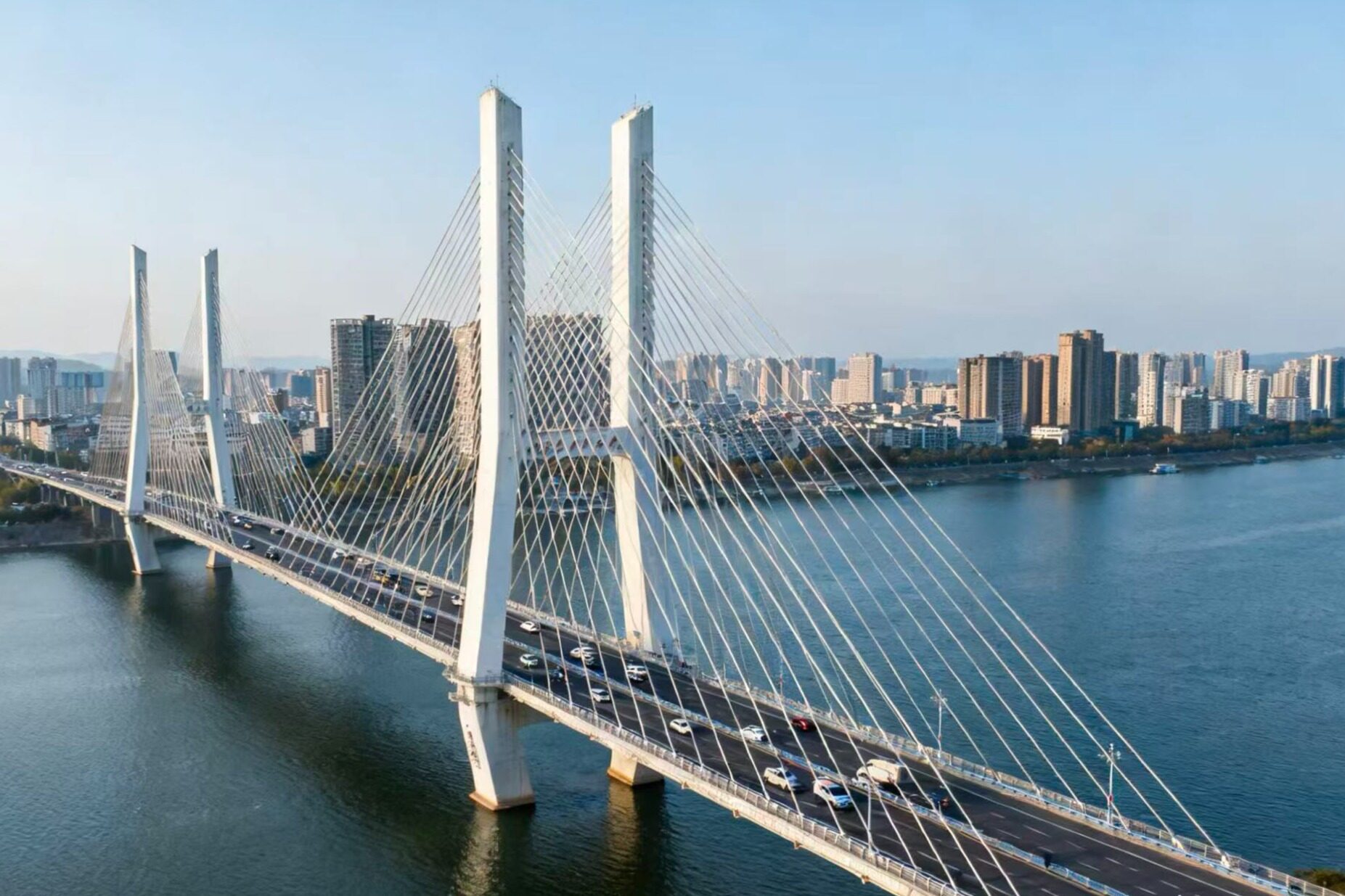
Recently, China Communications Construction Corporation (CCCC) successfully won the bid for the construction of the Han River Bridge in Xiangyang, Hubei. This cross river hub, which integrates a two-way 6-lane main road and a three-dimensional traffic system, officially marks the beginning of Xiangyang's efforts to break through the traffic barriers on both sides of the Han River and improve the spatial pattern of "one heart, four cities". As a key project to implement the National Comprehensive Three dimensional Transportation Network Planning Outline, the project will completely rewrite the current situation of cross river commuting congestion in Xiangcheng, Fancheng, and Dongjin New Area after completion, and become a "transportation artery" connecting the core resources of the city.
As a sub central city in Hubei Province, Xiangyang's regional GDP has exceeded 580 billion yuan in 2023, with a permanent population of 5.27 million. With the promotion of the "Eastward Expansion, Westward Expansion, Southward Optimization, and Northward Connection" strategy, the existing six cross river bridges are overwhelmed - the Old Hanjiang Bridge, built in 1970, has a daily traffic volume of 42000 vehicles, far exceeding the design standard of 25000 vehicles. During peak hours, congestion lasts for more than 1.5 hours, and problems such as mixed freight and passenger traffic and low traffic efficiency have become prominent bottlenecks restricting urban development. This winning bid project precisely addresses this pain point and solves spatial barriers with high standard design: the bridge has a total length of 1860 meters, and the main bridge adopts a double tower double cable plane cable-stayed bridge structure, with a main span of 320 meters and a bridge deck width of 38 meters. In addition to a two-way 6-lane motor vehicle lane, a 3-meter-wide non motor vehicle lane and a 2.5-meter-wide sidewalk are also set up simultaneously, achieving a three-dimensional traffic mode of pedestrian and vehicle separation and fast and slow separation.

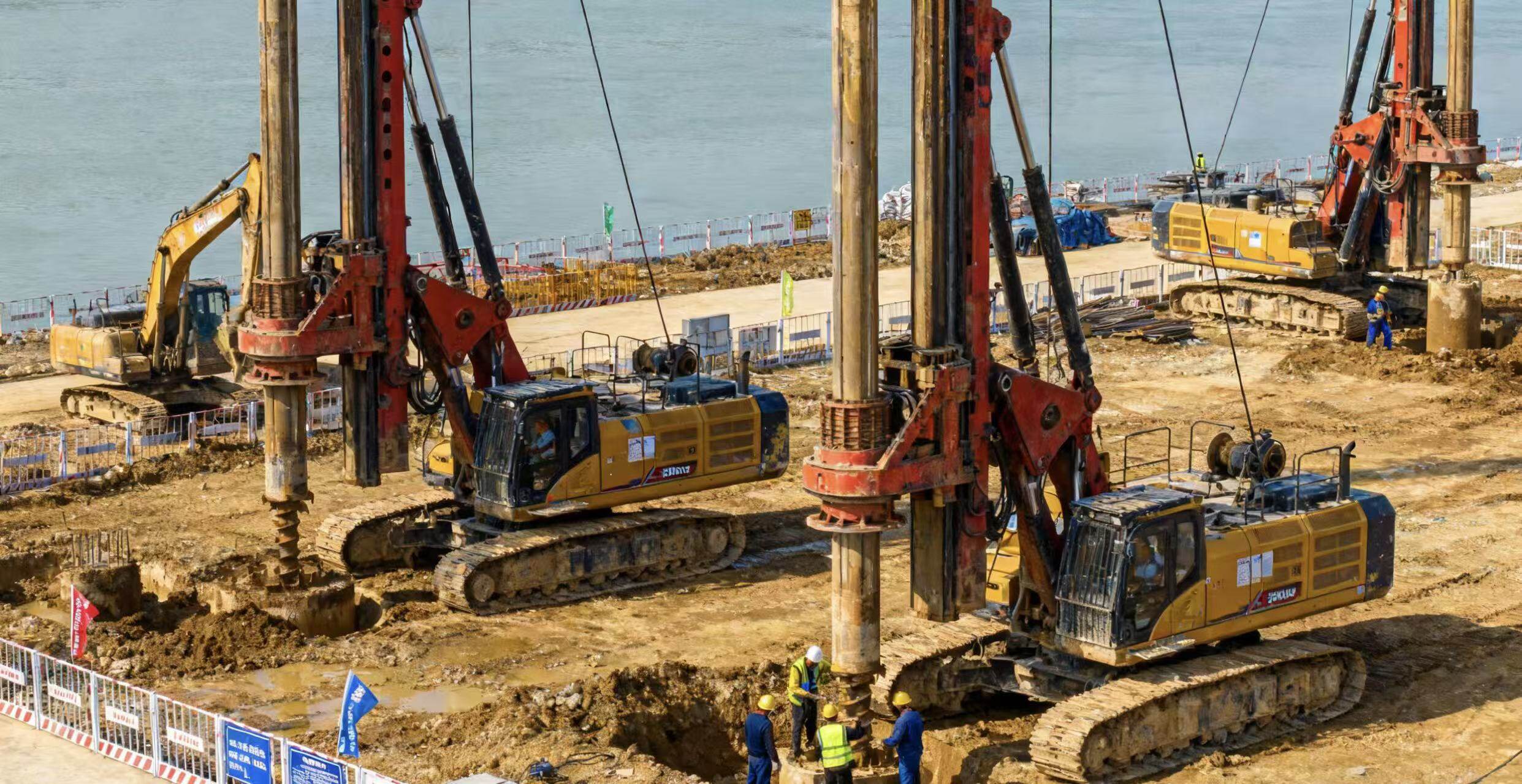
Based on the technological accumulation of China Communications Construction Corporation in the field of cross river bridge construction, the project will adhere to the concept of "technology-based and quality-oriented engineering", and overcome the complex geological and hydrological challenges in the Han River Basin. During construction, we plan to draw on advanced technologies such as static pressure pile drivers to solve the construction difficulties of large-diameter floating stones and dense sandstone formations, ensuring that 100% of the 532 pile foundations along the entire line are Class I piles, and that the concrete strength and cable force testing pass rates meet the full score standard. At the same time, the project will be accompanied by the construction of an intelligent transportation management system, covering functions such as traffic flow monitoring, violation capture, emergency dispatch, etc. A 8500 square meter ecological green landscape belt will be created on both sides of the approach road to achieve synchronous improvement of traffic functions and ecological quality.

It is worth noting that the project not only focuses on improving traffic efficiency, but also pays more attention to the deep linkage of regional development. The starting point of the bridge is connected to Binjiang Road in Panggong Street, Xiangcheng District, and the endpoint is connected to Zhongyuan Road in Fancheng District. After completion, it will shorten the cross river travel time between Xiangcheng and Fancheng from 30-40 minutes to less than 10 minutes, directly serving about 1.8 million people and indirectly radiating over 3 million people. By connecting the Panggong Cultural Tourism Zone, Fancheng Commercial and Trade Core Zone, and Dongjin New District Administrative Industrial Zone, the project will accelerate the flow of resources such as talent, capital, and technology, and is expected to drive a 1.2 percentage point increase in GDP in the surrounding areas, create more than 5000 job opportunities, and improve emergency channel functions and flood prevention and protection systems, providing solid support for disaster emergency rescue in the Han River Basin.
At present, the preliminary procedures of the project have been smoothly advanced, and the land use planning and fund raising have been implemented. The construction of the bridge main body, approach road engineering, and supporting facilities will be completed within the planned construction period. This cross river bridge, which integrates technological innovation, ecological friendliness, and functional integration, is not only another benchmark work of China Communications Construction Corporation's deep cultivation of transportation infrastructure construction, but also a core support for Xiangyang to build a national comprehensive transportation hub and promote the integrated development of the urban agglomeration, injecting strong impetus into the high-quality development of the city.Editor/Bian Wenjun
Comment




 Praise
 Collect
 Comment

 Share
Share


Write something~