 Search


- Both projects highlight the new quality productivity characteristics of "intelligence+greening"
- All projects adopt the self owned or self raised model of Qingdao Port, relying on the company's stable operating fundamentals and the resource support of Shandong Port Group
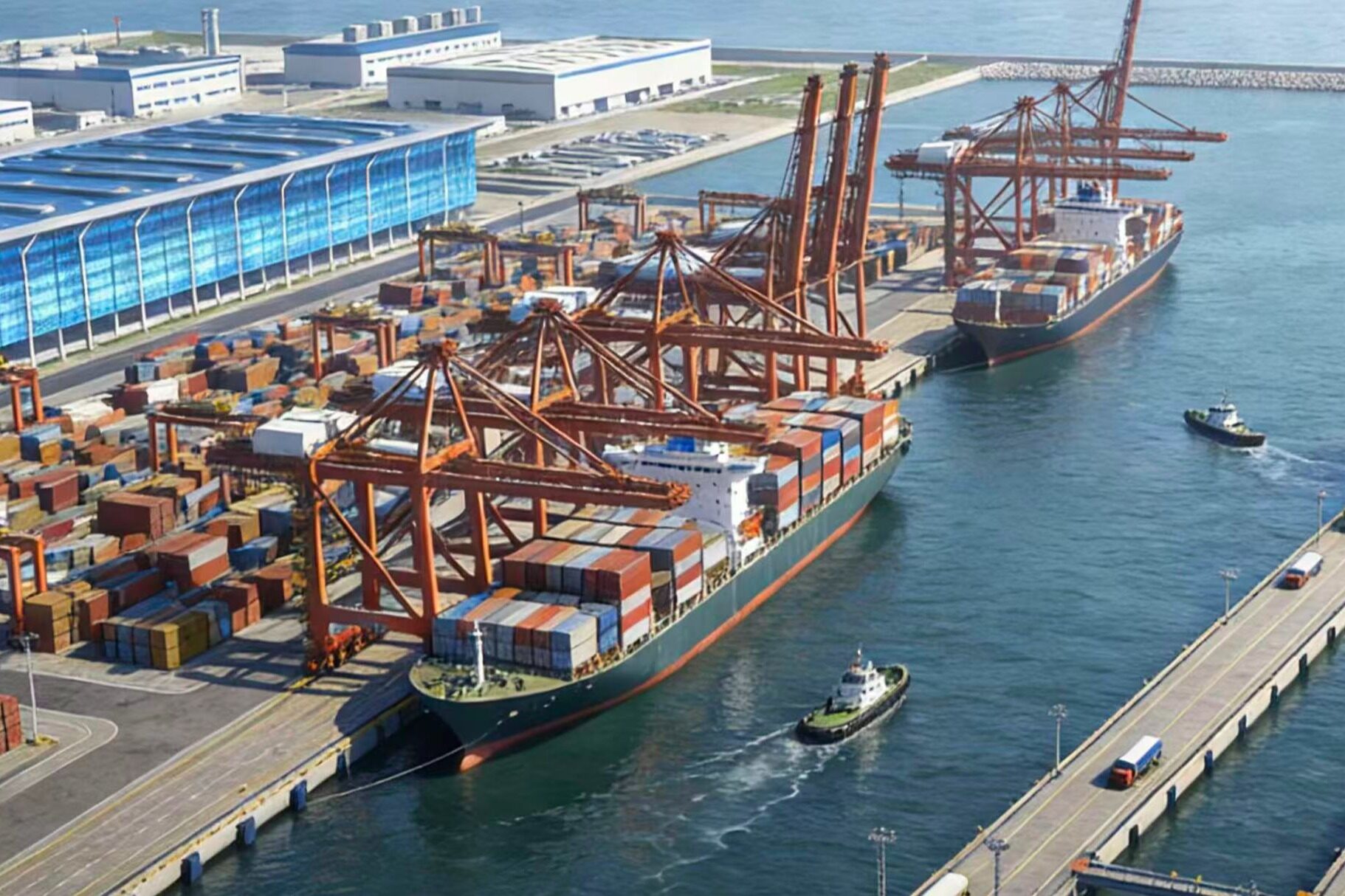
On December 19, 2025, a notice from Qingdao Port (601298) attracted industry attention: it plans to invest 15.7 billion yuan to simultaneously promote two heavyweight terminal projects in Dongjiakou Port Area, namely the first phase of the Langya Taiwan Operating Area Eastern Container Terminal project worth 9.097 billion yuan and the Bay Bottom General Terminal project worth 6.615 billion yuan. Both major projects are planned to be constructed within 4 years and put into operation by 2029. After completion, they will significantly enhance the container and bulk cargo throughput capacity of Qingdao Port, adding a core pivot to its "one bay, two wings, six districts" development pattern, and injecting surging momentum into the high-quality development of the Yellow River Basin and the integrated reform of Shandong Port.
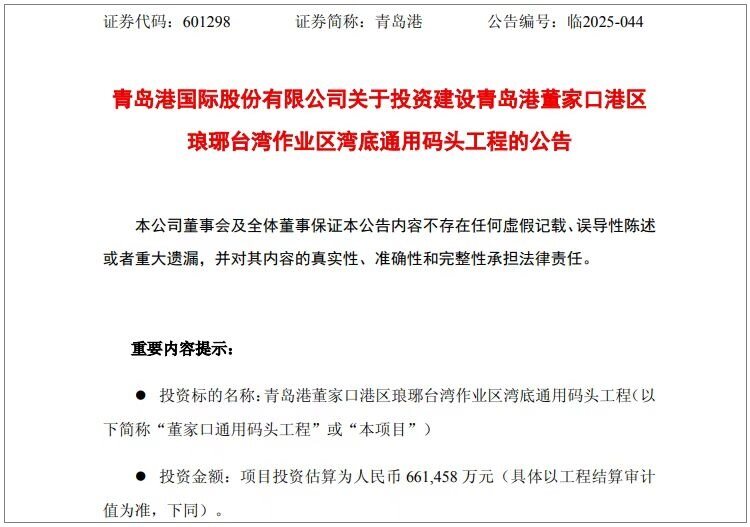

As a key port area for the sustainable development of Qingdao Port, Dongjiakou Port Area is welcoming a billion dollar investment, which is a key measure for Qingdao Port to implement the "Qingdao Port Master Plan (2035)". According to the plan, Dongjiakou Port Area undertakes the main incremental transportation needs of Qingdao Port and the transfer of cargo types from the old port area, and is the core hub connecting bulk materials and container transportation. The two major projects that have started this time are precisely in line with the functional positioning of the port area, forming a dual line layout of "container+general cargo". The first phase of the Eastern Container Terminal project will build one 70000 ton, one 100000 ton, and one 150000 ton specialized berth, with a total length of 1167 meters of coastline and 125.97 hectares of fully automated yard. The designed annual throughput capacity is 3.2 million TEUs. After completion, it will work together with the upgrading and transformation of the Qianwan Port Area to solve the production capacity bottleneck of international container transit and hinterland transportation growth in northern ports; The Bay Bottom General Terminal Project is equipped with seven berths ranging from 30000 to 70000 tons, with a total shoreline length of 1668 meters and an annual throughput capacity of 14.33 million tons. It is specifically designed to undertake the transportation of bulk and miscellaneous goods transferred from the Qianwan Port Area and Dagang Port Area, directly targeting the transportation needs of industries such as grain and oil processing, steel, timber, and automotive equipment in the port area.
It is worth noting that both projects highlight the new quality productivity characteristics of "intelligence+greening". The Eastern Container Terminal is built to fully automated standards throughout the entire process, and will introduce AI scheduling systems, unmanned container trucks, and intelligent shore cranes. It is expected that the operational efficiency will increase by more than 30% compared to traditional terminals, and the rate of defective operations will be controlled at the top level in the industry; The general dock at the bottom of the bay is synchronously planning environmental protection facilities such as clean energy power supply and dust recovery and treatment, in response to the construction requirements of the Dongjiakou Economic Zone National Circular Economy Demonstration Zone. In terms of funding sources, all projects adopt the self owned or self raised model of Qingdao Port, relying on the company's stable operating fundamentals and the resource support of Shandong Port Group to provide solid guarantees for the smooth progress of the project.
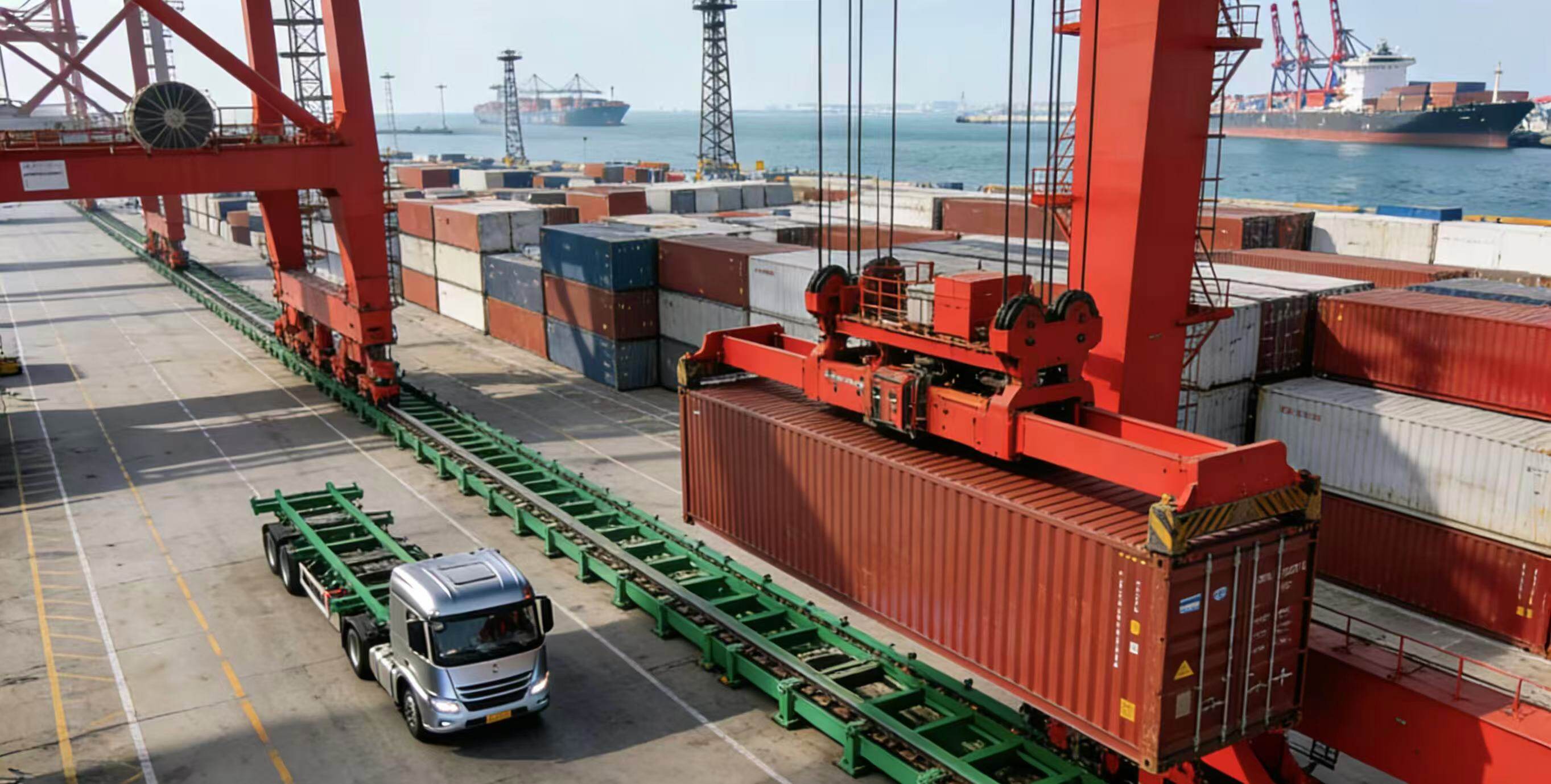
Behind this billion dollar investment is the strategic consideration of Qingdao Port to establish itself in Shandong, radiate along the Yellow River, and connect globally. As the most convenient seaport in the Yellow River Basin, Qingdao Port has currently established 50 inland ports and opened more than 80 sea rail intermodal routes in the nine provinces and regions along the Yellow River. By 2023, the sea rail intermodal container volume will reach 2.21 million TEUs, ranking first in the country for nine consecutive years. The proportion of goods flowing along the nine provinces (regions) along the Yellow River exceeds 90%. With the commissioning of two major projects, Qingdao Port will further improve the land sea intermodal transportation channel, helping provinces such as Henan and Shaanxi to export goods more efficiently to the sea, providing more convenient import channels for bulk materials such as iron ore and coal in Shanxi and Ningxia, and seamlessly connecting the "economic hinterland" along the Yellow River Basin with the "blue channel" of the global market.
From the perspective of regional synergy, this investment is also an important milestone in the integration reform of Shandong ports. Since the implementation of the integrated reform in 2019, Shandong ports have formed a pattern of "Qingdao Port as the leader, Rizhao Port and Yantai Port as the two wings, and Bohai Bay Port as the extension". By 2023, the cargo throughput will exceed 1.7 billion tons and the container volume will exceed 40 million TEUs, ranking among the top in the world. The implementation of the two major projects in Dongjiakou Port Area will further optimize the functional layout of Shandong Port Group, alleviate the pressure of port congestion in Qianwan Port Area, form a competitive advantage of complementary cargo types and coordinated shipping routes with Rizhao Port and Yantai Port, and strengthen Shandong Port's hub position in the Northeast Asian shipping market.
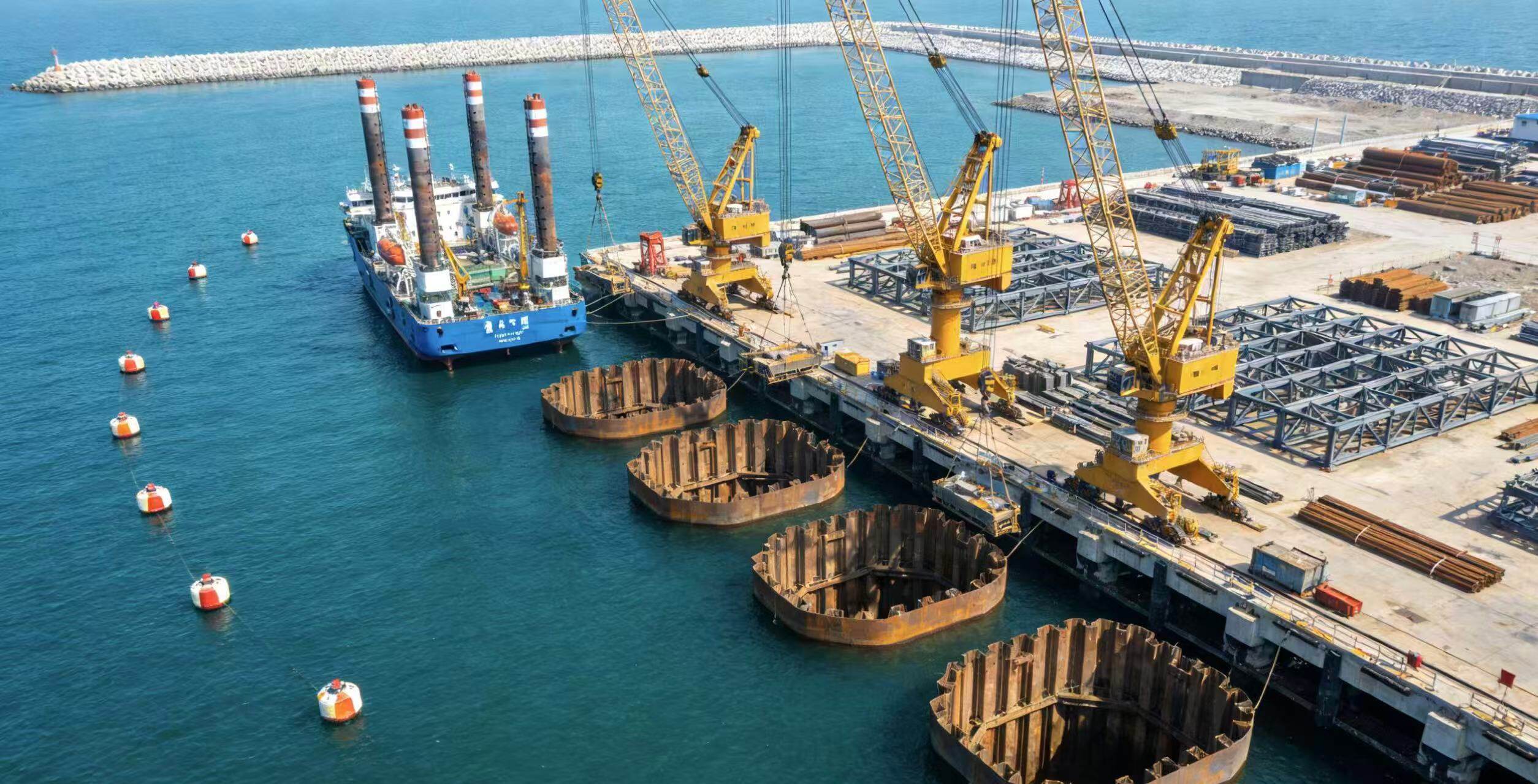
For Dongjiakou Economic Zone, this investment is a strong engine for the development of industrial clusters. At present, Dongjiakou Economic Zone has formed four major industrial bases, including chemical new materials, deep processing of bulk goods, and manufacturing of special steel equipment. It has gathered a number of billion dollar projects such as Bohai Grain and Oil and Qingdao Special Steel, forming a billion dollar grain and oil processing and wood deep processing industrial cluster. The construction of the Bay Bottom General Terminal will provide "door-to-door" logistics support for these port industries, reducing the transportation costs of raw materials and finished products; The landing of container terminals will help regional specialty products go global and accelerate the cultivation process of billion dollar industrial clusters.
Looking ahead to 2029, when the two major terminal projects are officially put into operation, Qingdao Port will add 3.2 million TEU containers and 14.33 million tons of bulk cargo annual throughput capacity, and the overall competitiveness of Hong Kong will reach a new level. Under the guidance of the deep adjustment of the global trade pattern and the "dual carbon" goal, this century old port is upgrading from a "cargo hub" to a "supply chain hub" through digital, green, and intelligent transformation. This 15.7 billion investment is not only a strategic layout for Qingdao Port to strive for "world-class strong port", but also a vivid practice for China's coastal ports to rely on national strategy, serve regional economy, and participate in global competition.

With the launch of engineering construction, Qingdao Port is leveraging Dongjiakou Port Area as a pivot to open up new spaces along the Yellow River Basin and write a new chapter in the integrated development of Shandong ports. In the future, this shipping hub that connects the inland and the ocean, and links domestic and international markets, will continue to inject "port power" into the high-quality development of regional economy, and move forward on the track of global port competition.Editor/Bian Wenjun
Comment

 Praise
 Collect
 Comment

 Share
Share


Write something~