 Search


- The G95 Ring Expressway Tianjin section project has been finalized, and the franchise model has been implemented
- The construction and operation entity of the Tianjin section of the Capital Region Ring Expressway has been officially determined

The G95 Capital Region Ring Expressway is located in the section from Tangcheng Expressway to the Tianjin Hebei border. This project has been officially authorized by the government to be fully responsible for the investment, construction, and later operation management of this expressway project, and can be regarded as the "overall responsible person" of the project. During the agreed operating period, the franchisee is responsible for the full process operation of the project and obtaining reasonable profits. After the operating period expires, the complete project assets must be transferred to the government free of charge.
Construction scale and core parameters
The starting point of this highway section is located at the Ninghe North Interchange of Tangcheng Expressway, seamlessly connecting with the completed Tanglang Expressway Phase I project, allowing vehicles to pass directly without detours; The endpoint is located at the junction of Tianjin and Hebei on the west side of Dongmaquan Town in Wuqing District, and crossing over here will enter the territory of Hebei Province. The route runs in an east-west direction, passing through three areas: Ninghe District, Baodi District, and Wuqing District, with a total length of approximately 76.638 kilometers, roughly equivalent to the round-trip distance between Tianjin city and surrounding districts and counties.
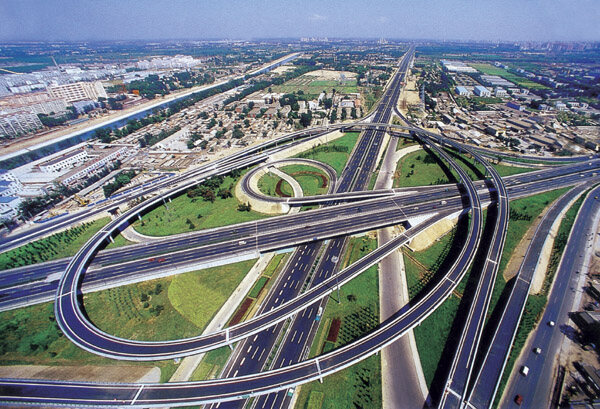
11 interchanges are planned to be constructed along the entire line, which serve as connecting nodes between highways and other roads, as well as between highways, mainly to facilitate vehicle route switching. This includes one ongoing hub interchange, which mainly serves the transfer of vehicles between different highways and usually does not have toll stations; Three new hub interchanges and seven new general toll interchanges will be built, connecting local ordinary highways to facilitate nearby residents to get on and off highways. Toll stations will be set up as supporting facilities. In terms of bridge engineering, the entire line will construct 5 super large bridges, 5 large bridges, and 10 medium and small bridges. Super large bridges mainly refer to bridges with large spans and long lengths, and are often used to cross large terrain and landforms such as rivers and valleys.
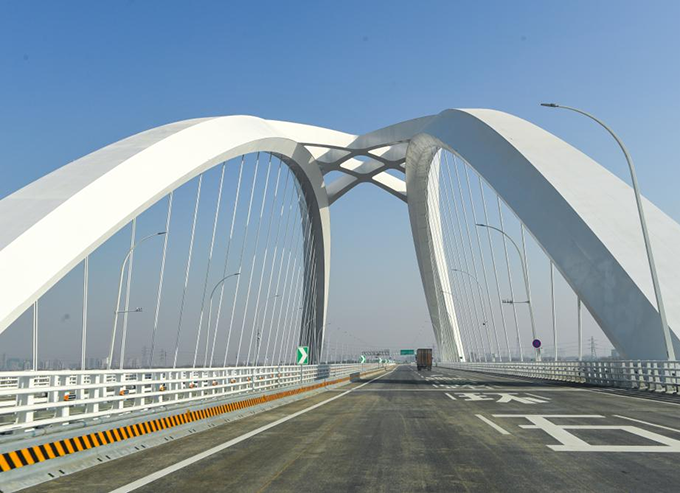
The supporting facilities along the line are also very complete, and two service areas will be built to provide rest, refueling, catering and other services for passing drivers and passengers; Two maintenance work areas are dedicated to the daily maintenance and upkeep of highways, just like regular car maintenance, to ensure that road facilities are always in good condition; One monitoring and communication sub center serves as the "smart brain" of the entire highway, achieving real-time monitoring of road conditions and stable communication signals. The road design speed is 120 kilometers per hour, and the entire line adopts a two-way six lane standard, with three lanes on each side, resulting in high traffic efficiency. It should be noted that the final construction scale is subject to the official approval documents of the relevant competent authorities.
Construction content and operational requirements
The construction content covers the entire process of the expressway from scratch, including route planning and laying, roadbed and pavement construction. The roadbed is the basic bearing part of the pavement, and the pavement is the area where vehicles directly travel; Bridge and culvert construction, in addition to various types of bridges, also includes culvert engineering for drainage; Cross engineering construction, as well as the construction of traffic signs, guardrails, and ancillary facilities along the line. At the same time, the project simultaneously carries out environmental protection and landscape design work, while ensuring the practical function of the road, taking into account the beauty of the surrounding environment, and minimizing the impact of engineering construction on the surrounding ecology and residents' lives.
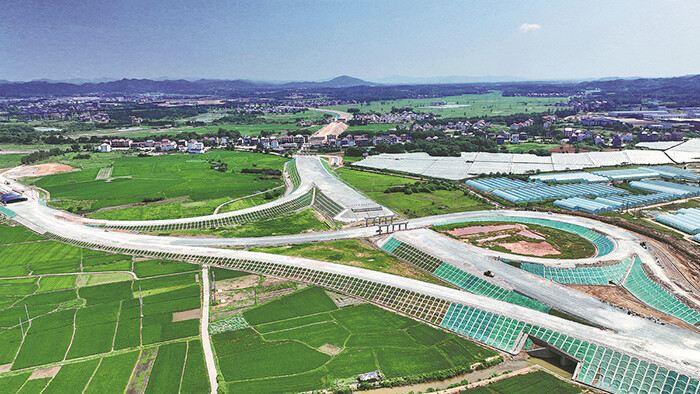
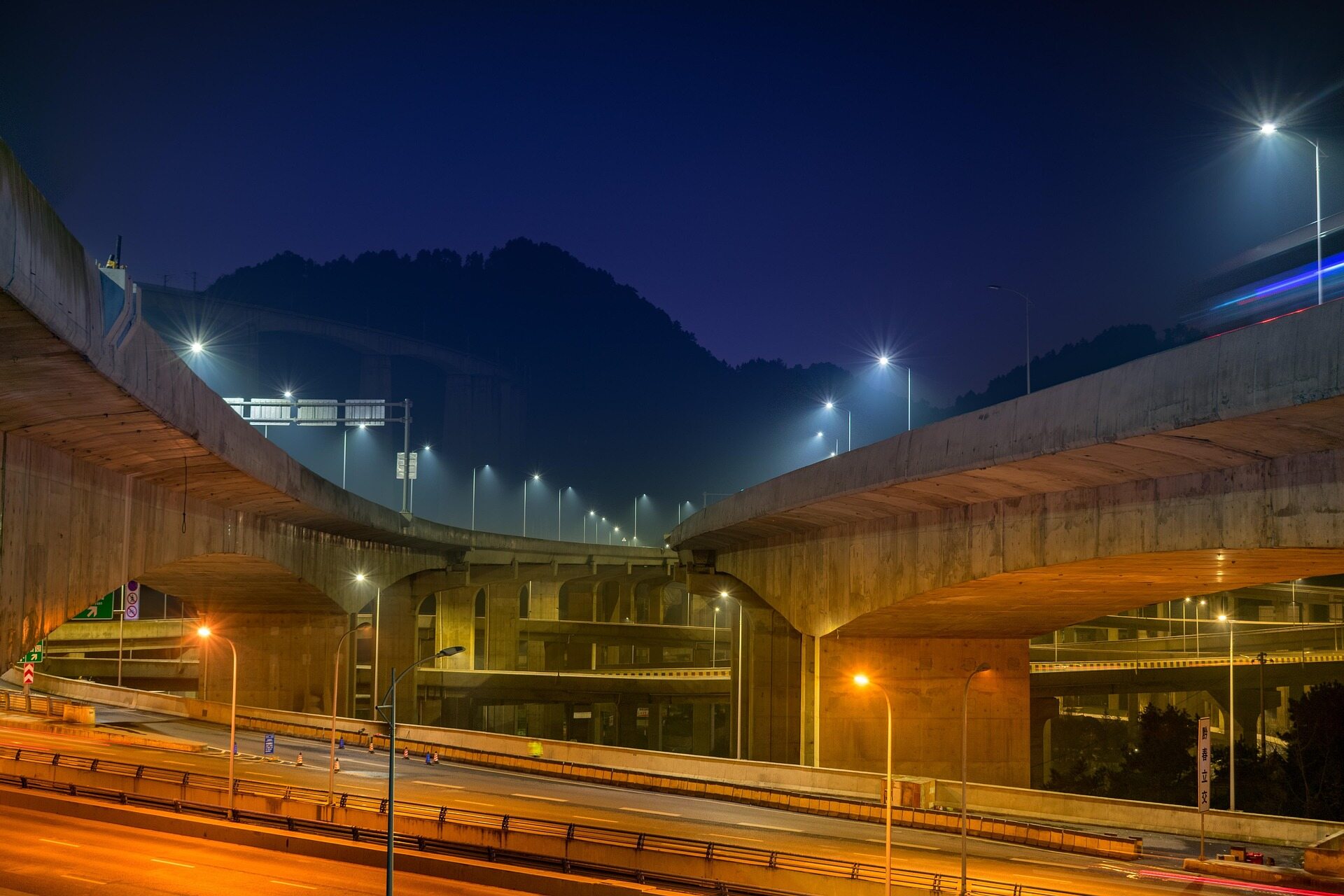
After the completion and opening of the project, operational services are the key to ensuring smooth road traffic. The main content of operation management is the maintenance and management of facilities throughout the project, including daily road maintenance, such as road surface cleaning, minor repairs, and repairs, to ensure smooth and safe roads; Large scale maintenance projects, namely the repair and renovation of road facilities; The maintenance of management buildings such as toll stations, service areas, and maintenance work areas, as well as the daily operation and maintenance of the three major systems of toll collection, communication, and monitoring, ensure the stable operation of various facilities, which is also the core requirement for the daily maintenance of highways.
The service content for the public is built around the travel experience, including toll collection services at highway entrances and exits, vehicle malfunction and traffic accident clearance and rescue services, real-time road condition information release services, as well as diversified services such as rest, refueling, shopping provided by service areas, to comprehensively ensure the convenient travel and comfortable experience of travelers. This is also a service obligation that franchisees must strictly fulfill.
Franchise operator bidding results
In terms of project investment, the preliminary design estimate for this project has been approved at a total amount of 18.516 billion yuan, which is the estimated total funding required for project construction. Among them, the construction and installation cost is 13.064 billion yuan, mainly consisting of material and construction costs directly generated by the project construction, and is the core component of the entire project investment. Keywords: China Communications Construction Corporation, Capital Ring Expressway, Expressway Construction
The bidding results for franchisees have been determined, and the first place will be awarded to a consortium consisting of China Communications Construction Investment Co., Ltd., Tianjin Port and Shipping Installation Engineering Co., Ltd., China Communications First Navigation Engineering Bureau Co., Ltd., China Communications First Highway Engineering Group Co., Ltd., China Communications Second Highway Engineering Bureau Co., Ltd., China Communications Road and Bridge Construction Co., Ltd., China Communications Third Highway Engineering Bureau Co., Ltd., and China Communications Construction Investment Nanjing Co., Ltd. These eight companies will work together to undertake project investment, construction, operation, and other related work; The second place is China Communications Fourth Navigation Engineering Co., Ltd; The third place is China Communications Second Navigation Engineering Co., Ltd.Editor/Gong Ziwei
Comment



 Praise
 Collect
 Comment

 Share
Share


Write something~