 Search


- The world's first hybrid phase-changing converter valve based on IGCT devices was recently put into operation at Lingbao Converter Stati
- The Lingbao Converter Station recently installed the world's first "super heart" of the power grid - the hybrid commutated converter valve
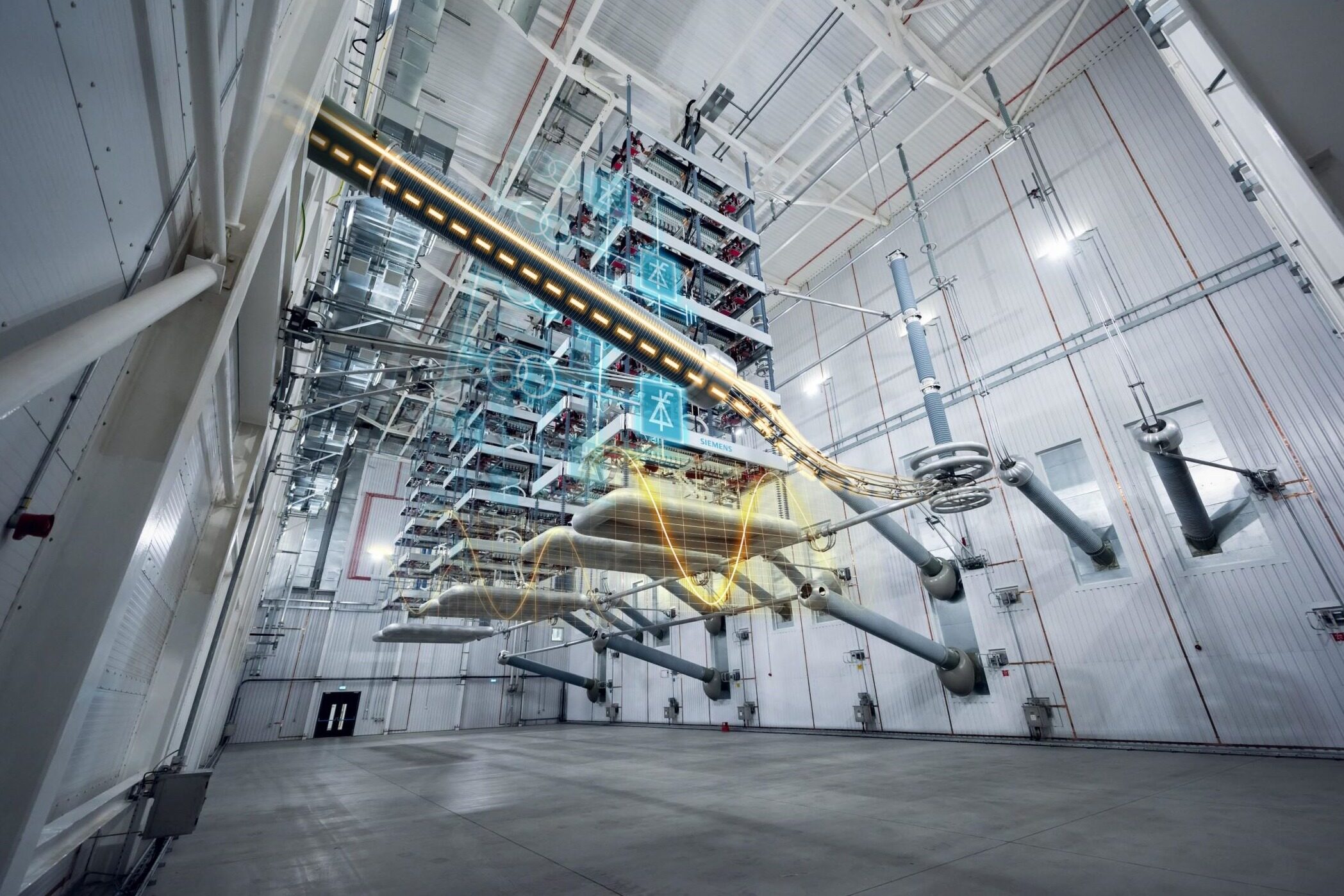
In the equipment hall of the Lingbao Converter Station in Henan, a set of brand-new "hearts" are beating quietly yet powerfully. Unlike traditional equipment that is vulnerable to transient fluctuations in the power grid, they can accurately identify anomalies and quickly cut off risks within microseconds, safeguarding the smooth transmission of electricity. This "heart" is the world's first hybrid phase-change converter valve based on Integrated Gate Controlled Thyristors (IGCT).
Recently, this device, known as the "super heart" of the power grid, successfully completed a 168-hour trial run at Lingbao Converter Station and was officially put into commercial operation. It marks China's original breakthrough in the entire chain from principles, components to equipment in the field of high-voltage direct current transmission, providing a new technical solution to the long-standing problem of "commutating failure" that has plagued direct current transmission systems.
From "the dilemma of interconnection" to "the gateway of energy"
In July 2005, Lingbao Converter Station, China's first fully domestically produced back-to-back DC project, was completed and put into operation. Prior to this, the Northwest Power Grid and the Central China Power Grid were like two railways with different track gauges: the Northwest transmitted energy at a voltage level of 330 kV, while the Central China distributed power at a voltage level of 220 kV. A simple connection would lead to system conflicts, but Lingbao Converter Station, through "back-to-back" technology, completed the conversion of "AC-DC-AC" within the station, allowing power to flow safely and freely across regions.
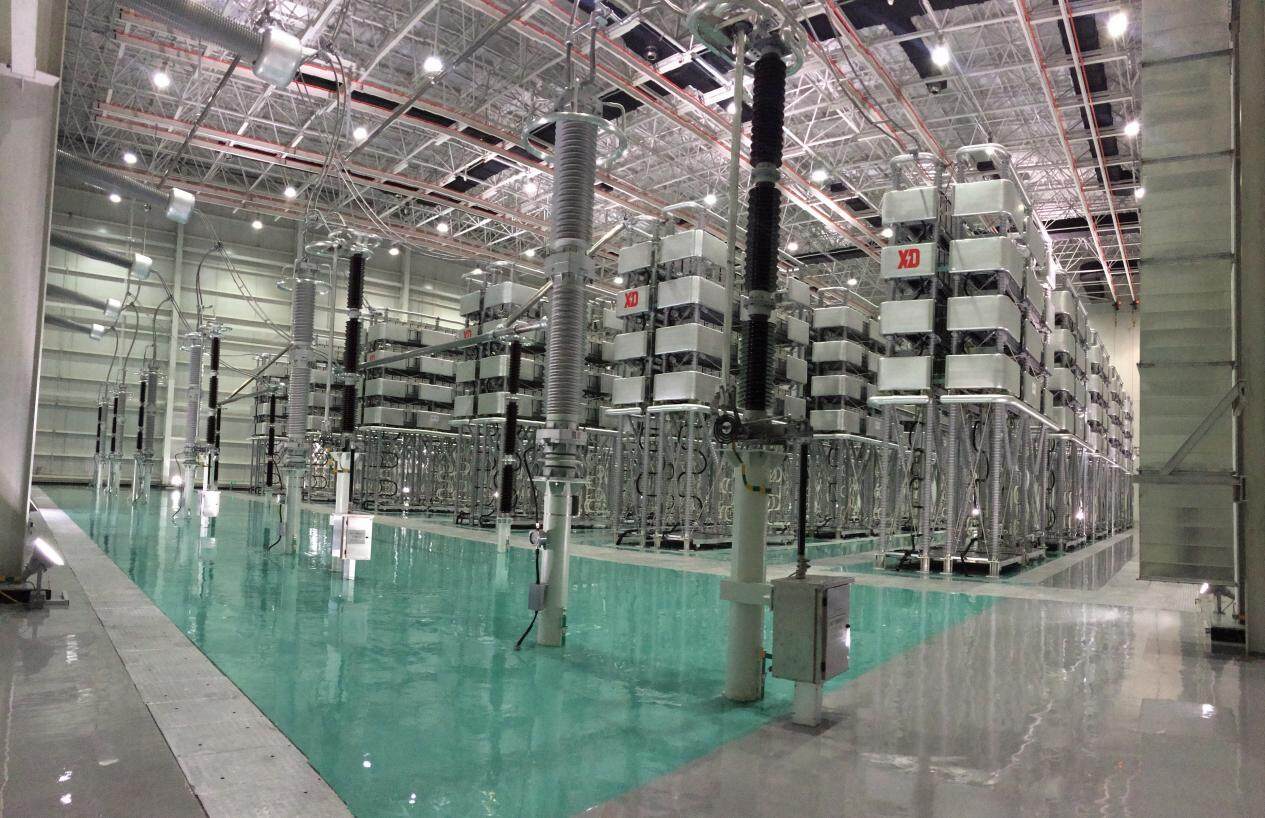
Over the past two decades, this converter station has delivered a cumulative electricity output exceeding 130 billion kWh, equivalent to the annual power generation of 1.5 Three Gorges hydropower stations, and has become a key gateway for clean energy from the western region to enter the power grid of the central and eastern regions.
Overcome the historical challenge of "phase change failure"
In a direct current transmission system, the converter valve is regarded as the "heart", undertaking the core task of electric energy conversion. Traditional converter valves employ grid commutation and conversion technology, consisting of thousands of thyristors. Once there is voltage fluctuation in the grid, the thyristors may fail to turn off, resulting in interruption of the commutation process and "sudden stop" of power transmission - this is known as "commutating failure".
This issue is particularly prominent in regions with dense DC landing points such as East China and South China. A single AC fault may trigger simultaneous commutation failures in multiple DC lines, resulting in power impacts on the scale of tens of millions of kilowatts, posing a threat to grid security. The receiving grid may face voltage instability, while the sending grid may encounter risks such as overvoltage and grid disconnection of new energy units.
To fundamentally address this issue, the Equipment Department of the State Grid Corporation of China, in collaboration with State Grid Henan Electric Power Company, State Grid DC Center, and State Grid Economic Research Institute, joined forces with Tsinghua University, Huairou Laboratory, China Electrical Equipment Group Co., Ltd., and other entities to form a research team. Starting with power semiconductor devices, they embarked on a journey of independent innovation.
Create a "Chinese solution" through full-chain innovation
After nine years of collaborative research and development involving industry, academia, and application, the team successfully developed the world's first 8 kV/3 kA reverse blocking IGCT device. This device possesses bidirectional voltage withstanding capability, allowing for both controlled turn-on and turn-off, thus addressing the shortcomings of traditional thyristors. Based on this proprietary device, the team further developed the world's first hybrid commutated converter valve.
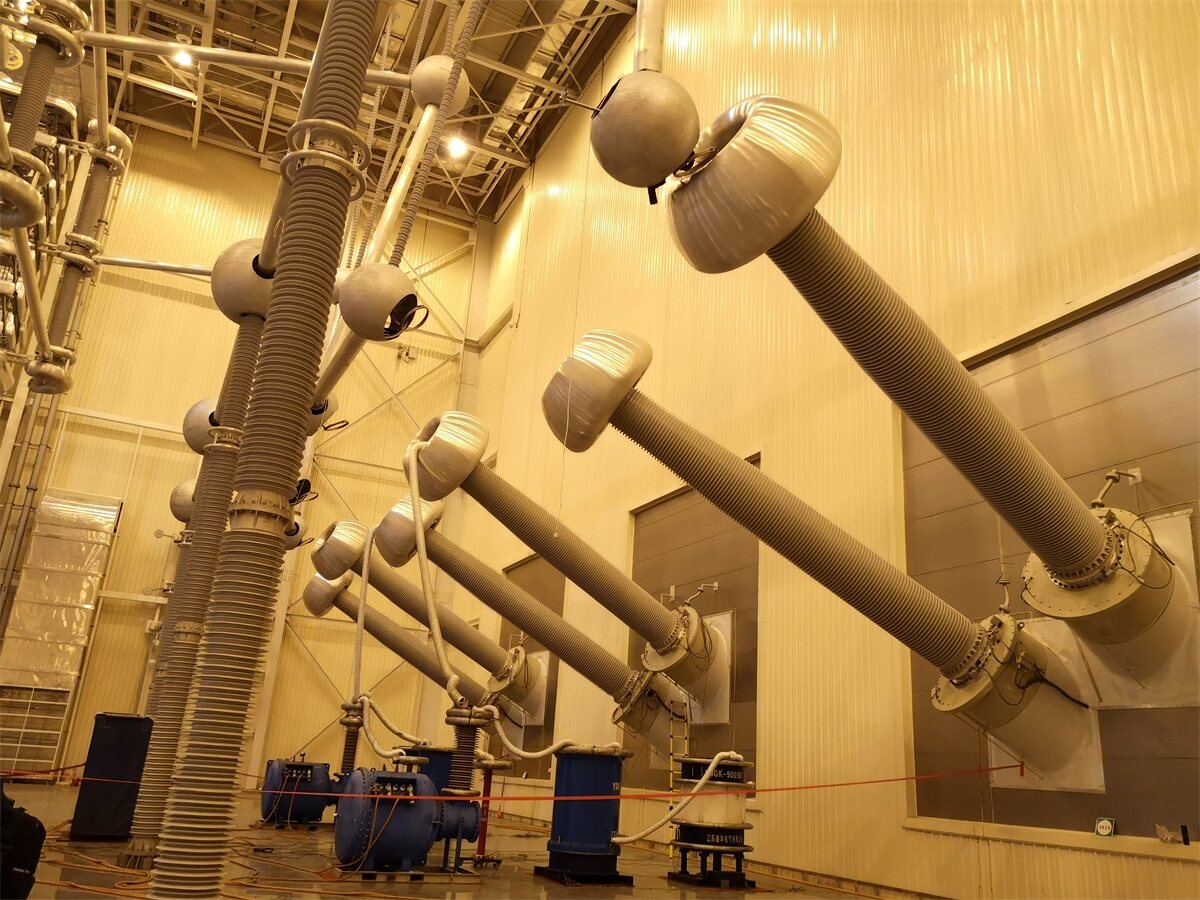
Yu Zhanqing, Director of the DC Research Center at the Department of Electrical Engineering and Applied Electronic Technology, Tsinghua University, explained that the new converter valve achieves precise identification and rapid interruption of current within microseconds, fundamentally solving the "commutating failure" problem. This technology has been selected for the Ministry of Industry and Information Technology's 2024 Guidance Catalogue for the Promotion and Application of the First Major Technical Equipment, as well as the National Energy Administration's Fifth Batch of Major Technical Equipment List in the Energy Sector.
Lou Yantao, Chairman of the Power System Division of China XD Group, a subsidiary of China Electric Equipment, pointed out that this achievement is applicable to both the renovation of existing DC projects and the construction of new UHV projects. While retaining the advantages of large capacity, low cost, low loss, and high reliability, it further reduces the reactive power compensation requirements of converter stations.
The project also adopted a control and protection system using entirely domestic chips, achieving 100% self-control from chips, software to hardware and systems. "We are not just upgrading technology, but taking a solid step on the path of domestic innovation," said Wang Jiangping, the technical chief of the Lingbao transformation project of Xidian Power System.
The Lingbao converter station, equipped with a "super heart," has now become a "super hub" for the consumption of new energy. After a smooth conversion, wind and photovoltaic power from the northwest region is transmitted over thousands of miles into the Central China power grid, increasing the capacity for new energy consumption by 30%. This provides a solid guarantee for the large-scale development and transmission of clean energy. Keywords: new infrastructure, infrastructure project
As the winter electricity consumption peak of 2025 approaches, the renovated Lingbao Converter Station will further support the transmission of clean energy from the northwest to other regions, ensuring the power supply of the cross-regional power grid. This technology not only provides new support for China's strategy of transmitting electricity from the west to the east and achieving its dual carbon goals, but also contributes an innovative and reliable Chinese solution to global large-capacity direct current transmission. Editor/Yang Beihua
Comment






 Praise
 Collect
 Comment

 Share
Share


Write something~