 Search


- Annually delivering 330 million cubic meters of water to the Tarim River ecosystem, safeguarding the lifeline of the oasis
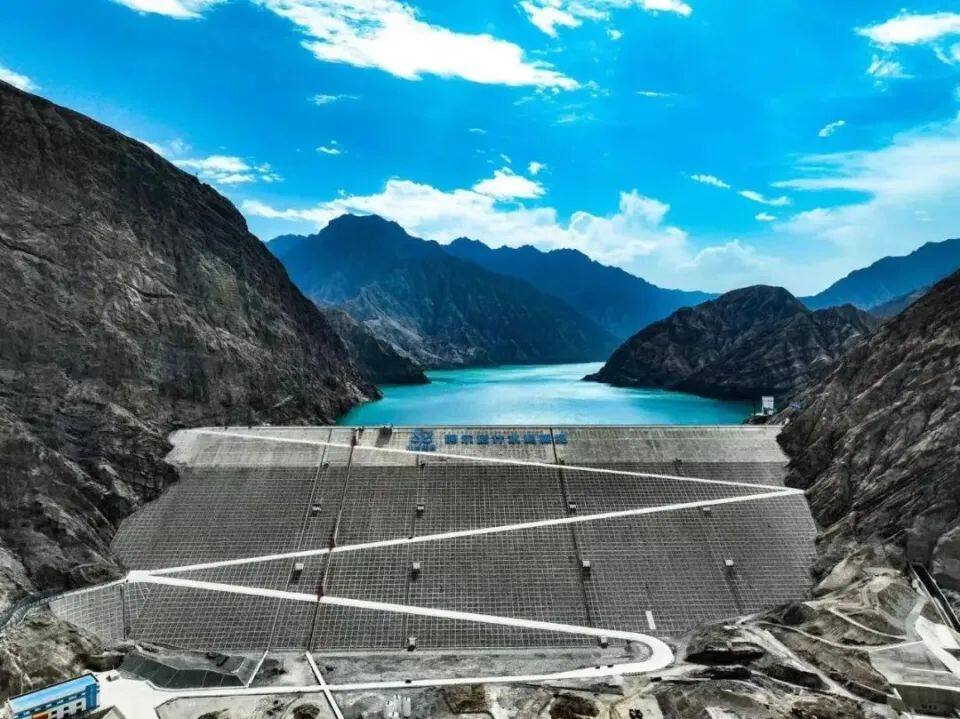
On the Yarkand River at the confluence of Kunlun Mountains and Tianshan Mountains, the surging flood that once made the people along the coast fearful has now been gently "tamed" by a towering 164.8 meter high dam. This is the Altash Water Conservancy Hub Project, known as the "Three Gorges of Xinjiang". Its construction has transformed millions of acres of farmland and countless villages downstream from 'afraid of water coming' to 'hoping for water coming'.
Taming the Wild River, Ending the Millennium Flood
The Altash Project is located at the border of Shache County and Aktao County in Kashgar Prefecture, Xinjiang. The Yarkand River was once one of the rivers with the highest flood control pressure in China, with frequent floods posing a serious threat to downstream safety.
The project started construction in 2011 and all units were put into operation for power generation in 2021. Its maximum dam height is 164.8 meters and its total storage capacity is 2.249 billion cubic meters. After completion, it will directly increase the flood control capacity of key downstream areas from less than once every 20 years to once every 50 years, completely reversing the passive flood control situation.
Overcoming the World Problem of 'Three Highs and One Depth'
Engineering construction faces world-class technical challenges such as high seismic intensity, high dams, high slopes, and deep cover layers. The deepest cover layer of the dam foundation reaches 94 meters, and the seismic fortification intensity is 9 degrees.
The builders have innovatively tackled challenges and utilized advanced technologies such as Beidou navigation unmanned compaction to ensure the absolute safety of dams under complex geological conditions, accumulating valuable experience for water conservancy projects in China and even the world.
Comprehensive benefits, benefiting the future of southern Xinjiang
As a multifunctional hub, the comprehensive benefits of Altash are being fully unleashed:
Power generation: The total installed capacity is 755 megawatts, with a designed annual power generation of 2.26 billion kilowatt hours, providing stable and clean energy for southern Xinjiang.
Irrigation: Ensuring irrigation water for 6.5147 million acres of farmland downstream, solving the dilemma of "spring drought and summer flood".
Ecology: Under the condition of meeting water supply requirements, an average of 330 million cubic meters of water is transported annually to the main stream of the Tarim River, effectively maintaining the downstream ecological environment.
This national treasure with a total investment of 10.986 billion yuan has become a strategic support point for benefiting regions such as Kezhou, Kashgar, and Hotan in southern Xinjiang.Editor/Yang Meiling
Comment



 Praise
 Collect
 Comment

 Share
Share


Write something~