 Search


- After the closure of the border locking project, sand control has entered a new stage of expanding borders and enriching the people
On the edge of the Taklamakan Desert, the cold winter did not stop the footsteps of desertification control. Maiti Turdi Maiti Kurban from Xianfeng Village, Minfeng County, is leading his members to plant grass squares and sand jujube seedlings on the sand dunes. Their village is only seven or eight kilometers away from this once ravaged desert, and they must urgently widen and thicken the sand prevention belt as the sandstorms have decreased.
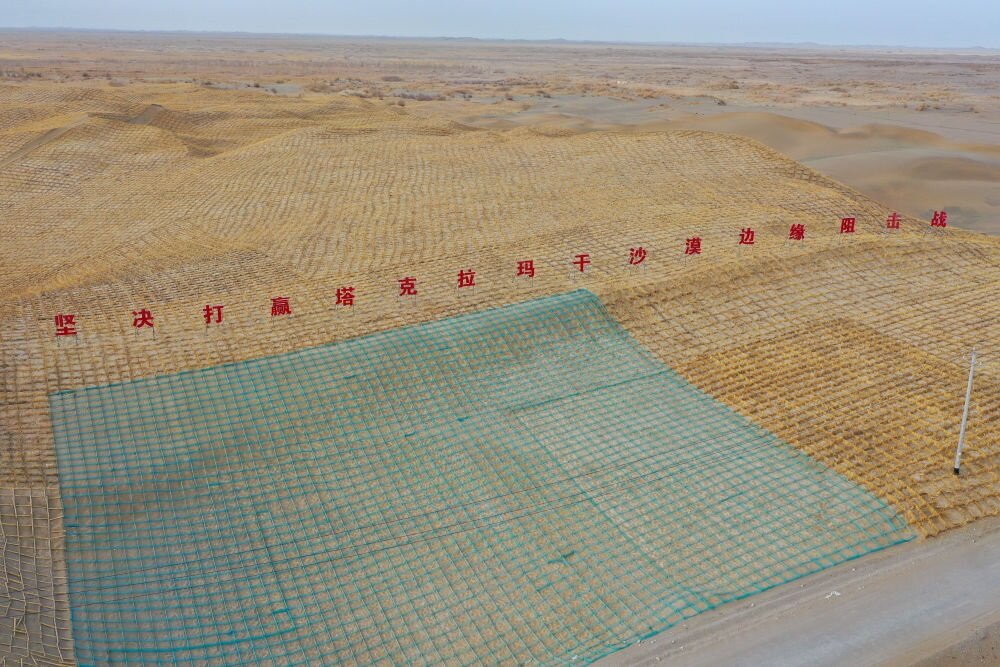
In November 2024, the 3046 kilometer long Taklamakan Desert Border Lock Project will be fully completed. In April 2025, General Secretary Xi Jinping specifically recognized this achievement during his participation in the voluntary tree planting activity in the capital. Nowadays, Xinjiang's desertification control has embarked on a new journey from border isolation to expanding, consolidating, and enriching the people through the sand industry.
Expanded and thickened 'green scarf'
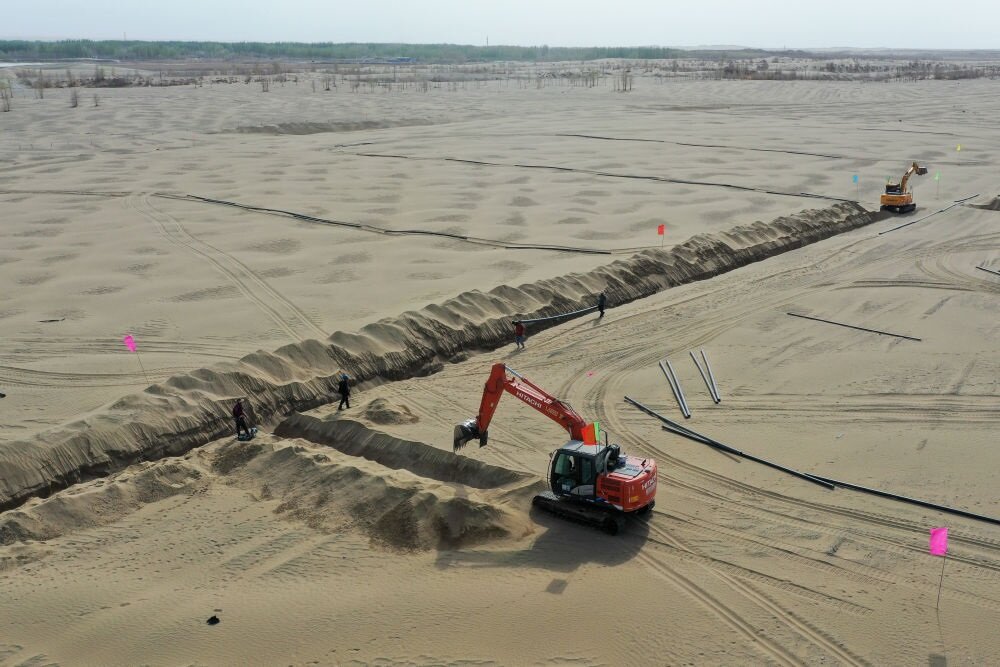
The interlocking 'dragon' is just the starting point. In Hotan County, the Tusong Buck couple gave up their out of town orchard and returned to their hometown to contract a thousand acres of sandy land to grow jujube trees; In Yutian County, enterprises have settled in to plant desert roses and pistachios, with a planned area of 10000 acres of sandy land. As of the end of October this year, 21 key counties and cities have added 9.3617 million mu of green planting and edge expansion area, and the average width of the edge protection belt has significantly increased. The "green scarf" is becoming denser as it is woven.
Technological innovation tailored to local conditions
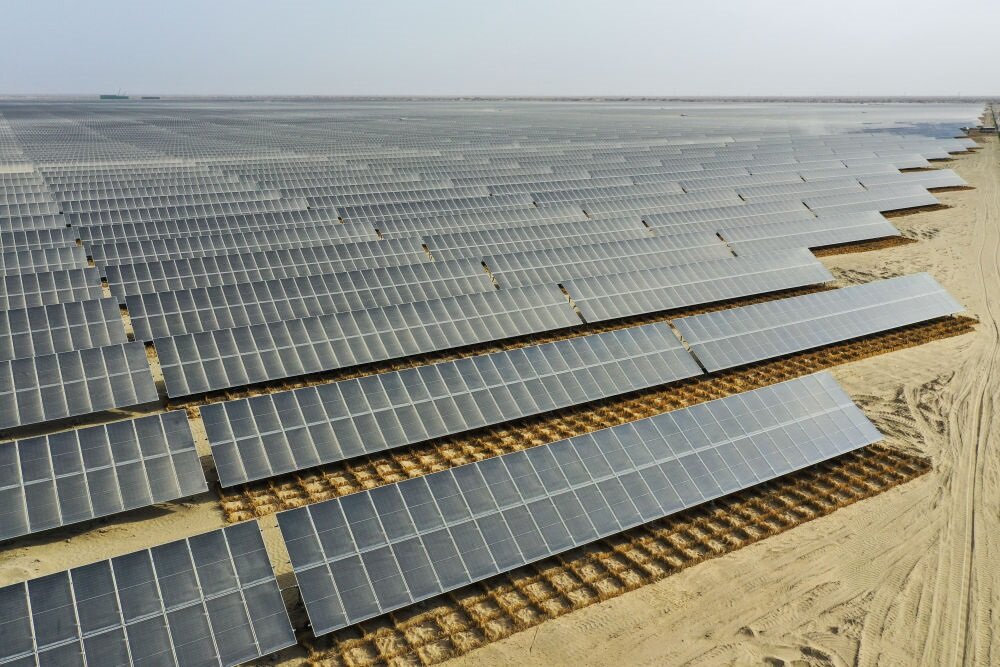
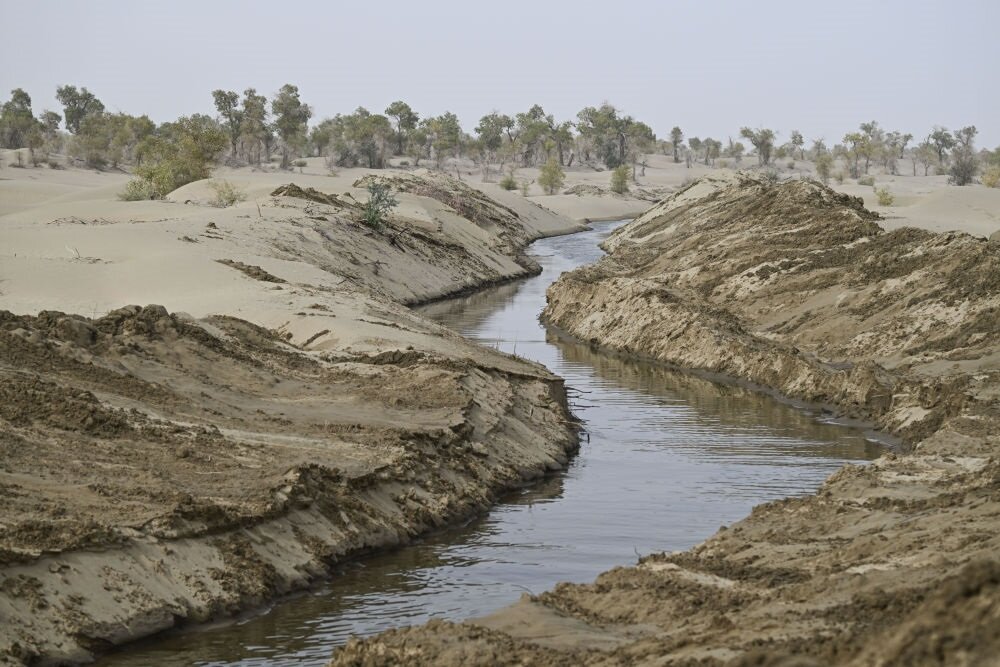
Desertification control cannot be separated from technology and innovative models. The Tarim Highway Shelter Forest, which runs through the desert, provides valuable technical foundation. Various efficient sand control models have been explored in various regions: the "terraced sand control" in Yutian County has transformed sand dunes into terraced fields, greatly reducing costs and soaring survival rates; The combination of "interval sand control" grass grid and high vertical sand barrier in Ruoqiang County has a significant windbreak and sand fixation effect, and the cost is reduced by 40%; Shaya County uses "photovoltaic water extraction" to extract shallow brackish water for irrigation, making 63000 acres of desert green. These tailored practices are building a solid green barrier.
Shali found a 'golden chain'
The construction of ecological barriers has led to the prosperity of the sand industry. The production of Cistanche deserticola in Yutian County accounts for 80% of the national total, and the rose fields stretch endlessly, with more than 40 related cooperatives; In the million acre ecological forest of Maigaiti County, forest ranger Nurguli Aihaiti takes care of the trees and records the growth of Cistanche deserticola. She receives a monthly salary and dividends at the end of the year, calling it the "iron rice bowl" in the desert. At present, the planting area of characteristic economic crops in the desert areas of Xinjiang exceeds 10 million mu, with an annual output value of nearly 29 billion yuan, driving an average annual income increase of over 3000 yuan per capita for more than 300000 farmers and herdsmen.
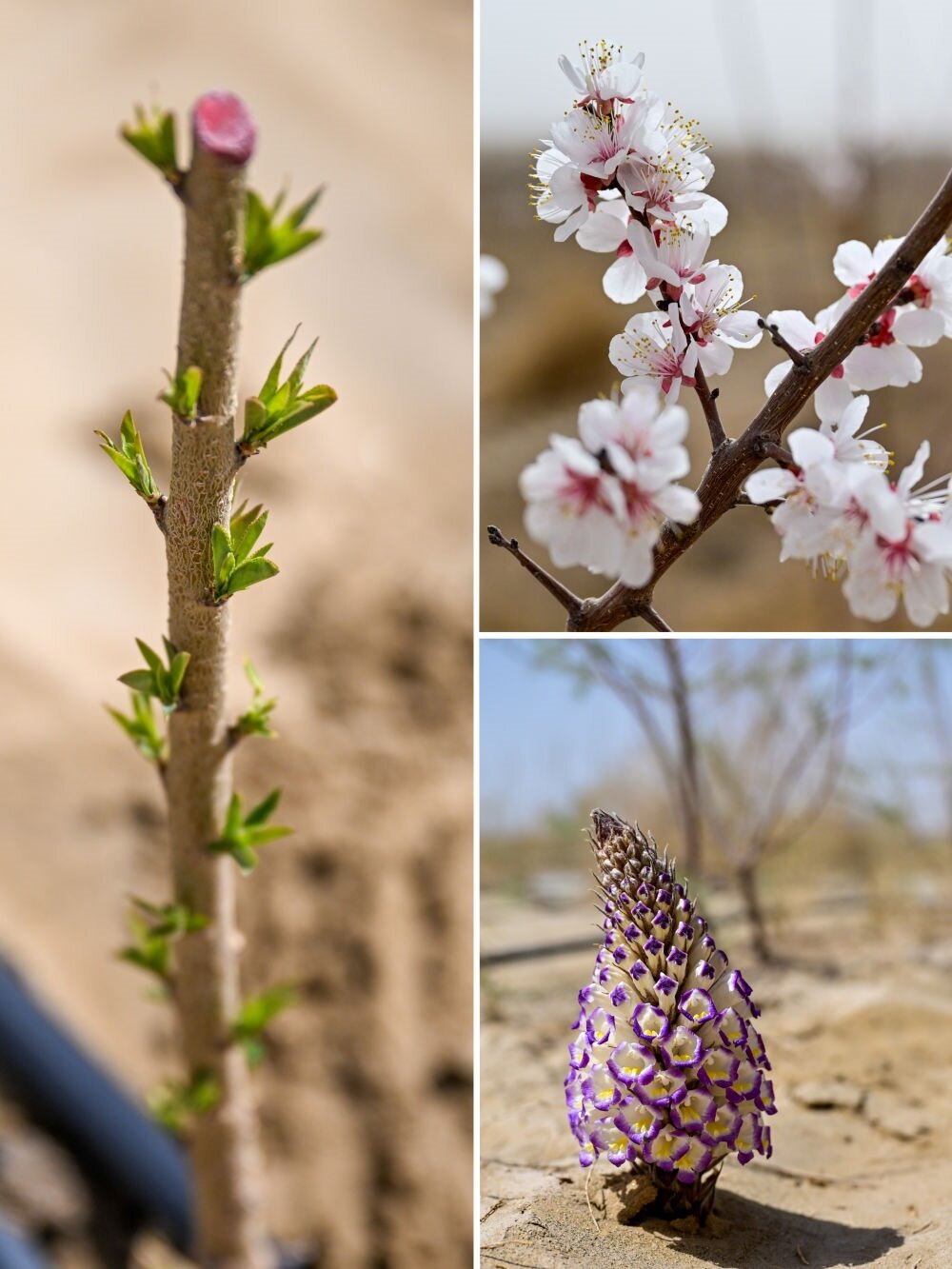
From the "green scarf" that resists sandstorms to the "golden necklace" that benefits the people and increases income, the story of the Taklamakan Desert edge is demonstrating the sustainable path of green prosperity.Editor/Yang Meiling
Comment



 Praise
 Collect
 Comment

 Share
Share


Write something~