 Search



- This strategy marks China's seizing the opportunity in the competition of 6G air space integration
At the beginning of 2026, a "star storm" caused by 203000 satellites is sweeping across the Chinese stock market from the International Telecommunication Union's document library. In just over ten trading days, all aerospace related stocks doubled, and satellites and rockets became hot topics on the streets and alleys. In this wave of enthusiasm, veteran media figure Eagle, after being interviewed by several media outlets, chose to use an in-depth talk to uncover the national chess game behind this "space declaration".
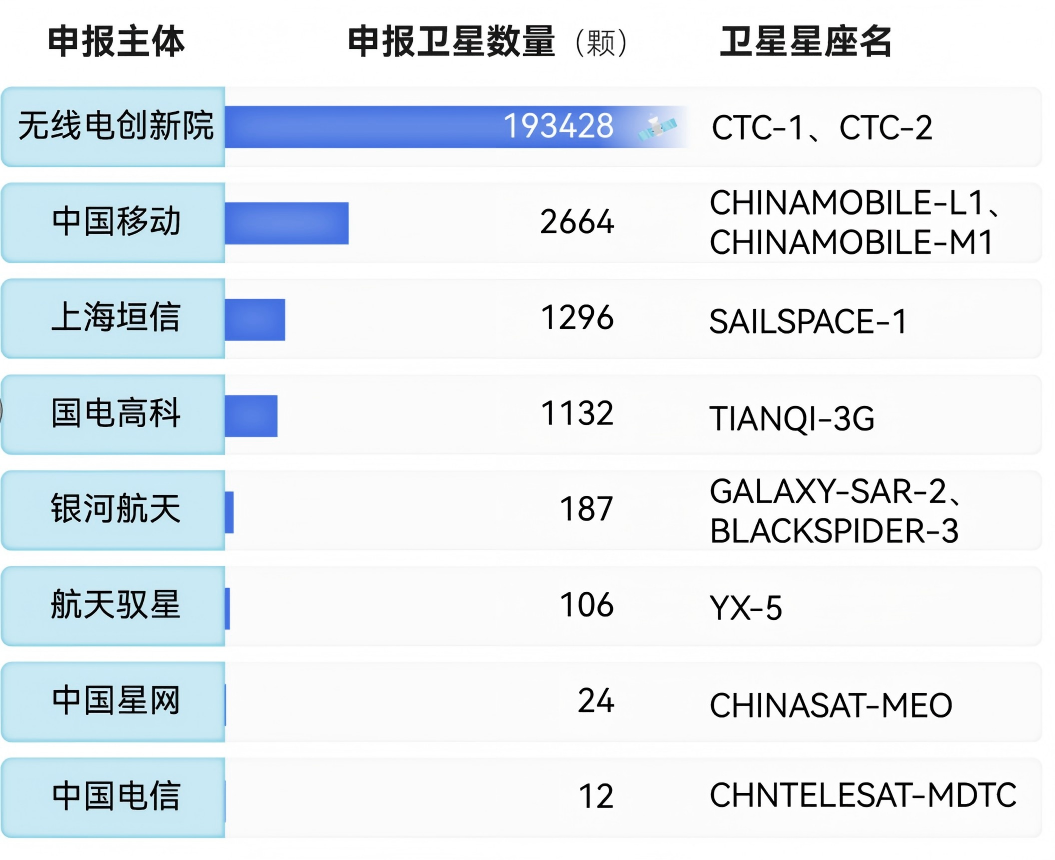
Tracing back to the end of December 2025. Seven Chinese institutions have submitted frequency orbit applications for 14 constellations to the International Telecommunication Union, with a total of 203000 satellites. Among them, the newly established Radio Spectrum Development and Utilization and Technology Innovation Research Institute has applied for 193000 satellites, and companies such as China Mobile and Yuanxin Satellite have also proposed a thousand satellite constellation plan. Previously, China had applied for a total of 51300 satellites, forming a multi-point layout such as GW constellation and Qianfan constellation, and forming a strategic confrontation with the US SpaceX star chain.
This application is regarded as the most impactful commercial space initiative in the first year of China's 15th Five Year Plan.

193000 satellites build solid frequency orbit foundation
The Radio Innovation Institute has become the most prominent presence in this application. The institute was registered in Xiong'an New Area, Hebei Province on December 30, 2025. It is jointly built by seven units including the National Radio Monitoring Center, China Satellite Network Group, and China Electronics Technology Group, focusing on spectrum development, utilization, and technology integration.
The two LEO constellations, CTC-1 and CTC-2, submitted by them, each contain 96714 satellites, totaling 193428, basically covering the key frequency bands and orbital positions required by the future satellite Internet of Things and the Internet. From the VHF low-frequency band to the Ku/Ka and Q/V high-frequency bands, from the 500-1200 kilometer low orbit golden range to the direction of ultra-low orbit extension, a full frequency coverage layout of "core+reserved" is formed.

This is not simply 'occupying a pit'. As a space power with complete capabilities in satellite development, launch, and operation, China's unconventional application is a strategic decision based on technological and industrial support. Following the International Telecommunication Union's "first to declare, first to coordinate, first to use" rules, China is proactively operating to lock in scarce orbit and spectrum resources for future space development.
China Mobile launches 6G aerospace integration
Another major highlight comes from China Mobile. This world's largest telecommunications operator has applied for the CHINAMOBILE-L1 and CHINAMOBILE-M1 constellations for the first time, with a total of 2664 satellites, officially entering the field of satellite networking.
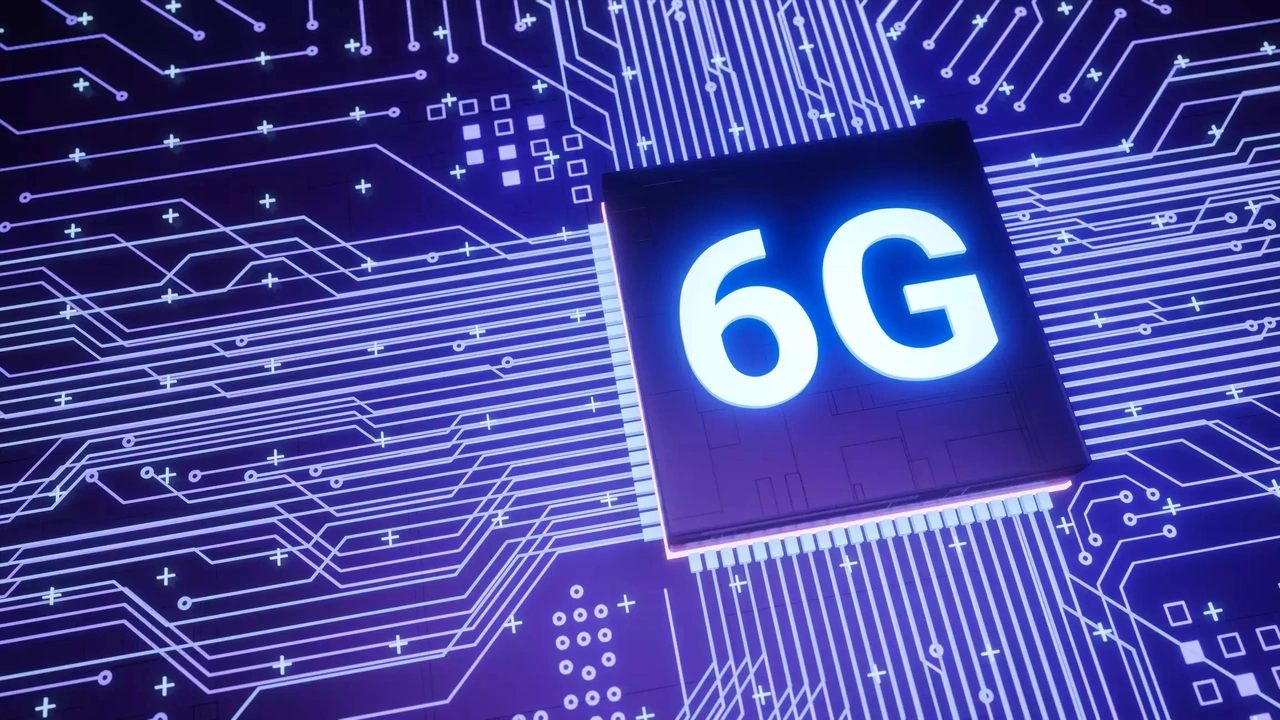
Among them, the CHINAMOBILE-L1 low orbit constellation contains 2520 satellites deployed in an orbit of 500-1200 kilometers, focusing on low latency and high bandwidth, and supporting scenarios such as direct connection of mobile phones to satellites and low altitude economic communication. CHINAMOBILE-M1 medium orbit constellation consists of 144 satellites, configured with 12 x 12 orbital planes, focusing on wide area coverage and link backup to compensate for low orbit blind spots and alleviate inter satellite link pressure.
6G will include satellites in the main navigation channel, and the integration of air, space, and earth has become the primary label of 6G. ”Eagle pointed out in its analysis that China Mobile's use of LEO+MEO collaborative networking highlights the characteristics of telecom grade services, laying the foundation for China to occupy the strategic high ground of 6G in the next decade.

Ecological collaboration to solve the problem of commercial closed loop
In this application, private enterprises such as Guodian High tech, Galaxy Aerospace, and Aerospace Yuxing also submitted their own distinctive low orbit constellation plans, focusing on sub sectors such as the Internet of Things, communication remote sensing, and in orbit services, forming an industrial ecosystem of "national team+private enterprises".
This precisely solves the core dilemma of China's commercial aerospace development in the past decade. Since the beginning of commercial aerospace in 2015, the industry has always faced the "chicken and egg" paradox - without a large-scale constellation, it is difficult to form a business model; Without a business model and unable to support constellation construction.
Nowadays, the dominance of frequency tracks at the national level injects a stimulant into the industry. Private enterprises can focus on tackling reusable technologies such as rockets and satellite manufacturing industrialization without any distractions; Telecom operators rely on massive user resources to import commercial traffic into giant constellations, thus opening up a commercial closed loop in one fell swoop.

2026 will truly be the first year of China's commercial aerospace industry, "Eagle wrote in the article. From 5G to new energy vehicles, from high-speed rail to aerospace, China has repeatedly achieved a leap from following to leading with its national system and top-level design. The declaration of 203000 satellites this time is not only a resource layout, but also a strategic declaration for China to write its own chapter in the space age.Editor/Yang Meiling
Comment





 Praise
 Collect
 Comment

 Share
Share


Write something~