 Search


- This marks the equipment landing stage of this important transportation project in Latin America

At the azure Santos Port terminal, a giant crane slowly lifts an orange locomotive bearing the "CRRC" (China CRRC) logo. This batch of equipment that crosses the ocean, including two locomotives, three hopper cars, and one flatbed with side panels, will undertake the maintenance responsibility of the Red Ruby Line 7 on the northern axis of the S ã o Paulo Intercity Railway.
Although they do not directly carry passengers, they are the 'lifeline' that ensures the safety and smoothness of railways, "the project leader explained, pointing to the hopper car being unloaded. These vehicles are specifically designed for railway maintenance: hopper cars are used for laying ballast and stabilizing roadbeds; A flatbed truck can transport heavy components such as steel rails; Locomotives provide traction for maintenance operations.
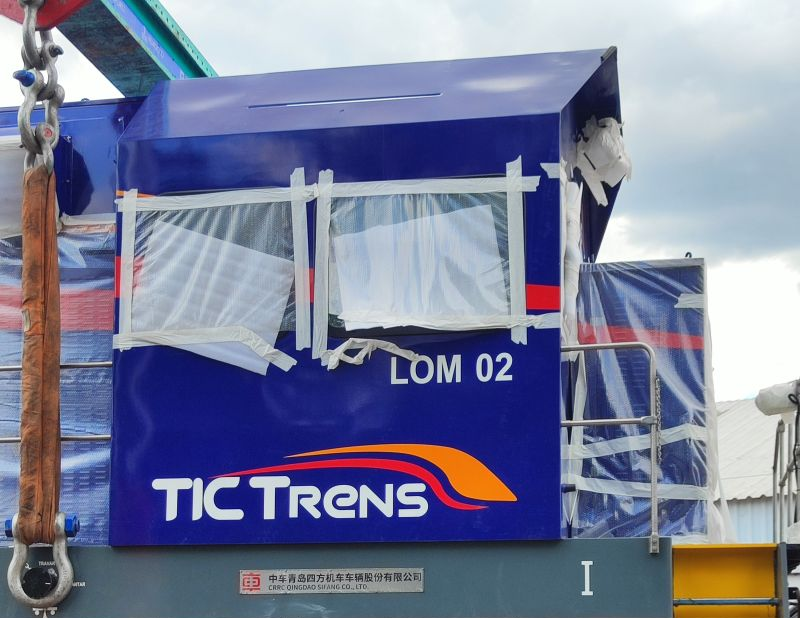
To ensure seamless integration, all equipment has undergone rigorous testing in China before arrival, covering performance, safety, and local standard adaptation. Next, they will be transported to the railway base for secondary debugging and operational integration, laying the foundation for long-term stable service. This is a strategic choice to accelerate the modernization of the S ã o Paulo railway, "the project team emphasized, introducing Chinese equipment and technology to cope with the increasing pressure of passenger and freight transportation in the S ã o Paulo metropolitan area. Improving maintenance quality means reducing train interruptions and enhancing the competitiveness of railways over highways - this is the key to Brazil's urban transformation.
Behind the cooperation lies a deeper layout. The franchisee of the North Axis project, TIC Trens (a subsidiary of CRRC Hong Kong), is forming a new train fleet: in addition to taking over the existing 30 Korean made trains, it has planned to purchase 22 new trains from CRRC, including 7 intercity railway models and 15 intelligent intercity trains. In the future, these vehicles will connect intercity railways (TIC), intercity railways (TIM), and Metro Line 7, forming an efficient network with a total length of 101 kilometers.
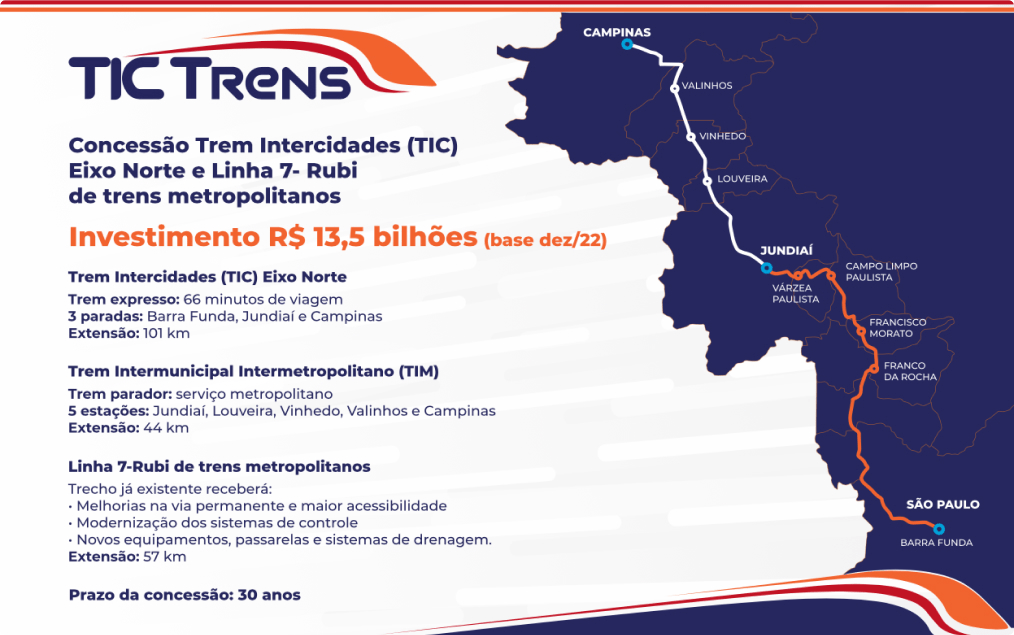
The North Axis project is not only Brazil's transportation engine, but also a key project for China's technology to go global. After the signing of the project in 2024, multiple Chinese companies actively participated: China Railway Signal&Communication Corporation was responsible for the signal system, Poly Huaxin was responsible for the communication and monitoring system, and Tianjin Rail Transit Group provided operational consulting - a "Chinese solution" chain from equipment to intelligence is taking root in South America.
Connect the three cities and activate the economy
The northern axis will construct a multi-level rail transit corridor from the city center of S ã o Paulo to the urban areas of Jundiay and Campinas. After the completion of the project, it is expected to significantly alleviate highway congestion and promote regional economic integration. Keywords: international news, infrastructure projects, railways
This is just the beginning, "said Torres, a port engineer, as he looked at the vehicles being loaded." These Chinese equipment have brought us closer to the 'one hour metropolitan area.' As subsequent trains are delivered, this transportation artery that runs through southeastern Brazil will truly pulse.Editor/Yang Meiling
Comment

 Praise
 Collect
 Comment

 Share
Share


Write something~