 Search


- China becomes the first 'electricity country' in human history
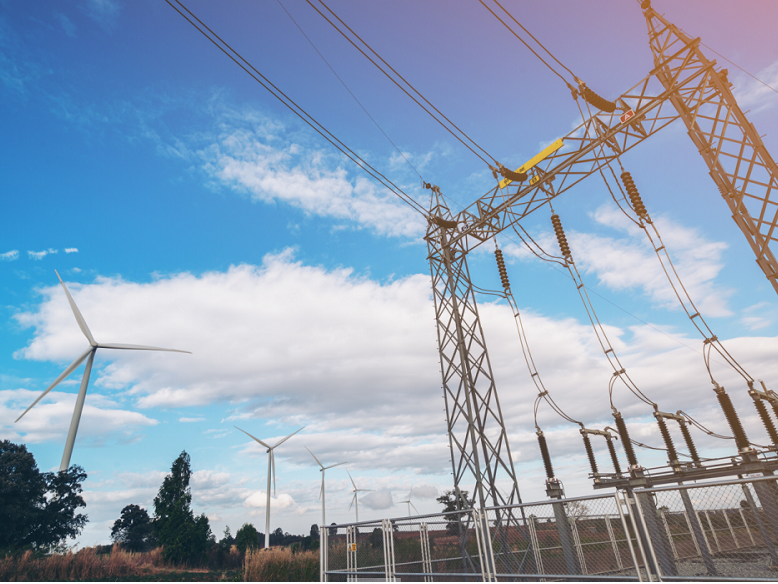
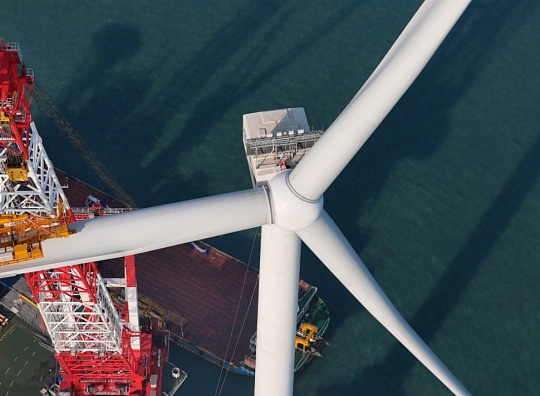
On the coastline of Dongying, Shandong, the world's largest 26 megawatt offshore wind turbine independently developed by Dongfang Electric Group rotates in the wind, with its hub center height equivalent to more than 50 residential buildings and a sweeping area exceeding 10.5 standard football fields. This is not only a technological breakthrough, but also a microcosm of China's foray into the deep sea. As China becomes the first important "electricity country" in human history, offshore wind power and photovoltaics are becoming key supports to consolidate this position, enabling China's new energy layout to achieve a coordinated upgrade of "onshore foundation building and offshore expansion".
Why does China truly deserve its reputation?
The emerging buzzword in the global energy and climate policy field, 'electricity country', has its core measurement standards being the proportion of electricity in the national energy system and the level of electricity product exports. China's achievement of this honor is not accidental, but a result of solid data and planning.
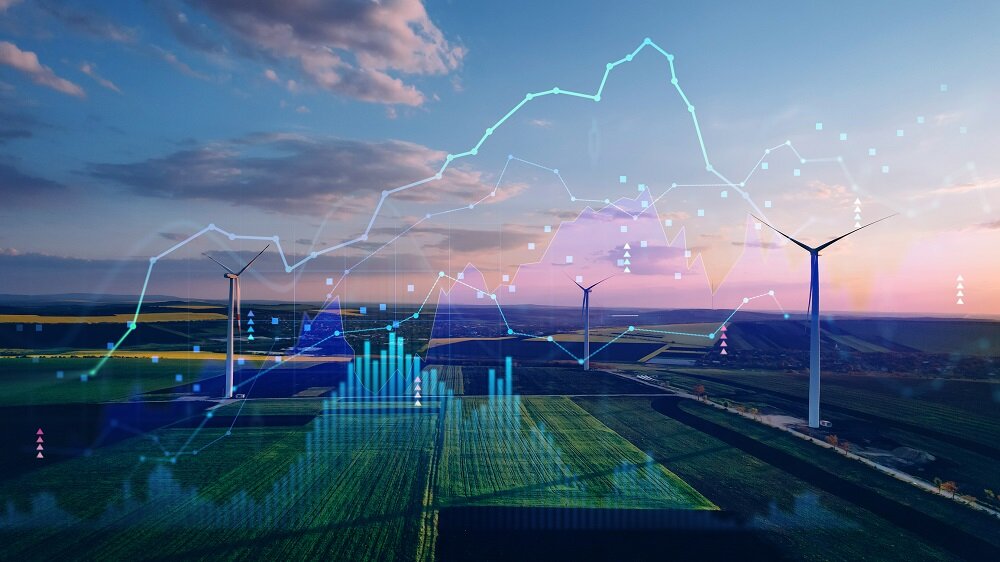
According to authoritative data released by the National Development and Reform Commission, the total electricity consumption in China will exceed 10 trillion kilowatt hours for the first time in 2025, reaching 10368.2 billion kilowatt hours, a year-on-year increase of 5.0%, setting a new record for annual electricity consumption in a single country worldwide. This scale is equivalent to more than twice the annual electricity consumption of the United States, far exceeding the total annual electricity consumption of the four economies of the European Union, Russia, India, and Japan, and achieving nearly doubled growth compared to about 5.5 trillion kilowatt hours in 2015.
The support at the power end is equally strong. By the end of 2025, the cumulative grid connected installed capacity of wind and photovoltaic power in China has exceeded 1.8 billion kilowatts for the first time, equivalent to the total installed capacity of about 82 Three Gorges power stations. In the same year, the total installed capacity of power generation in China exceeded 3.8 billion kilowatts, of which clean energy accounted for over 60% of the installed capacity. For every 3 kWh of electricity used, more than 1 kWh came from green power. The total installed capacity of wind and photovoltaic power exceeded that of thermal power in history, and green power has become an important pillar of China's energy structure.
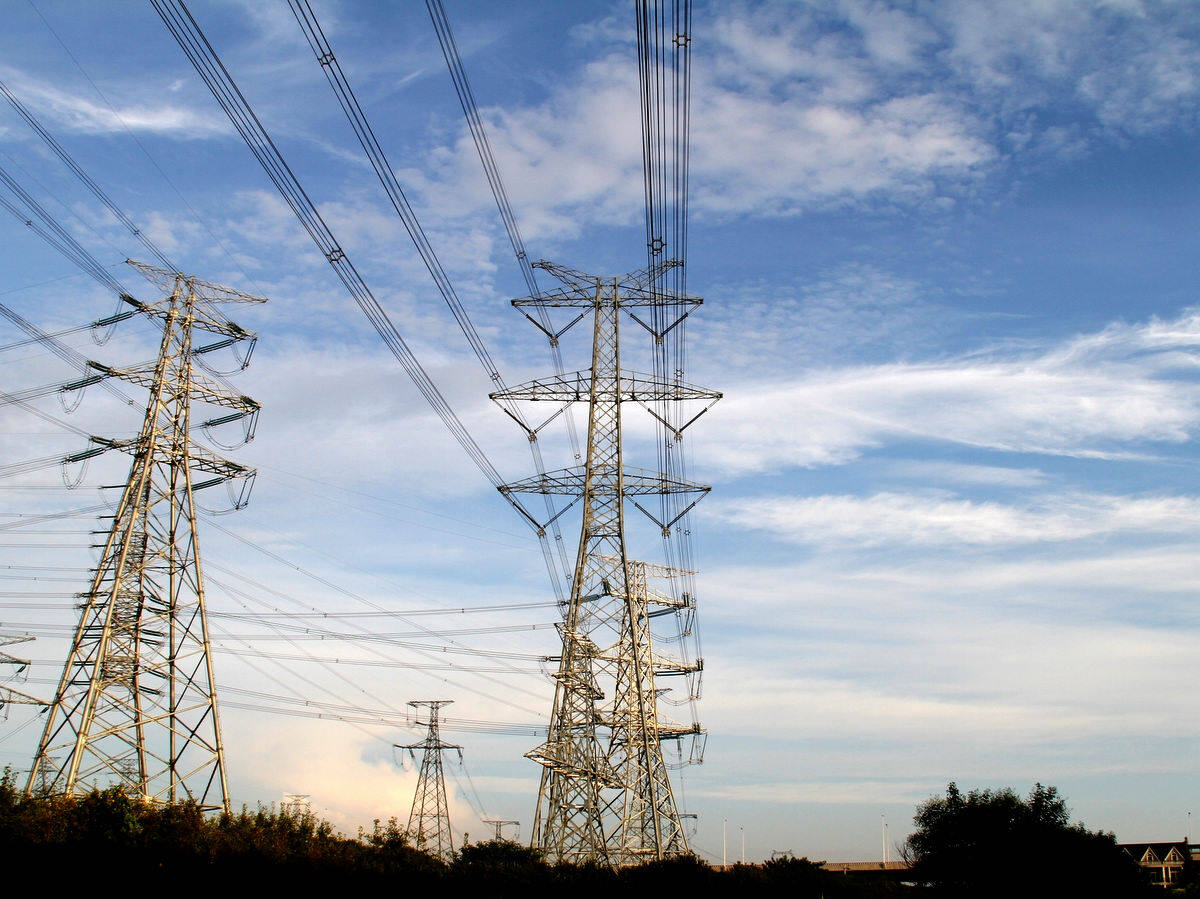
On the other hand, many countries with high levels of economic development around the world have always been plagued by problems such as "power shortages", "fragmented power grids", and high electricity bills. The rapid leap in China's power scale cannot be achieved without the scientific guidance of the "China Plan" -46 ultra-high voltage projects have built the energy artery of "West East Power Transmission" and "North South Power Supply". Currently, the "19 AC and 20 DC" ultra-high voltage AC-DC transmission project has been completed and put into operation, with a transmission capacity of over 300 million kilowatts and a cumulative power transmission of over 3 trillion kilowatt hours; The construction of a unified national electricity market is accelerating, and the coordinated promotion of the "East Calculation and West Calculation" project and energy layout fully demonstrates the high efficiency of "planning and governing the country".
The 'blue growth pole' of new energy is accelerating its rise
As an important breakthrough in the field of ocean energy, the rapid development of offshore wind power and offshore photovoltaics has become a key support for China to consolidate its position as an "electricity country", and has also enabled China's new energy layout to achieve a coordinated upgrade of "building foundations on land and expanding boundaries on the sea".
In the field of offshore wind power, China has ranked first in the world's cumulative installed capacity for four consecutive years, and has been leading the world in new installed capacity for seven consecutive years. According to data from the National Energy Administration, as of the end of March 2025, the cumulative grid connected capacity of offshore wind power in China has reached 42.73 million kilowatts; By the end of September, this number had climbed to 44.61 million kilowatts, and the annual scale continued to break records. From the perspective of regional layout, the scale of Jiangsu's offshore wind power grid connection has exceeded 12 million kilowatts. The Three Gorges Group's Jiangsu Dafeng 800 MW offshore wind power project has achieved full capacity grid connection, with the farthest offshore distance reaching 85.5 kilometers, becoming the farthest offshore wind power project in China; The Longyuan Electric Power Jiangsu Rudoi Wind Farm of the National Energy Group has a total installed capacity of 482000 kilowatts and an annual power generation of 900 million kilowatt hours, demonstrating the strong production capacity of offshore wind power.
Technological breakthroughs are equally impressive. In August 2025, the world's largest 26 MW offshore wind turbine independently developed by Dongfang Electric Group was successfully hoisted at the Dongying Wind Power Equipment Testing and Certification Innovation Base in Shandong Province. Its hub center height is equivalent to more than 50 floors of residential buildings, and the sweeping area exceeds 10.5 standard football fields. At present, China has established a complete industry chain system for offshore wind power covering design, manufacturing, construction, and operation. The production capacity of wind turbines accounts for 60% of the global market share, and the proportion of domestic production of core components continues to increase, completely breaking the foreign technology monopoly.
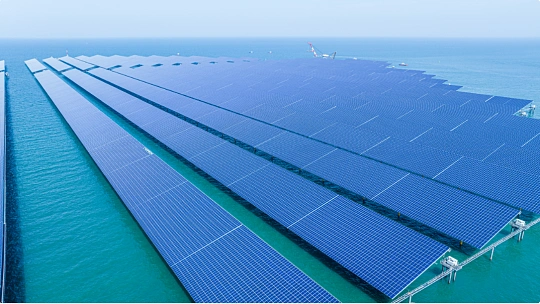
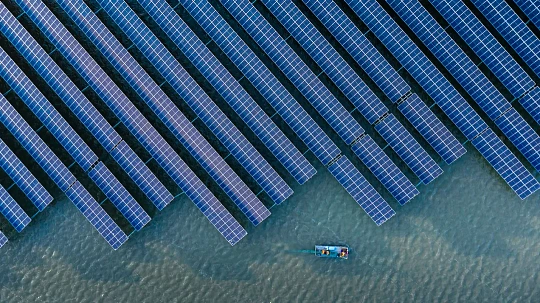
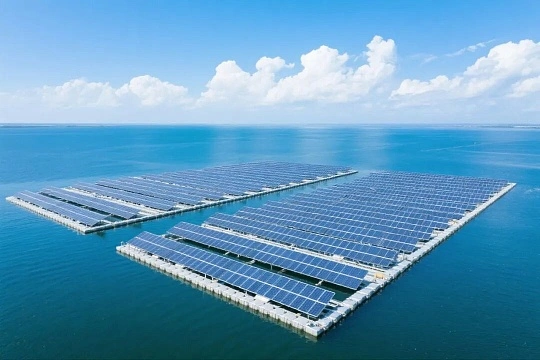
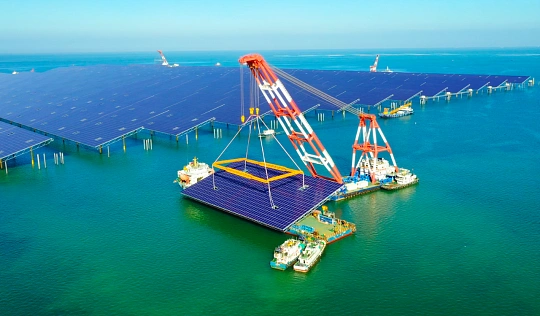
Although offshore photovoltaics are still steadily advancing, there is enormous potential for development. With the continuous efforts of the National Energy Administration in the layout of offshore new energy, coastal provinces such as Shandong and Jiangsu have gradually launched pilot projects for offshore photovoltaics, forming synergy and complementarity with offshore wind power. In the future, it will further fill the gap in marine energy development and add new growth poles to China's green power supply.
China's plan to solve the world's energy crisis
China's becoming the first important 'electricity country' is not only a vivid practice of its own high-quality development, but also provides a replicable demonstration sample for the global energy green transformation. The International Energy Agency has clearly stated that the 'era of electricity' has arrived, and China is helping countries around the world embrace this change through comprehensive output of technology, production capacity, and solutions.
In terms of equipment supply, China has become a core exporter of global new energy equipment, providing 70% of wind power equipment and 80% of photovoltaic module equipment to the world. Export products are distributed in more than 200 countries and regions around the world, and in the past 10 years, it has driven the global cost of wind power down by more than 60%. The annual output value of China's wind power industry chain is about 1.2 trillion yuan, driving direct and indirect employment of over 2 million people, forming an industrial system that combines scale and competitiveness.
In the field of international cooperation, China's new energy solutions are benefiting all over the world. In sub Saharan Africa, China's off grid photovoltaic systems contribute to over half of the new power connections; The rural off grid solar power plant project in Cameroon has completely bid farewell to the frequent power outages faced by local villagers. The night lights not only illuminate their homes, but also activate the local nighttime economy; The first photovoltaic power station in the Central African Republic, the Sakai Photovoltaic Power Station, meets about 30% of the electricity demand in the city of Bangui, injecting new vitality into local development.
In Pakistan, Chinese made solar panels have become popular investment products and have even been included in the local bride's "dowry list"; In Laos, the construction of the China Laos 500 kV interconnection project is progressing steadily. As a landmark project of the the Belt and Road jointly built by China and Laos, the project is planned to be completed in 2026, which can realize the mutual aid of 1.5 million kilowatts of two-way power and deliver about 3 billion kilowatt hours of clean power every year. In addition, China has taken the lead in formulating the world's first international standard in the field of photovoltaic direct current, facilitating the signing of a total installed capacity of 12 million kilowatts at the 2025 Shanghai Cooperation Organization Energy Ministers' Meeting, providing accessible and affordable energy transformation options for countries in the global South through "shared supply".
Nowadays, China's power transformation has entered a deep water zone, and the electrification rate is steadily increasing, expected to reach around 35% by 2030. More than 95% of coal-fired power units achieve ultra-low emissions, and over 50% can achieve deep peak shaving. The world's largest clean coal-fired power supply system has been established; Replacing coal with electricity, oil with electricity, and gas with electricity is steadily advancing in various industries such as transportation, industry, and construction, and the substitution of electricity is continuously deepening.
Looking towards the future, China will continue to promote the energy revolution, accelerate the planning and construction of new power systems, implement large-scale and high proportion new energy transmission campaigns, and promote the expansion of offshore wind power to deep and distant seas. It is expected that during the 15th Five Year Plan period, the annual installed capacity of offshore wind power will increase by 15 million kilowatts, and the cumulative installed capacity by the end of the 15th Five Year Plan will exceed 100 million kilowatts.
Lighting up the world's first important 'electricity country', China has proven through practice that green transformation and development quality improvement can achieve resonance on the same frequency. From onshore windmills to offshore wind towers, from domestic energy upgrades to global coordinated development, a future driven by "electricity" and based on "green" is accelerating into reality, and China will continue to serve as the "engine" of global energy transformation, writing a new chapter of harmonious coexistence between humans and nature.Editor/Yang Meiling
Comment


 Praise
 Collect
 Comment

 Share
Share


Write something~