 Search


- Chinese companies are penetrating the entire industry chain to transform Tanzania's advantages into industrial capacity
- China firmly holds the position of Tanzania's largest source of foreign investment with 39% of foreign investment and approximately 60% of job contribution

In Tanzania on the west coast of the Indian Ocean, an industrial transformation driven by Eastern capital is quietly accelerating. The latest investment report for the first quarter of 2026 shows that this East African hotspot is absorbing global capital at an unprecedented rate, and China, with a proportion of up to 39% of investment and about 60% of employment contribution, not only holds the position of the country's largest source of foreign investment, but also becomes the core engine for its transformation from an agricultural country to an industrial country.
When $1.12 billion of foreign investment flows in, more than $2100 of capital is transformed into the roaring machines of factories every minute, and a new economic map centered on manufacturing is clearly emerging on the equator.

Penetration of the entire industry chain from textiles and clothing to steel and cement
Data doesn't lie, but the structural changes behind it are worth pondering. Among the 177 projects registered this quarter, the manufacturing industry took the lead, not only accounting for 51% of the project quantity, but also absorbing nearly half (47%) of the real money and creating 63% of job opportunities miraculously.
This is not a simple transfer of production capacity, but a deep localization embedding. From the textile industrial park in Dar es Salaam to the building materials processing base in Mtwara, Chinese enterprises bring not only advanced production lines, but also mature technical standards and management experience.
Taking the textile industry as an example, a leading Chinese enterprise has established a garment factory in Tanzania, which has achieved 90% local procurement of raw materials, directly driving the recovery of the surrounding cotton planting and logistics transportation industry chain. This full industry chain penetration is transforming Tanzania's simple resource export hub into a regional manufacturing center with added value creation capabilities.
The Siphon Effect of Dar es Salaam and the Rise of Coastal Gradients
The flow of capital outlines a clear regional economic geography. Dar es Salaam leads the country with an absolute advantage of 60 projects, becoming the undisputed top investment city, and its siphon effect as the economic capital is becoming increasingly significant.
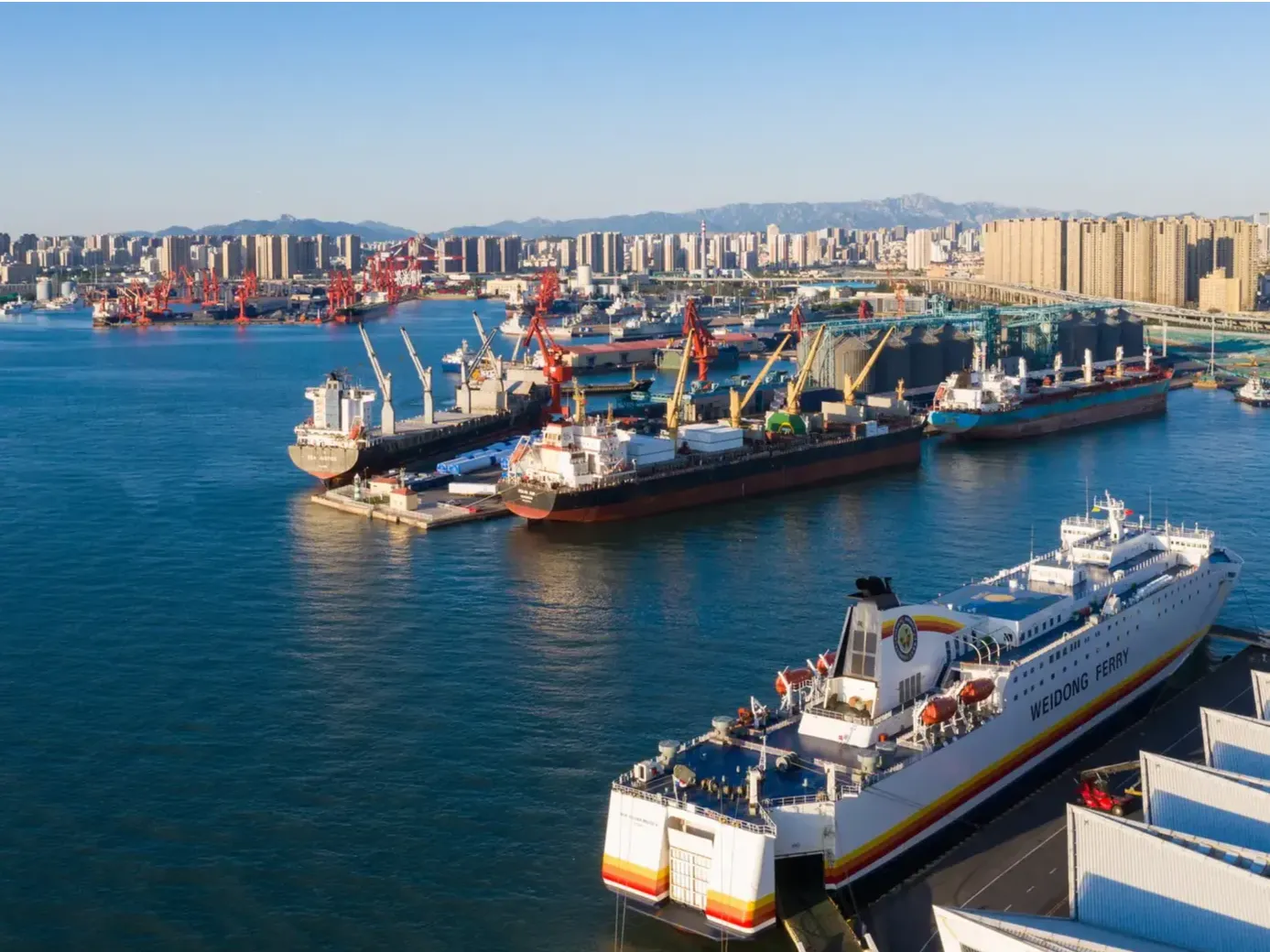
However, it is worth noting that the rise of coastal areas and southern Mtwara is breaking the single center pattern. Especially Mtwara, with its natural deep-water port advantage and connection to the road network of the Limpopo Corridor, is undertaking more heavy asset industrial projects.

TISEZA Director General Gilead John Terry pointed out in interpreting the data that this gradient distribution of regions is precisely in line with Tanzania's strategic intention of building an economic growth pole - using cities as the brain and coastal areas as the limbs, and transmitting growth momentum to the inland through the capillaries of infrastructure.
After the UAE and other Middle Eastern capital briefly captured the spotlight at the end of 2025, Chinese capital once again established its unshakable dominant position with its profound accumulation and long-term endurance in the manufacturing industry.
This is not just a digital victory of 1.12 billion US dollars, but also a victory for the development model. In the current global supply chain restructuring, Tanzania is leveraging China's technology transfer and capacity cooperation to transform its demographic dividend into tangible industrial dividends. Keywords: international cooperation, connectivity, Tanzania
For this hopeful land of East Africa, China's investment is no longer just an injection of funds, but a golden key that opens the door to industrialization, enabling Tanzania to firmly move from the edge of raw material supply to the core of manufacturing in the global value chain.Editor/Cheng Liting
Comment


 Praise
 Collect
 Comment

 Share
Share


Write something~