 Search


- Vietnam proposes that China prioritize three standard gauge railway projects, involving preferential financing and technology transfer
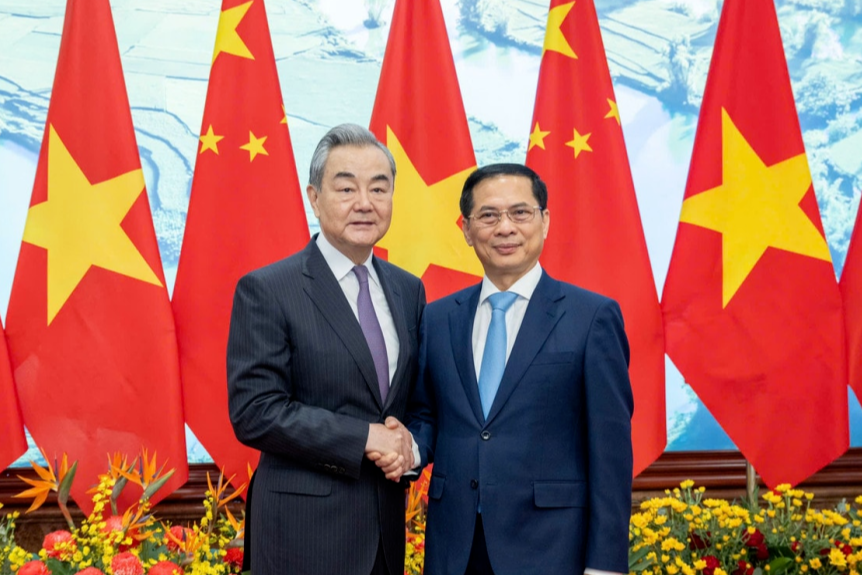
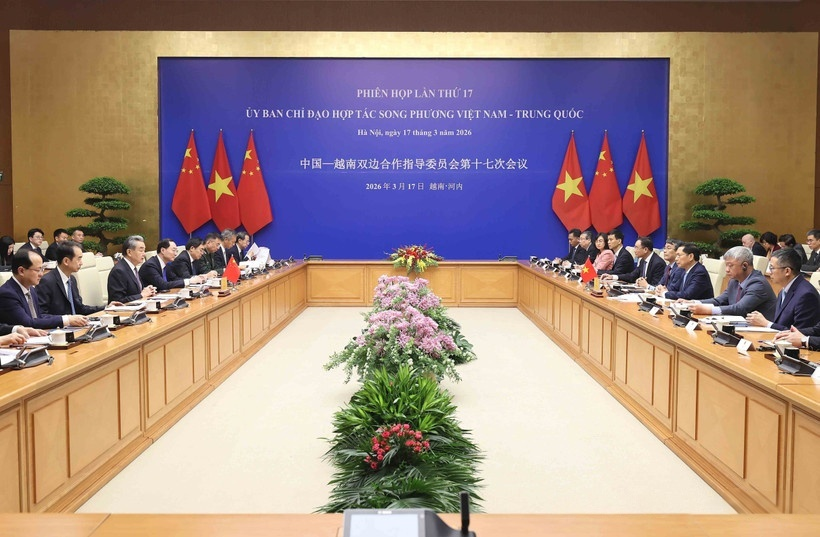
On the morning of March 17, 2026, in Hanoi, a high-level dialogue focusing on future cooperation is underway. Vice Prime Minister of Vietnam, Pei Qingshan, sat side by side with Wang Yi, member of the Political Bureau of the Communist Party of China Central Committee, Director of the Office of the Central Foreign Affairs Commission, and Minister of Foreign Affairs, to co chair the 17th meeting of the Vietnam China Bilateral Cooperation Steering Committee. The atmosphere inside the venue was candid, friendly, and pragmatic. The topics discussed by both sides, from the extension of railway rails to the circulation of agricultural product containers, were quietly outlining a closer picture of neighboring cooperation.
Breakthrough in infrastructure connectivity
Since the meeting at the end of last year, China Vietnam relations have maintained a good development momentum, and this meeting has injected new strong momentum into the key issue of "infrastructure connectivity". At the meeting, Vietnam put forward a clear request for cooperation.
Vice Premier Pei Qingshan suggested that both sides should prioritize promoting railway cooperation and accelerate the implementation of the three standard gauge railway projects connecting the two countries. He also hopes that China can provide preferential financing, technology transfer, and talent training support in these projects. This proposal directly targets the core of the strategic alignment between the two countries, marking a substantial step forward for both sides in promoting the construction of cross-border transportation backbone networks.
Director Wang Yi gave a positive response to this. He stated that China will actively promote cooperation on these three railway projects and strengthen support in terms of funding, technology, and talent training. Railway, as the artery of economic development, its cooperation and progress will undoubtedly pave a faster and more efficient channel for trade, investment, and personnel exchanges between the two countries.
Dual wheel drive of agricultural products and investment
In addition to the "hard connectivity" of railways, promoting the "soft upgrading" of trade and investment is also a key focus of the talks. Both sides have noted the rapid growth of economic and trade cooperation, with China continuing to maintain its position as Vietnam's largest trading partner and Vietnam firmly ranking as China's fourth largest trading partner, with a strong momentum in the trade of high-value agricultural products.
To further tap into its potential, Pei Qingshan put forward a series of specific suggestions: he hopes that China will continue to expand market access for Vietnamese agricultural and aquatic products, including caught aquatic products, pomelos, etc., and looks forward to resuming imports of Vietnamese crayfish as soon as possible. At the same time, Vietnam also calls on China to facilitate the establishment of trade promotion agencies for Vietnam in China.
In the field of investment, Vietnam hopes to promote high-quality and high-tech investment cooperation, and accelerate the resolution of problems in some existing aid projects. Wang Yi responded that China is willing to share development opportunities, support Vietnam in building an independent and autonomous economic system, expand the import of high-quality goods, especially agricultural products, and encourage Chinese enterprises to expand investment in Vietnam. This back and forth has clarified the path for future economic and trade cooperation between the two countries to develop towards higher added value and a more balanced direction.
Integrating Humanities and Multilateral Cooperation
The focus of cooperation is not limited to economy, trade, and infrastructure. Both parties agree to expand the scope of bilateral cooperation to a wider range of fields. Pei Qingshan suggested that both sides can deepen cooperation in agriculture, environment, finance, technology, healthcare and other fields, and specifically propose to strengthen cultural exchanges.
This includes launching activities related to the 2026-2027 Vietnam China Tourism Cooperation Year as early as possible, as well as increasing the number of scholarships provided by China to Vietnamese students studying abroad. Wang Yi agrees with this and suggests strengthening cooperation in emerging fields such as high technology, innovation, and clean energy, deepening cultural, medical, and educational exchanges, and providing more scholarships to Vietnamese students in various forms.
In addition, both sides had in-depth exchanges of views on maritime issues and unanimously agreed to continue implementing high-level consensus, better managing differences, and jointly maintaining peace and stability in the East China Sea. Pei Qingshan emphasized that the role of the maritime negotiation mechanism should be fully utilized to promote the early achievement of a substantive and binding Code of Conduct in the East China Sea. Both sides also agreed to strengthen coordination and cooperation in multilateral mechanisms, demonstrating the global affairs cooperation as important neighbors.
From the blueprint of the three railways to the dazzling list of agricultural products, from the cultivation of technical talents to the planning of the tourism cooperation year, the outcome list of this Hanoi meeting is specific and rich. It shows that under frank communication and pragmatic planning, China and Vietnam are committed to transforming the potential of cooperation into a powerful driving force for common development, injecting more certainty into regional stability and prosperity.
When railway sleepers are laid together on both sides of the boundary, their significance goes far beyond the pouring of steel and cement. It symbolizes the rational commitment of both countries to closer ties and joint investment in a shared future.Editor/Yang Meiling
Comment

 Praise
 Collect
 Comment

 Share
Share


Write something~