 Search


- The roar of machines in Indonesian factories witnesses a qualitative change in China's heavy industry's overseas model
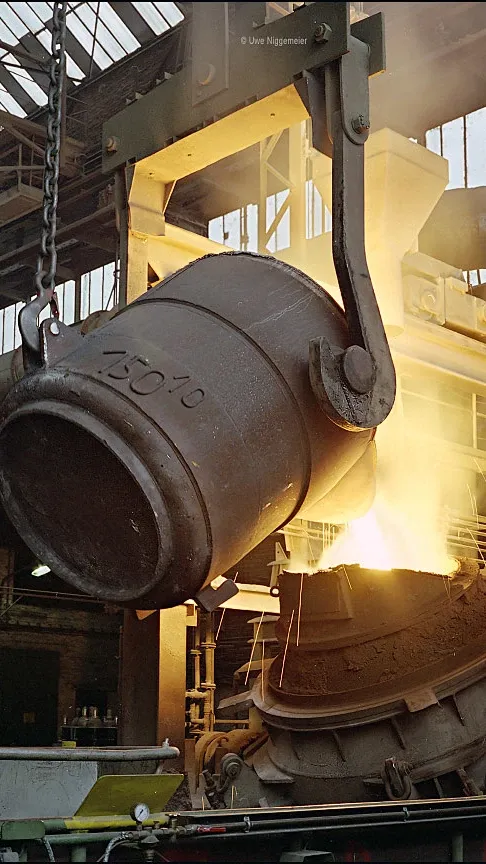
In the Morowali Industrial Park in Indonesia, a huge smelting furnace is converting laterite ore into nickel iron. A few years ago, this was a barren land, but now it has become an important global base for new energy materials. Chinese engineer Zhang Lei pointed to the newly produced product and said, "In the past, we only sold finished products, but now we have 'moved' the factory here and are manufacturing together with the local area
This is a microcosm of the upgrading of heavy industry cooperation between China and ASEAN. In 2026, which marks the 5th anniversary of the establishment of the comprehensive strategic partnership between China and ASEAN, Xu Ningning, Chairman of the RCEP Industrial Cooperation Committee, pointed out that the cooperation between the two sides has entered a new stage of "industrial chain synergy" from "trade exchanges".
ASEAN becomes China's largest export market for electromechanical products
In the past year, the frequency of the "steel camel caravan" between China and ASEAN has increased. According to customs data, the total trade value between China and ASEAN will reach 7.55 trillion yuan in 2025, with exports of mechanical and electrical products (including machinery and equipment, automobiles) growing by 24.7%. ASEAN has surpassed the European Union and become the largest export market for Chinese mechanical and electrical products.
Trade structure reflects industrial complementarity:
China's exports: construction machinery, high-end steel, new energy vehicles and components. Taking Guangxi as an example, its automobile and spare parts exports will increase by 24.6% in 2025, while lithium battery exports will surge by 60.7%.
China imports resource-based products such as coal and non-ferrous metals, as well as intermediate goods such as computer components.
This combination of "Chinese equipment+ASEAN resources" is accelerating its flow through tariff reductions under RCEP and the China ASEAN Free Trade Area 3.0. Xu Ningning predicts that the bilateral trade volume is expected to exceed 8 trillion yuan by 2026.
From factory construction to chain building
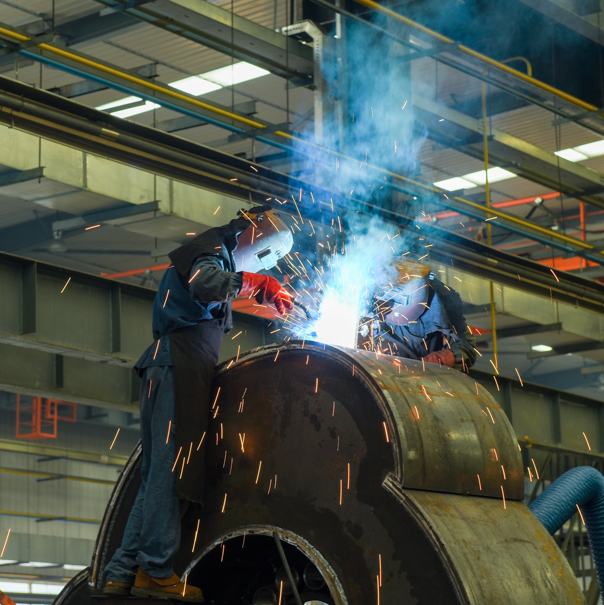
Chinese companies are no longer satisfied with simple product exports, but are "grafting" the entire industrial chain to Southeast Asia.
Landmark project landing:
Steel Metallurgy: The 3.5 million ton steel project constructed by Guangxi Shenglong Metallurgy in the Kuantan Industrial Park in Malaysia has become one of the largest steel bases in the area, achieving capacity cooperation.
Automobile manufacturing: SAIC GM Wuling's Indonesian factory has produced over 170000 vehicles and has driven supporting enterprises such as electronic control and charging ecology to collectively move south, forming a cross-border chain of "Liuzhou R&D - Indonesian assembly - ASEAN sales".
This group oriented overseas model has shifted heavy industry investment from single point layout to cluster development. By 2025, the cumulative two-way investment between China and ASEAN has exceeded 450 billion US dollars, with manufacturing and new energy becoming the core flows.
Green and intelligent dual wheel drive
In the face of the industrialization needs of ASEAN countries, simple capacity transfer is no longer sufficient, and "green+intelligent" has become a new consensus.
In Laos, China General Nuclear Power Corporation (CGN) is participating in the Udomsa AI Green Aluminum Industrial Park, which is attempting to drive high energy industries with clean energy; In Indonesia, nickel ore smelting is introducing environmentally friendly technologies to reduce carbon emissions.
With the launch of the China ASEAN Artificial Intelligence Cooperation Center, industrial Internet and intelligent manufacturing technology began to empower traditional heavy industry. Xu Ningning suggested that enterprises should take advantage of the dividends of the Free Trade Zone 3.0 to advance in digital infrastructure and green standards.
From the Indonesian park where Zhang Lei is located, the newly built dock is loading and unloading battery materials destined for Europe. This heavy industry chain jointly forged by China and ASEAN is becoming the toughest "backbone" of the regional economy.Editor/Yang Meiling
Comment

 Praise
 Collect
 Comment

 Share
Share


Write something~