 Search


- BYD Forklift's self-developed system breaks through equipment silos and reshapes the intelligent logistics ecosystem
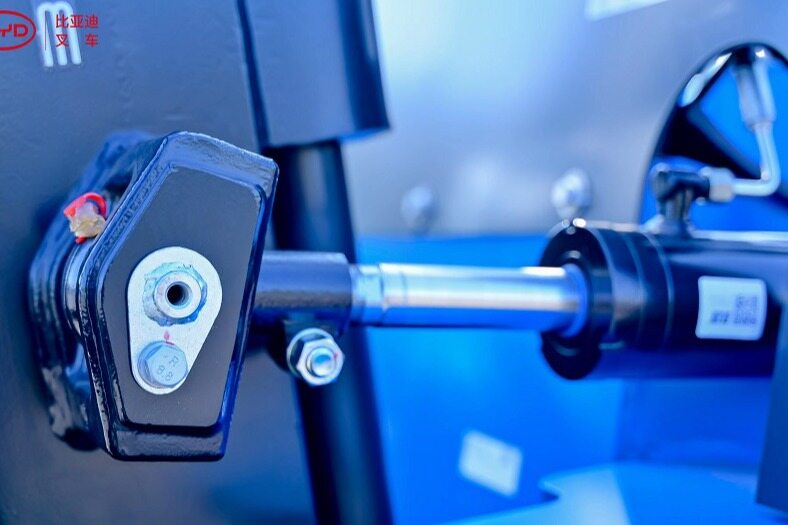
In the history of human industry, the most dangerous trap is often not the lack of power, but the information gap. In 19th century factories, steam engines could drive hundreds or thousands of gears, but if one transmission rod broke, the entire factory would be paralyzed. This kind of rigid fragility that can move the whole body with one pull has evolved into a new "Tower of Babel" crisis in modern manufacturing scenarios: factories are filled with automated equipment that can run and be seen, but they seem to be different systems from each other.
When it becomes common for devices to stand tall but act independently, the problem is no longer just the difference in individual performance - the more devices and the deeper the sense of fragmentation, the more efficiency will be diluted. The logistics industry has thus reached a critical point from single machine optimization to overall optimization. In this process, BYD Forklift relies on its self-developed full stack and technological accumulation in the field of new energy vehicles to integrate dispersed handling units into a unified perception and scheduling system, promoting logistics from tool driven to system driven.

Accumulate strength, break through boundaries and stand firm
Faced with the industry turning point from "single machine optimization" to "system optimization", BYD Forklift has adopted the hard core selection of full stack self-developed technology and undertaken more than 20 years of technological accumulation in the field of new energy. The full chain autonomy of "three electric" (battery, electronic control, motor) technology enables innovation in bidirectional inverter technology not only for vehicles, but also for re adaptation in heavy load scenarios, long-term work, and complex working conditions in industrial logistics. BYD forklifts break down and reconstruct the power control, environmental perception, and collaborative logic of intelligent manufacturing production lines, and deeply integrate them into their own motion control system, thereby achieving precise start stop in narrow passages, smooth steering under heavy load conditions, and flexible passage between dynamic production lines, completing the transformation from a reliable handling tool to a system driven logistics node that can think and collaborate. When hardware is endowed with collaborative genes, logistics truly begins to move from tool driven to system driven.
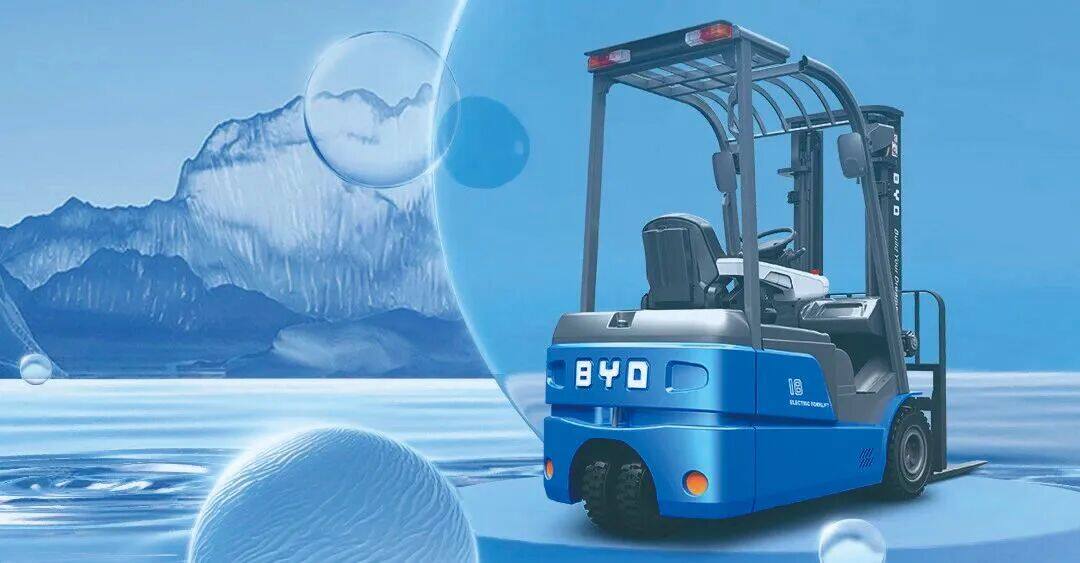
Smart Chain Future, Collaborative Renewal
The fragility of industrial systems stems from information gaps between processes; The intelligent transformation of the logistics industry is precisely the re establishment of digital neural connections between isolated physical nodes. BYD forklifts are supported by a fully self-developed underlying architecture, which transforms the precise control capability of AGV/AMR into a central skeleton driving global collaboration, achieving a qualitative change from single point intelligence to system intelligence. In traditional logistics, equipment and ERP, WMS and other systems are like isolated islands, with data barriers, poor scheduling, and greatly reduced efficiency. While BYD continues to deepen its cultivation in the equipment field, it is also exploring and extending towards the overall operational level of logistics scenarios. From path planning and environment perception to a fully self-developed system that integrates software and hardware, we have built an endogenous framework for intelligent systems to avoid instruction breakpoints caused by external dependencies at the root.

The deep integration of BYD AGV equipment with more than ten production and logistics systems such as ERP, WMS, MES, etc., easily connects the information silos in various links of the logistics production line. At a component factory in Xi'an, BYD achieved an automated closed-loop system of "instruction execution feedback" through the collaborative work of AGV forklifts, palletizing robots, and automated conveyor lines, combined with CIMC Chuangjian WMS/MES/WCS full system integration. Once the production plan is adjusted, instructions can be efficiently transmitted between various systems, and the AGV cluster operation can be uniformly commanded by the intelligent scheduling system; Dozens of AGVs autonomously navigate and dynamically avoid obstacles, accurately dock with production line nodes, achieve unmanned and seamless material flow, and reconstruct a new paradigm of production line collaboration with hardcore technology.
At this point, the logistics industry has officially entered the era of system driven communication, with nodes breaking through barriers and data flowing smoothly throughout the entire chain. The new "Babel Tower" dilemma in industrial scenarios has been easily solved. Editor/Min Jing
Comment


 Praise
 Collect
 Comment

 Share
Share


Write something~