 Search


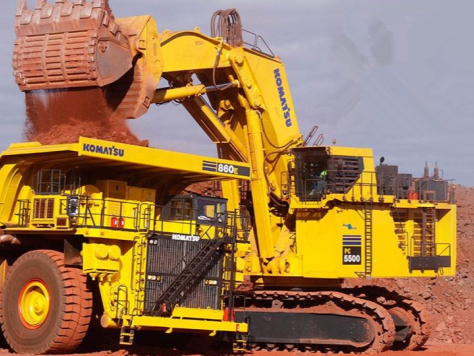
- The beginning of China's reform and opening up coincides with the second stage of Komatsu's business development in China
The second stage of Komatsu's business development in China coincides with the period when China began to implement reform and opening up. During this stage, under the active advocacy of Kawai Ryoichi, the then president of Komatsu, Komatsu responded to the call of the Chinese government to actively assist China in reforming state-owned enterprises, and helped China to introduce total quality management (TQC) through free teaching. Later, it provided relevant product manufacturing technology to Chinese construction machinery enterprises and industrial machinery enterprises in the form of cooperative production, and contributed to China's economic development after the reform and opening up, and the improvement of the development level of manufacturing.
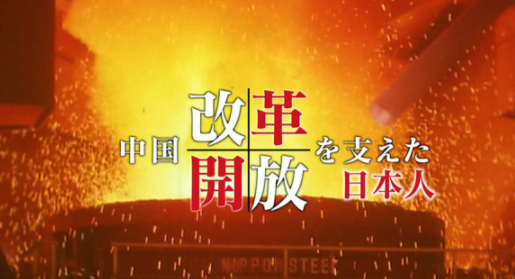
On February 10, 2019, the Japan Broadcasting Association (NHK) broadcast a two-hour documentary "Japanese who provided important assistance to China's reform and opening up" on the BS channel (Chinese "reform and opening up" を支えた Japanese) In ", it also reviewed this history and Kawai Ryoichi's achievements in assisting China to introduce and popularize TQC. Ryoichi Kawai (the chairman of Komatsu Corporation at the time), Yoshihiro Inyama (the chairman of Nippon Steel Corporation at the time), and Satakero Dairyi (the former director of the Comprehensive Planning Bureau of the Economic Planning Agency of the Japanese Government) People consultant) and the two listed as the three key Japanese people who should be thanked for China's reform and opening up.
During this period, in addition to the free teaching of TQC to China, Komatsu also actively carried out technical cooperation with the state-owned enterprises of China's construction machinery and industrial machinery, and successively provided China with dozens of models of construction machinery and industrial machinery. Technology has laid the foundation for the great development of China's construction machinery and other industries in the future.
To teach China the experience and methods of total quality management free of charge, and to provide construction machinery and industrial machinery manufacturing technology to China through the combination of technology and trade, marking a new step in the friendly exchange and cooperation between Komatsu and China. , Komatsu’s business in China has moved from the first stage characterized by the export of complete machines to the second stage characterized by assisting China in developing its manufacturing industry and improving the overall industrialization level. At the same time, the mutual cooperation and trust established in the process of cooperating with Chinese state-owned enterprises also laid a good foundation for Komatsu's direct investment in China to establish joint ventures and become a business partner in the next stage.
Assist China to introduce TQC and contribute to the improvement of China's overall industrialization level
Komatsu is known for its TQC application in Japan. In the early 1960s, in response to the survival crisis caused by foreign giants landing in Japan, Komatsu carried out a quality improvement activity called the "Circle A Countermeasure". During the activity, through the introduction of TQC, Komatsu's product quality was fundamentally improved , And finally realized the catch-up with the industry's leading companies, so that Komatsu was able to overcome the difficulties, and at the same time, Komatsu has also become an advanced company in the application of TQC in Japan, known as "TQC Komatsu."
In October 1977, President Ryoichi Kawai proposed to the Chinese government through the visiting Deputy General Manager of China National Machinery Import and Export Corporation Cheng Jixian that the most effective way to rationalize the management of existing enterprises is to implement total quality management, suggesting that China Introduce TQC, and at the same time propose to pass on Komatsu's total quality management experience and practices to China free of charge. The Chinese government adopted Kawai Ryōichi's proposal and decided to introduce total quality management in China. Subsequently, the First Ministry of Machinery Industry (Ministry of Machinery Industry) designated Beijing General Internal Combustion Engine Plant as a pilot plant to cooperate with Komatsu to carry out related introduction work.
In May 1978, a 7-member inspection team, including Shaye, the director of Beinei, was led by Huang Dunqian, deputy director of the Technical Department of the First Machinery Department, to Komatsu to study and inspect total quality management. According to Sha Ye’s recall, “Komatsu made full preparations for this inspection organized by our country. In addition to giving a detailed introduction to the inspection team, he also invited us to participate in the results presentation of the quality management team, which deepened our understanding of overall quality. Management awareness. Subsequently, in 1978 and 1979, Komatsu sent several batches of experts to our factory for pilot projects, held training classes for leading cadres and technicians, and went deep into the two sections of cylinder block casting and crankshaft processing to demonstrate quality improvement. 1979 When the total quality management was initially launched in 2016, Mr. Kahe personally accompanied Dr. Ishikawa Xin, who had instructed Komatsu to promote total quality management, to our factory for on-site quality management diagnosis. All this has played a role in the promotion of total quality management in Bei Nei Great effect."
The introduction of total quality management has not only achieved good results in the North, but also brought a new look to the North, and promoted the great development of production (from 2.31 million horsepower in 1977 to 4.15 million horsepower in 1981) and a major improvement in quality (from 1977) In 1981, both engines were substandard products. In 1981, the diesel engine became a high-quality product and the gasoline engine became a first-class product. At the same time, the efficiency was greatly improved (the profit increased by 79.6% in three years). The success has played a demonstrative role for enterprises across the country, and has formed an upsurge of learning and introducing total quality management throughout China. According to Shaye's recall, at that time, there were as many as 90,000 learners who came to Beijing to visit each year.
Today, whenever we talk about the history of the vigorous development of total quality management across the country in the 1970s and 1980s, Komatsu is always an existence that cannot be ignored. Komatsu is an enthusiastic leader and selfless devotee. Still popular. Shaye, Jin Guanglin and others who participated in the TQC inspection team to Komatsu in 1978 became experts in China's total quality management and played an important role in the popularization of China's total quality management. In the aforementioned NHK documentary, Shaye, the former Kituchi factory director, said with emotion when reviewing the situation at the time: "I have been to many foreign factories. Only the people from Komatsu came to give us guidance for free. I think they are holding A particularly noble attitude to do this."
Actively assist in the reform of state-owned enterprises and provide China with construction machinery and industrial machinery manufacturing technology
While actively assisting Beijing General Internal Combustion Engine Plant to carry out total quality management activities, in September 1979, Komatsu signed a technical cooperation contract for crawler bulldozers with China National Technology Import and Export Corporation. Tianjin Construction Machinery Factory, Shaanxi Huanghe Construction Machinery Factory and Shanghai Pengpu Machine factories are targeted to help China improve the level of bulldozer manufacturing by providing drawings, processes, and standard materials, and training relevant personnel.
In 1985, with the purpose of improving the overall level of China's construction machinery industry, the Ministry of Machinery Industry organized and implemented 12 Chinese state-owned enterprises and companies such as Komatsu of Japan, Caterpillar of the United States, and Liebherr of Germany after the establishment of the original State Planning Commission. The "joint introduction" project introduces engineering machinery and other manufacturing technologies in a "technology-trade combination" method. Komatsu actively responded to this call from the Chinese government and has successively cooperated with many Chinese state-owned enterprises to provide them with a full set of manufacturing technologies for nearly 20 models of construction machinery and industrial machinery.
Shanghai Pengpu Machinery Factory introduced the Komatsu D355A-3 (301KW) crawler bulldozer in the form of technical and trade cooperation in 1984, and successfully developed it with the Tianjin Construction Machinery Research Institute in early 1992. The machine was the largest bulldozer in China at that time. In addition, the factory also introduced Komatsu D155A-1 bulldozers, and based on this model, produced the Shanghai 320 large bulldozers, which were once exported to the US market. In September 1990, initialed a letter of intent with Komatsu to jointly produce D375A-2 crawler bulldozers.
Shandong Bulldozer General Factory and Tianjin Construction Machinery Factory welcomed 6 types of Komatsu D60A-8, D60PL-8 and D65A-8 (118KW) crawler bulldozer technologies in the form of licenses in December 1984.
Benxi Heavy-duty Truck Manufacturing Plant and Baotou No. 1 Machinery Plant cooperated with Komatsu in January 1985 to produce HD680 dump trucks by combining technology and trade.
Changzhou Forestry Machinery Factory co-produced WA300 (107KW, bucket capacity 2m³, 4t class) wheel loader in Kosong in December 1985 through chicken feather cooperation. In 1991, it once again cooperated with Komatsu to produce WA470-1 (195KW, 4.2m³ bucket capacity, 7.5t class) wheel loader.
Shandong Bulldozer General Factory and Shaanxi Yellow River Engineering Machinery Factory cooperated with Komatsu in September 1986 to introduce D85A-18 (162KW) crawler bulldozer technology through license trade, and after digestion and absorption, TY220 and TSD220 crawler bulldozers were made And in 1987 mass production and put on the market. In 1990, the TY220 bulldozer produced by Shandong Bulldozer General Factory won the China National Quality Product Gold Award. In addition, Shaanxi Huanghe Engineering Machinery Factory also introduced Komatsu D80A-18 crawler bulldozer technology, Shandong Bulldozer General Factory also introduced Komatsu YJ409, YJ435 and other hydraulic torque converter manufacturing technology, and developed and manufactured the TB70 model using Komatsu KES standards. Crawler bulldozer.
Zhengzhou Construction Machinery Factory co-produced WS168S and WS23S scrapers in Komatsu in November 1987.
Jiangxi Changlin Machinery Factory signed a PC200-5 (bucket capacity 0.8m³) hydraulic excavator cooperative production contract with Komatsu on December 7, 1992. On March 8, 1993, Shaanxi Huanghe Engineering Machinery Factory and Jiangxi Changlin Machinery Three companies, including the Shandong Bulldozer General Factory, have signed contracts with Komatsu for PC300-5 (backhoe, bucket capacity 1.6m³), PC400-5 (front shovel, bucket capacity 2.6m³) and PC400-5 (backhoe, bucket capacity) The PC-5 series hydraulic excavator technology import contract with a capacity of 2m³.
Linyi Construction Machinery Co., Ltd. cooperated with Komatsu to produce PC100-5 and PC120-5 hydraulic excavators by combining technology and trade.
Qiqihar Heping Plant introduced Komatsu forklift technology and successfully developed the first batch of world-advanced 1.5t battery forklifts, 2.5t liquefied gas forklifts, 2.5t internal combustion forklifts, and 6t internal combustion forklifts at the end of 1996.
In terms of industrial machinery, Qiqihar No. 1 Heavy Machinery Factory, Shanghai Heavy Machinery Factory, Taiyuan Heavy Machinery Factory and Qiqihar No. 2 Machine Tool Factory introduced 9 types of mechanical presses from Komatsu and 1 type of blanking production line production technology through a license-based cooperative production method. .
Today, China's construction machinery and other industries have made amazing progress and development. A large number of Chinese construction machinery companies have already had the strength to start competing with foreign construction machinery companies on the two stages at home and abroad. In addition to the long-term and unremitting efforts made by the majority of Chinese construction robots, the achievement of this achievement has also played an important role in the technical cooperation between Komatsu and other advanced industrial enterprises from abroad in the 1980s with Chinese state-owned enterprises. The effect is indispensable.
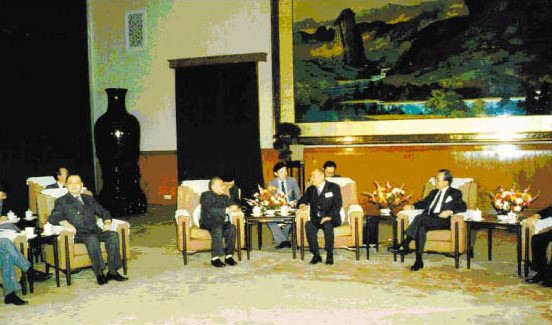
Actively participate in the activities of the Japan-China Economic Association, Kawai Ryoichi led a delegation to visit China as the delegation leader for 11 consecutive years
The Japan-China Economic Association is Japan’s important non-governmental friendly organization to China. It is a tradition of friendly exchanges between the two countries under the "LT trade" mechanism before the normalization of Sino-Japanese diplomatic relations in the Japanese economy and industry. And it was established in 1972. Today, as the main friendly organization in the Japanese economic circle, it still plays an important role in maintaining and developing the friendly relations between the two countries.
As a rule, the Japan-China Economic Association will send an annual visit to China every year, and each time it will be received by Chinese leaders. At the same time, every time a Chinese leader visits Japan, they will also attend a welcome organized by the Japan-China Economic Association. The banquet, the formation of this tradition, is inseparable from the enthusiastic and active efforts made by the older generations of insight, including Ryoichi Kawai (under the LT trade system), in the process of promoting the development of friendly relations between Japan and China. It's open.
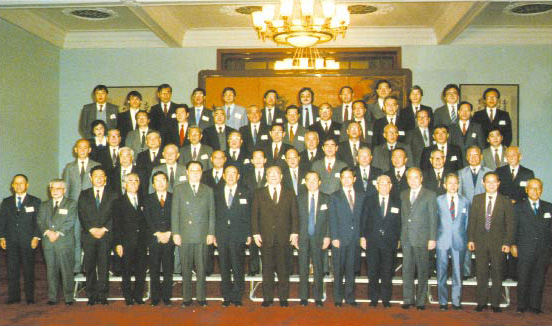
From 1986 to 1996, Kawai Ryoichi, who served as the president of the Japan-China Economic Association for 11 consecutive years, led the Japan-China Economic Association’s annual visit to China as the head of the Japan-China Economic Association’s annual visit to China, and carried out active exchanges with the Chinese political and economic circles to promote economic trade and friendship between the two countries The development of the relationship has been received by Chinese leaders every time. Editor/He Yuting
Comment

 Praise
 Collect
 Comment

 Share
Share


Write something~