 Search


- Southeast European countries are urgently cutting red tape for offshore gas exploration and production
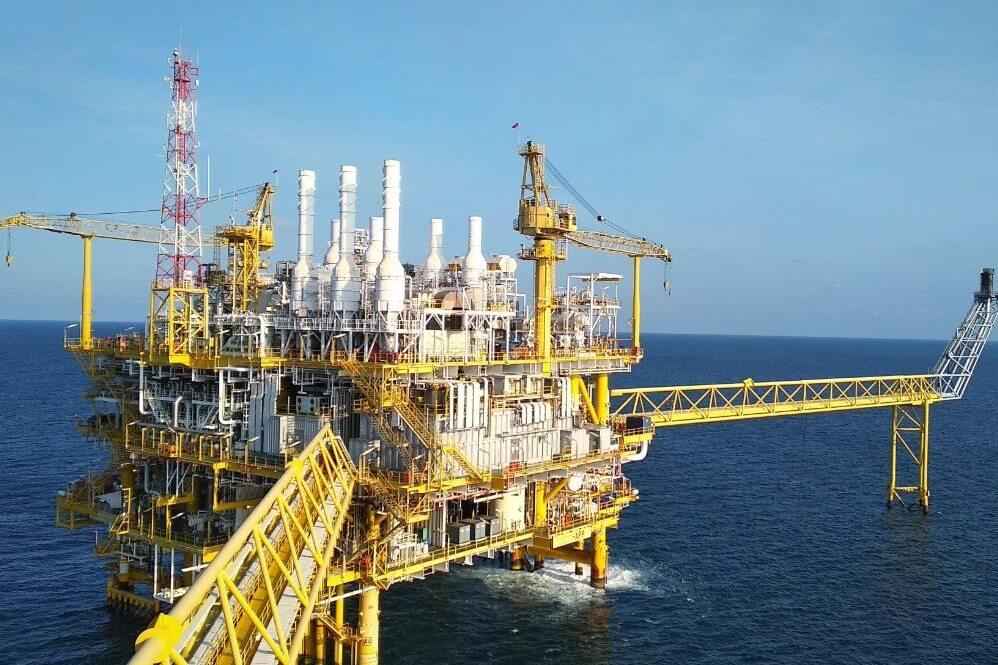
Russia's invasion of Ukraine has added to Europe's severe energy crisis. The EU and its member states are still formally delivering on their climate commitments, even pledging to add more clean solutions than planned. At the same time, they hope to replace imported Russian fossil fuels as soon as possible, but renewable energy cannot meet all the new demand in the short term.
The biggest challenge is the reliance on Russian gas delivered through pipelines. European Commission President Ursulavonder Leyen said the goal is to eliminate the need for Russian fossil fuels by 2027. The measures in the RE Power EU package expected to be launched next month should be clearer. According to preliminary information from the revision process, the EU will use more renewable energy, nuclear power and coal than was targeted in the original Fit-for-55 package. Obviously, hydrogen and biomethane also play a vital role, both of which can be used to replace fossil gases.
Financing such an undertaking is another matter as the European Commission, EU member states and fossil fuel companies are all pushing for investment in offshore gas, LNG terminals and related infrastructure as energy prices have risen sharply. The European Union has passed the Next Generation EU package worth more than 800 billion euros as an urgent tool to speed up the recovery from the pandemic and make it green. Regardless, consumers can expect energy prices to remain high for several years.
Countries across Europe are rolling out and accelerating plans for liquefied natural gas (LNG) terminals to source fuel from elsewhere at sea. Many are also betting on domestic offshore gas projects, and the Balkans are no exception, while environmentalists are sounding the alarm about pollution and greenhouse gas emissions. The price increase of any commodity or product, and the current price increase in the fossil fuel and power industries, is very severe and usually increases investment interest in the corporate sector.
Romania enacts maritime law to start offshore gas production faster
Romanian Prime Minister Nicola Cucco said last week that a proposed law is aimed at boosting the extraction of natural gas from the Black Sea, which is due to start in the second half of this year. The bill aims to lower taxes and remove export restrictions on fuel. Black Sea Oil and Gas (BSOG) earlier said it would start extracting gas from its Romanian offshore project by the end of June.
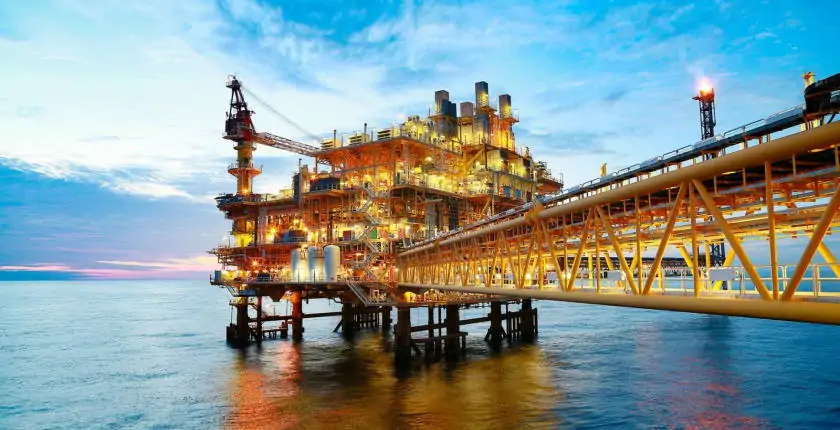
According to the Prime Minister, development of the Neptune Deep Field could begin as early as the end of 2026. After Exxon Mobil abandoned the project, Romgaz said it would acquire its 50 percent stake in the project, while OMV Petrom would hold the rest. Prime Minister Nicolae Ciucă believes BSOG will start production in 2022 from its Black Sea offshore well. The Prime Minister added that the law will also help onshore gas production. Caragele in Buzău county, the largest gas field discovered in Romania in the past 30 years, will start production in 2024, Ciucă said. In Bulgaria, Total Energies and OMV Petrom were granted an extension in 2012 for an oil and gas exploration license for the 1-21 Han Asparuh offshore block in the Black Sea. Energy Minister Alexander Nikolov stressed the importance of the project for the country's energy security. According to the ministry, the two companies plan to invest nearly 1.5 billion euros over two years.
The Croatian INA brought oil assets online while the sunken platform rotted, and Croatia revealed that it increased the capacity of its LNG terminal on Krk Island from 2.6 billion cubic meters per year to 2.9 billion cubic meters per year. In addition, the facility's operator, LNG Hrvatska, told Montel that it was looking to increase production to 3.5 billion cubic meters per year. INA, owned by Hungary's MOL, started gas production in March at its new offshore well IkaB-1R-DIR in the North Adriatic Sea. The company said it has an annual production capacity of 55 million cubic meters.
Croatia abandoned offshore exploration drilling program six years ago
Production from another well is scheduled to begin this month. INA added that its third new division will require building a platform and that investment decisions will be made in the next few years. The company is also conducting onshore exploration and developing new natural gas production units. An offshore exploration drilling program was abandoned six years ago after potential investors pulled out of the projects under public pressure.
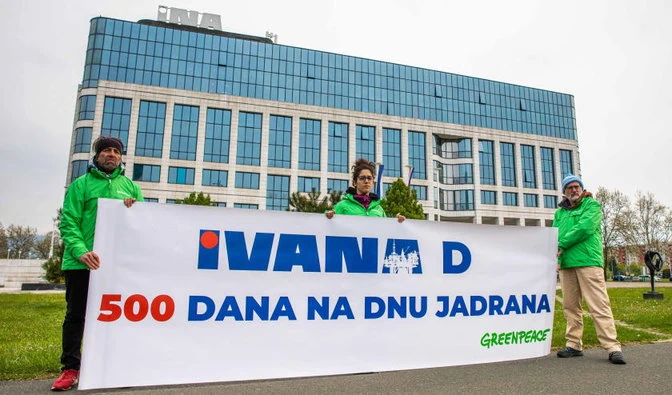
Activists from Greenpeace's Croatian branch protested in front of the INA's headquarters in Zagreb, noting that 500 days after the sinking of the gas platform IvanaD, there is still no information on the cause of the accident and no return to work. Activists say the government must step up oversight and inspect all offshore gas platforms, including methane leaks. Five hundred days after the INA's IvanaD gas platform sank in the Adriatic Sea, officials remain silent on the cause.
They called for a decades-long moratorium on fossil fuel infrastructure investment in the Adriatic. Greenpeace said the government was sending a message that the fossil fuel industry could do anything without consequences. The group urges the deployment of clean energy solutions to achieve true energy independence. Neighboring Slovenia has recently been studying the possibility of building an LNG terminal on its Adriatic coast.
Turkey's tax cuts to accelerate development of large offshore gas fields
Turkey has just said it supports Turkish Petroleum's offshore gas field project Sakarya for tax exemption. The $9.9 billion project is scheduled to come online next year. The field, discovered in 2020 in the southwestern Black Sea, has reserves estimated at 540 billion cubic meters. Almost all of the country's fossil gas comes from abroad, mainly from Russia, but when Sakarya reaches full capacity, it should supply a quarter of current imports. Turkey has conducted gas exploration in Mediterranean waters also claimed by Greece and Cyprus. Instead, Cyprus is promoting offshore oil and gas exploration and development on its behalf, while the Ankara government is threatening to halt these activities.
Greece to step up search for natural gas
Greece has announced that the country will speed up efforts to explore and develop potential oil and gas reserves and build infrastructure for hydrocarbon and gas pipelines. Greenpeace Greece has criticized plans to speed up onshore and offshore gas extraction and shipments to the rest of Europe, saying it is not an appropriate response to the energy and climate crises.
The first exploration well in the Adriatic Sea, offshore Montenegro, proved to be dry. Still, more oil and gas drilling is ahead. Albania allows exploratory offshore drilling, but these projects have been dormant for years. Keywords: engineering construction, engineering news
On the coal side, the closure of some power plants in Bosnia and Herzegovina has been postponed indefinitely. Greece has decided to produce 50% more lignite this year, and two old coal plants may continue to run longer if necessary. Romania is sticking with its plan to phase out coal by 2032, and the government intends to increase its renewable energy target, but in the meantime, it is bringing idled power plants back online.Editor/XingWentao
Comment






 Praise
 Collect
 Comment

 Share
Share


Write something~