 Search


- The ancestors of the Hui nationality brought knowledge of Islamic astronomical calendar into China.
Huihui astronomy originated in the Mediterranean region, and in the fusion with Chinese civilization, it greatly influenced and enriched Chinese astronomy. In the middle and late Tang Dynasty, Huihui astronomy was introduced to China. Relatively speaking, Huihui in history is closer to the Mediterranean cultural circle than the Hans, and has a linguistic advantage. It can easily learn astronomy knowledge from the Middle East and the West.
There is a poem in the history book of Yijiao ancient legend "Back to the Original" (also known as "Tang Wang Tan Dao"):
Back to the western region of the capital, he never knows that China will never reside.
Because of the one night dream of King Tang, Yilai had three thousand foundations.
Sealed Zhang Yin and Qin Tianjian, and lived in the Central Plains.
I deeply feel that Wang Yu of Tang is dewy, and so far the country has remained unchanged.
This legend is well founded.
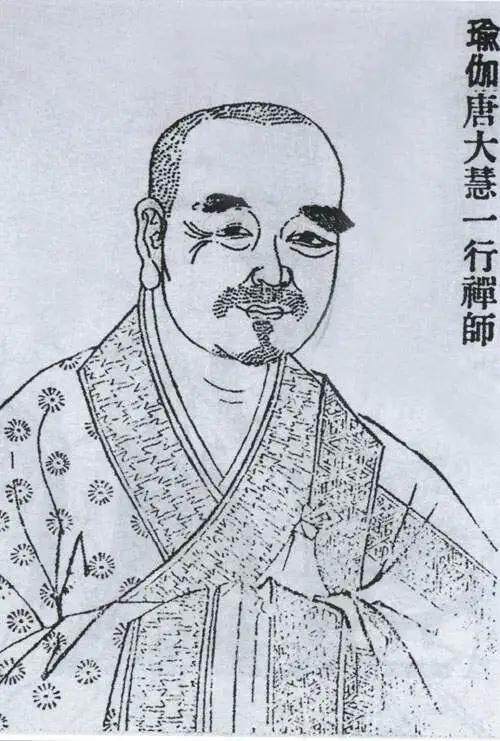
In 721 AD, the Tang Dynasty believed that the old calendar was inaccurate and a new calendar was needed. The court ordered monks to compile "Da Yan Li". In 729, the Great Calendar was officially the official calendar of the Tang Dynasty.
However, shortly after the "Dayan Calendar" was promulgated, a monk from the western region of India, Qu Yi, filed a complaint, saying that the new law copied the Indian calendar "Nine Executive Calendar", but "its skills are not exhausted." It means that "Yanyan Calendar" is copied from "Nine Executive Calendars", but has no way of doing it.
It must be pointed out that what the Tang Dynasty people call India is not the South Asian India today, but the Western India, which is equivalent to Pakistan (including the Uzbekistan), Afghanistan (Gandhara), and Kashmir (Cashmir). , Nepal (mud Bora) and other regions.
The Qu Yi family is a native of the Indian region of the Western Region. The Qu family is very famous. They have held important positions in astronomical institutions of the Tang Dynasty for nearly a hundred years, and they are called "Qu family supervisors." "Nine Executive Calendars" was compiled by Qu Yi Si Da, the father of Qu Yi, based on Sanskrit astronomical works "Compilation of Five Calendars". This book exists today and is included in Kaiyuan Zhanjing, which includes:
1. For the first time, Qu Yi Si Da used the dot notation to represent 0, which filled the gap in the Chinese system of calculations without zero marks.
2. Introduce the circular indexing system in Western Astronomy to China. Compared with the traditional Chinese circular index of 365.25 degrees, the newly introduced circular index is 360 degrees, which is more convenient for calculation.
3. Based on the 360-degree indexing system and the spherical triangle method, the degree of the lunar eclipse during the eclipse is estimated, and the earliest trigonometric (sine) function table in Chinese history is formulated.
4. In calculating the method of solar eclipse, considering the change of the distance between the sun and the moon and the earth, a method of estimating the diameter of the day and the moon based on visual observation has been added.
A party (AD 683-AD 727), whose real name is Zhang Sui, who is from Changle, Weizhou (now Nanle County, Henan Province). The great ancestor was the founder of Tang Kaiguo and Zhang Gongjin, the granddaughter of Guo Guo. His father Zhang was good at Wugong county magistrate. In his youth, he was a monk, and his name was his party. He successively studied the classics of Buddhism in Songshan, Tiantaishan and Dangyangshan. He once studied astronomy and mathematics with the fearlessness of western monks.
She is a native of Orissa in Bangladesh today. Before she came to China, she studied Buddhism and calendar in Kashmir (now Kashmir), translated a variety of Indian Buddhist scriptures, and became the leader of the Tan Dynasty in the Tang Dynasty. One line is his disciples.
"Dayan Calendar" absorbs the knowledge of Indian calendar in the Western Region.
Following the indictment by Qu Yan, Tang Xuanzong ordered Tai Shiling to compare the two almanacs with the observatory's records. The conclusion is that "Da Yan Li" has won many trials, and Qu Yi was punished with a false accusation. After being released for more than 20 years, he returned to Si Tiantai in 758.
【appendix】
Good and fearless, Tang monk (637-735 AD). A native of Mogatu, a descendant of King Ganlu of Central India, he inherited the throne at the age of thirteen and later became a monk. Xuanzong Kaiyuan arrived in Chang'an four years ago. First live in Xingfu Temple, then live in Ximing Temple. It was an incoming person in the tantric Tibetan ancestral realm of the Tang Dynasty, and it was called Kaiyuan three princes together with King Kongzhi and Bukong. The translations include seven volumes of the Great Vrayzhana Buddha's Change and Blessing Scriptures, and three volumes of the Suserti Sutra, and are also called Lost Bogaros.
His disciples are the most famous monks and his party. The "Summary of Writings by Shan Wuyou" includes Buddhist tantric works by Shan Wuyou, an Indian monk from the Tang Dynasty, and Shi, a Chinese monk.
His party is a famous Buddhist scholar and astronomer in ancient China. In religion, he was an important successor of the secret law of the Tang Dynasty. At the same time, he was also a famous astronomer in the Tang Dynasty for compiling the "Yanyan Calendar".
Since the late Ming Dynasty, Huihui astronomy has begun to decline. With the abandonment of the "great unified calendar" in the Kangxi period, Huihui calendar has withdrawn from the official stage. From the early Song Dynasty to the Kangxi reign of the Qing Dynasty, Huihui astronomy influenced the Chinese calendar for about a thousand years. Author / He Xin Editor / Zhao Yongjing
Comment




 Praise
 Collect
 Comment

 Share
Share


Write something~