 Search


- When the archaeological hoe gently fell, a Tang Dynasty painted wooden coffin made a stunning appearance in the sand and dust
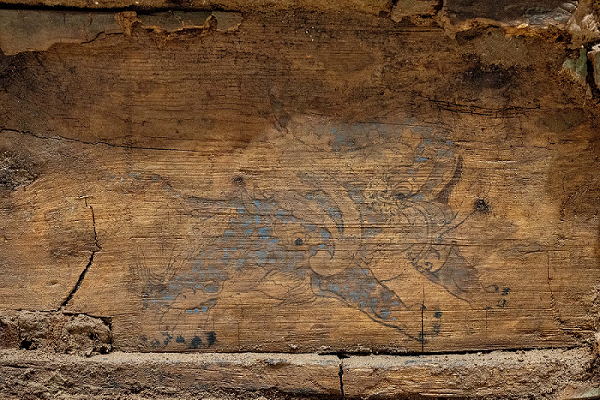
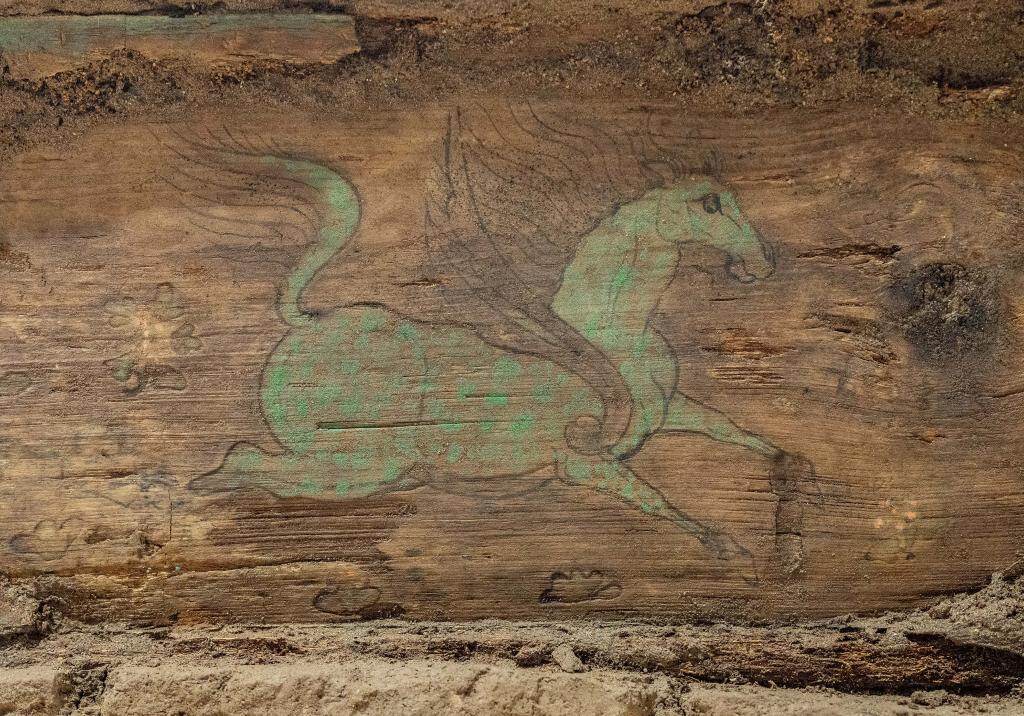
At the foot of Flame Mountain in Turpan, Xinjiang, a Tang Dynasty painted wooden coffin is stunning in the sand and dust. Above the coffin seat, twelve winged auspicious beasts gallop with colorful galloping, and the painted winged horses are lifelike, as if trying to uncover the mysterious past of the Western Regions during the Jin and Tang dynasties.
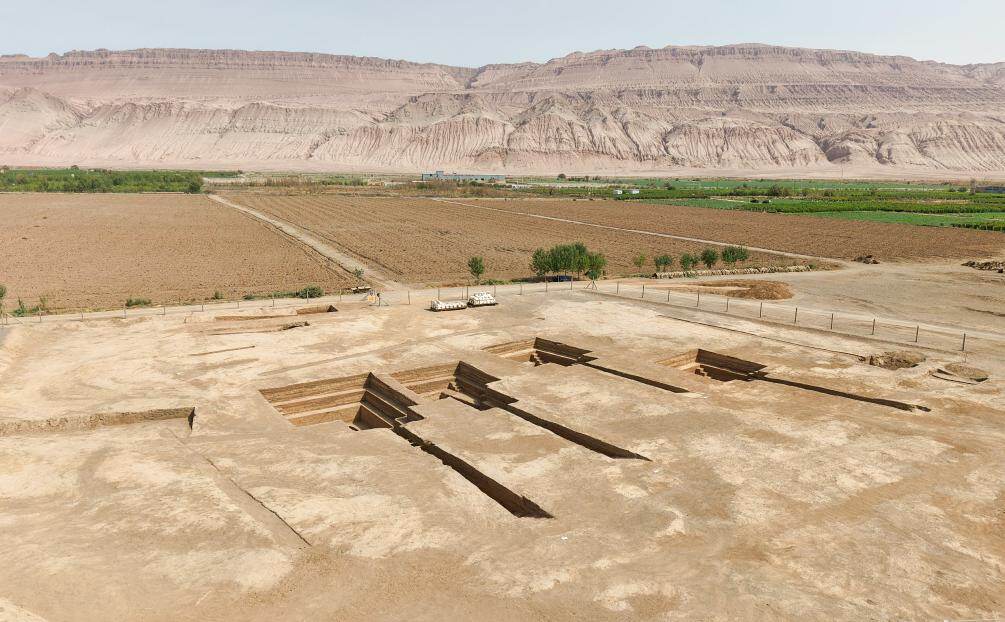
Revive the glory of history
From 2022 to 2025, the Xinjiang Institute of Cultural Relics and Archaeology and the Turpan Academy of Studies will actively excavate the tombs of the Eastern Jin and Tang dynasties in Badamu, Turpan City, achieving remarkable results. A total of 27 tombs from the Sixteen Kingdoms to the Tang Dynasty have been excavated, with over 600 artifacts unearthed. In February of this year, the tomb group was selected as a "New Archaeological Achievement of China in 2025". This public burial area of the ancestors of Gaochang interprets the historical scene of the "family country harmony" between the Western Regions and the Central Plains during the Jin and Tang dynasties with rich physical objects, and is a precious specimen for studying the diverse and integrated pattern of Chinese civilization.
Guarding the border with lone bravery, defending the central governance of Xinjiang
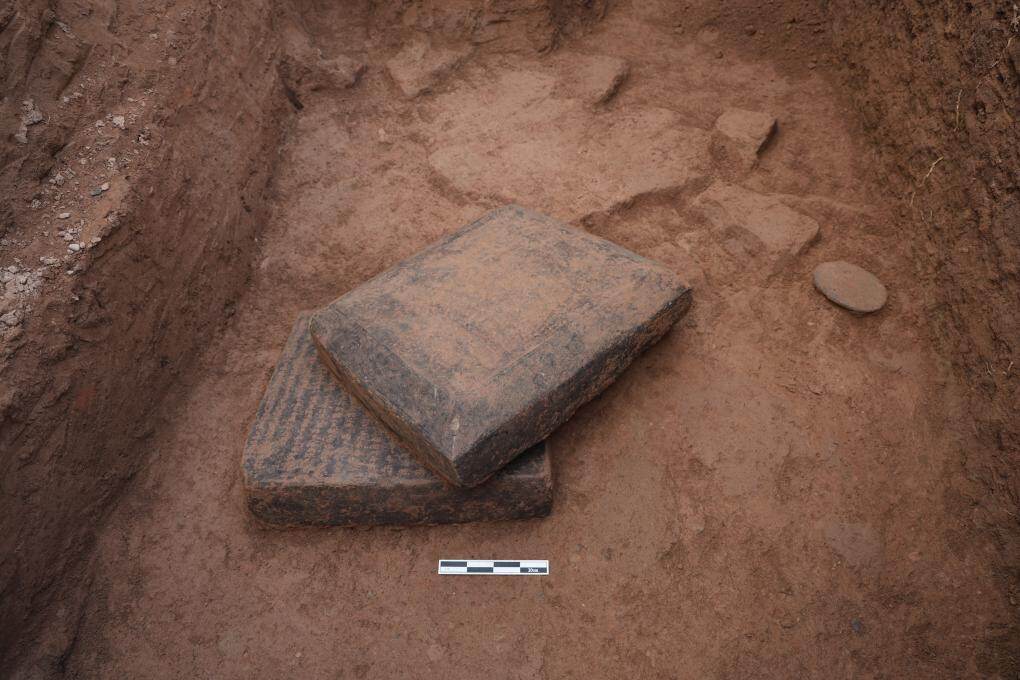
The Badamu Tomb Group is not the first time it has entered the archaeological field. In 1984, the tomb of Gao Yao, the deputy commander of the Tang Dynasty North Court, was discovered here. Recently, proactive excavation has led to the reconstruction of two high-level Tang Dynasty official tombs. In 2022 and 2024, archaeologists discovered the epitaphs of Cheng Huan and Li Chonghui in tombs M11 and M16. Cheng Huan, born in Handan, Hebei, served as the Deputy Commander of the Han Navy and passed away in the eleventh year of the Dali reign of the Tang Dynasty (776 AD); Li Chonghui, born in Tianshui, Gansu, served as the Chief of the Governor's Office in Xizhou. He passed away in the fifth year of the Zhenyuan era (789 AD) at the age of 83.
After the An Lushan Rebellion, Tubo expanded and cut off the Hexi Corridor, but the epitaphs of these two officials clearly used Tang Dynasty era names, proving that the Western Regions adhered to the Tang Dynasty system for nearly half a century and the central government's jurisdiction over the Western Regions was not interrupted. The excavation of epitaphs as physical evidence highlights the deep intervention of the Tang Dynasty central government in the Western Regions, and is a vivid manifestation of the unity of Chinese civilization.
Funeral rituals and cultural identity integration
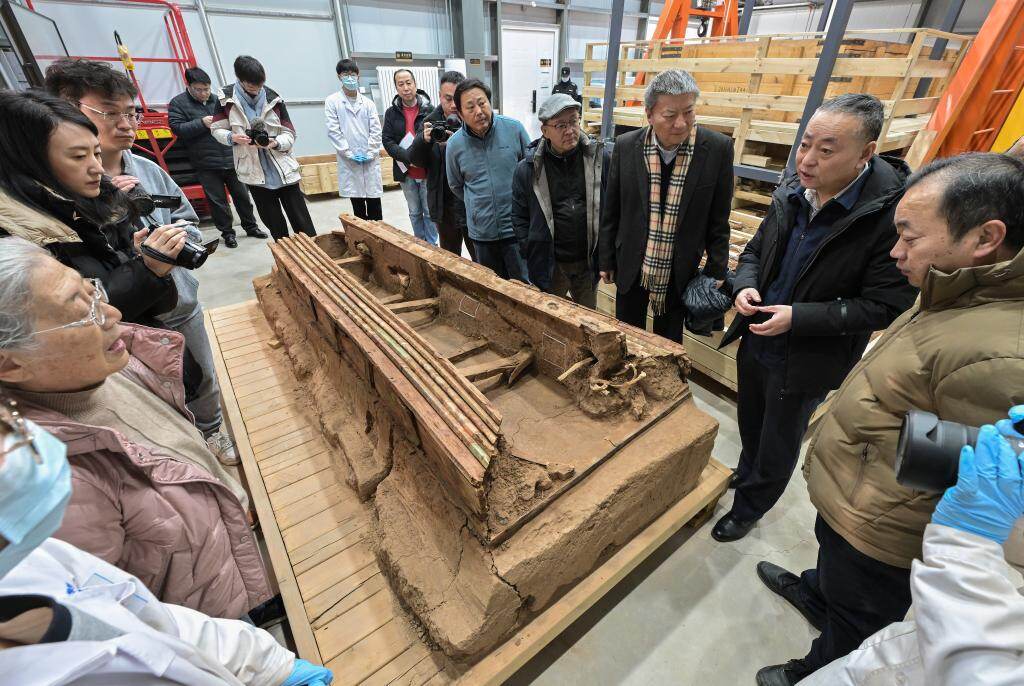
In the M20 tomb excavated in 2025, the most complete Tang Dynasty painted wooden coffin in China has been discovered. The north and south sides of the coffin seat are painted with 12 different winged auspicious beasts. The winged horse in the Humen Divine Beast and the phoenix on the tomb wall are high-level symbols of the Central Plains. The "Tiger Catching Sheep" pattern implies the identity of the tomb owner as a general, reflecting the combination of Central Plains ritual system and border ethnic imagery.
The tables, wooden plates, etc. on the painted wooden couch are similar in shape to the "Northern Qi School Calligraphy Map", resembling the "underground study room" of Tang Dynasty officials. The layout of the tomb owner facing east and west, with their head facing west, indicates their non Han identity, while the burial customs of holding coins in their mouths and hands originate from the cultural cognition of the Central Plains that "fate leads to death, and one cannot bear to empty their mouth". It is a physical material for the deepening of Central Plains funeral etiquette in the Western Regions. Experts evaluate that the remains of the tomb group comprehensively demonstrate the deep recognition of the Central Plains culture by the Western Regions society, and the concept of "family and country sharing the same style" has become a daily cultural consciousness.
Silk Road heritage treasures, mutual learning among diverse civilizations
The Tang Dynasty Kaiyuan Tongbao and Qianyuan Zhongbao unearthed from the tomb group, as well as foreign currencies such as Tuqishi coins, Persian silver coins, Byzantine gold coins, and Greek style three ear green glazed jars, recreate the prosperity of the Silk Road.
More than 300 silver foil pieces engraved with Hu people's music and dance patterns in the M12 tomb chamber, combined with the custom of the tomb owner wearing a copper chin brace, suggest that the tomb owner may be a Sogdian; The circular earthen platform inside the M27 tomb chamber is suspected to be a Zoroastrian fire altar, and imitation Byzantine gold coins were unearthed, which does not rule out the possibility that the tomb owner was also a Sogdian. Sogdians have been engaged in business along the ancient Silk Road for a long time, and some have been employed as officials after staying in China. In this high-level public cemetery, different regional cultures are integrated into a common burial system, showcasing the historical scene of the blending of multi-ethnic populations in ancient Xinjiang. This multicultural fusion is a two-way mutual learning, condensed into a community consciousness of "each beauty is its own beauty, and beauty is shared", supporting the pattern of diversity and unity.
With the deepening of interdisciplinary research, there are still more secrets to be uncovered about the tombs of Badamu during the Eastern Jin and Tang dynasties.Editor/Cheng Liting
Comment



 Praise
 Collect
 Comment

 Share
Share


Write something~