 Search


- The two sides will focus on building a six-sided diamond cooperation framework between China and Cambodia
- Among them, in terms of production capacity, focus on building industrial development corridors
Recently, Cambodian Prime Minister Hun Sen was invited to visit China. During the visit, China and Cambodia stated that no matter how the international situation changes, China and Cambodia will unswervingly deepen the close iron friendship, unswervingly carry out mutually beneficial and win-win practical cooperation, and unswervingly promote the construction of a community with a shared future for mankind . Cambodian Prime Minister Hun Sen's visit to China this time is not only a part of high-level mutual visits, but also to commemorate the third anniversary of his retrograde visit to China. In February 2020, China was in a difficult period of fighting the new crown epidemic. Cambodian Prime Minister Hun Sen became the first foreign leader to visit China under the epidemic. Now, Hun Sen has become the first foreign leader to be received after the Chinese New Year in 2023, releasing a positive signal of bilateral cooperation. In the joint statement, China and Cambodia agreed to start with the six major fields of politics, production capacity, agriculture, energy, security and humanities to build a six-sided diamond cooperation framework between China and Cambodia, which pointed out the direction for China-Cambodia practical cooperation in the next stage.
Production capacity cooperation
The two sides agreed to deepen the docking cooperation between China's Belt and Road Initiative and Cambodia's Four Corners strategy, jointly ensure the safety of cooperation projects and enterprise personnel, give full play to the role of the China-Cambodia production capacity and investment cooperation mechanism, and focus on the vision of Cambodia building a multi-functional economic demonstration zone in Sihanoukville Province. Create industrial development corridors. In recent years, from the upgrade of the relationship between the two countries to a comprehensive strategic partnership, to Cambodia becoming the first country to sign an action plan with China to build a community of shared future, and to the entry into force of the China-Cambodia Free Trade Agreement, the bilateral relations between China and Cambodia have continuously reached new heights.
Cambodia is the earliest participant in the Belt and Road Initiative, and one of the first countries to take the initiative to align its long-term development plan with the Four Corners Strategy and the joint construction of the Belt and Road Initiative. The four-corner strategy, which was proposed by the Cambodian government in 2004, focuses on optimizing administrative management, accelerating agricultural development, strengthening infrastructure construction, attracting more investment and developing human resources. It is closely related and highly compatible with the Belt and Road Initiative in many fields. The two countries have achieved docking in many projects, such as Siem Reap Angkor International Airport, a key project of China-Cambodia production capacity cooperation, the energy project Sesan Second Hydropower Station, and Cambodia's first intercontinental submarine cable project.
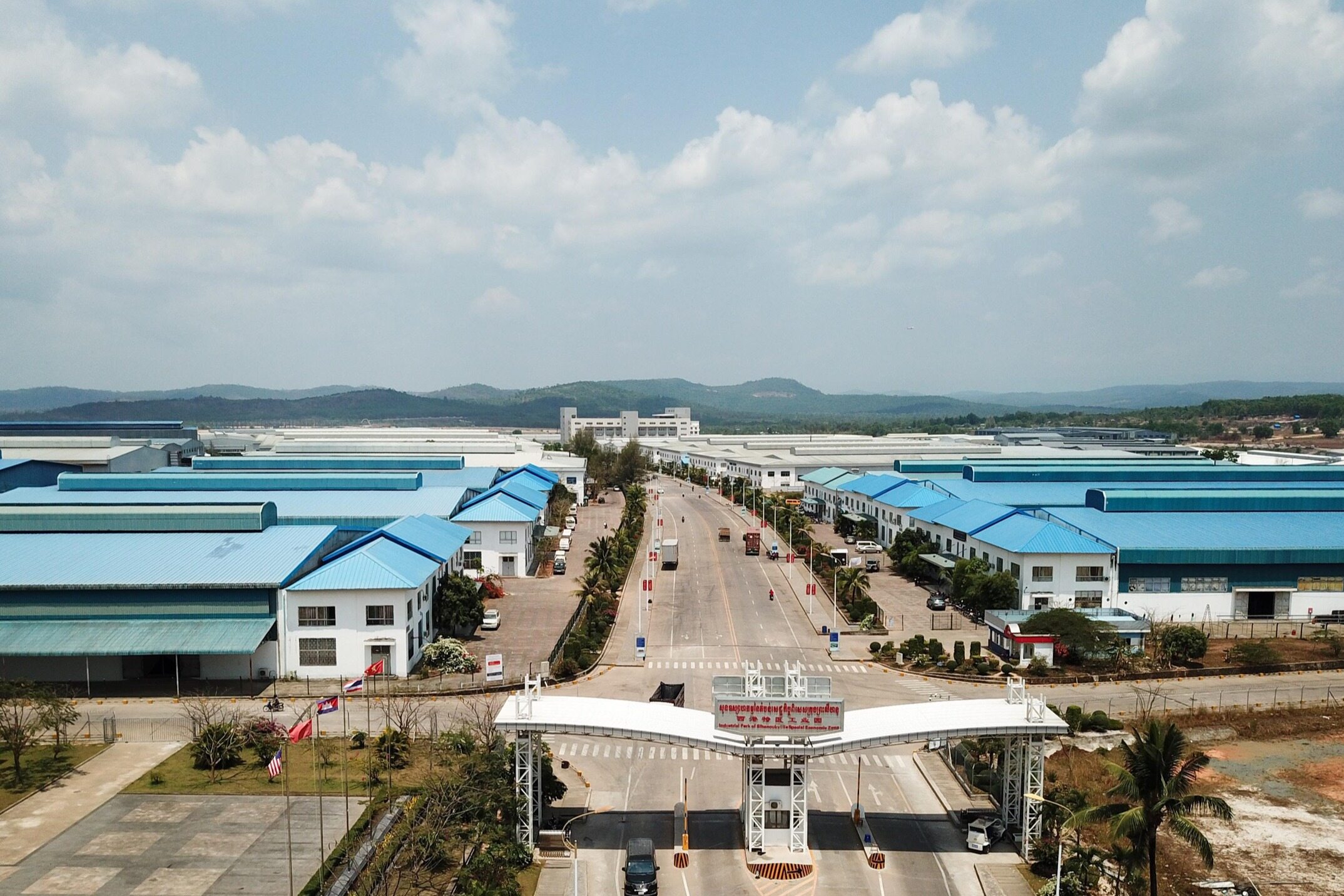
Relying on projects such as the Sihanoukville Special Economic Zone and the Phnom Penh-Sihanoukville Expressway, attract more powerful Chinese companies to increase investment in Cambodia, discuss and promote cooperation in supporting transportation facilities, power cables, warehousing and logistics, and optimize China-Cambodia production capacity cooperation layout. Sihanoukville Special Economic Zone is led by China Hongdou Group and jointly developed and constructed by Chinese and Cambodian enterprises. The overall planning area is 11.13 square kilometers.
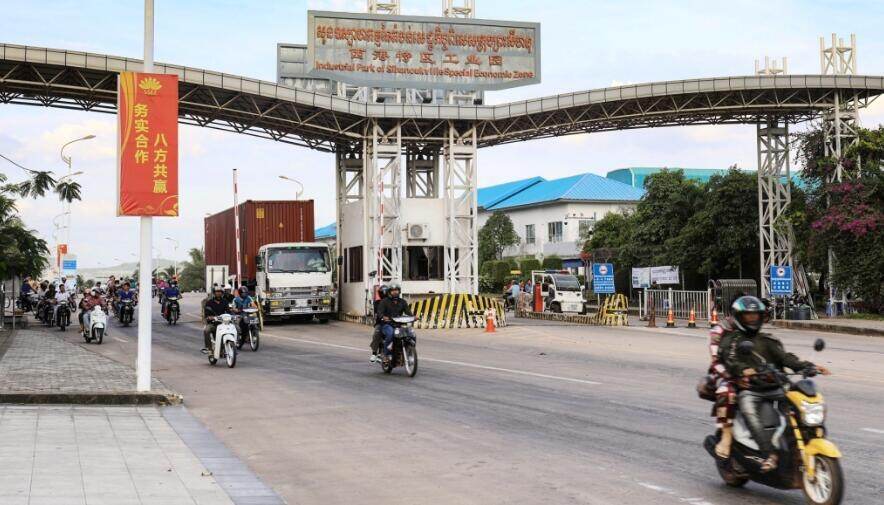
Sihanoukville Province, where the SAR is located, has a superior geographical location and is the third largest economic hub province in Cambodia. According to Cambodia's "2015-2025 Industrial Development Plan" and the 2030 Sihanoukville Development Vision formulated by the Royal Government, the province will become a national growth center, a national logistics center and a modern industrial production center. At present, 175 enterprises from China, Europe, America, Southeast Asia and other countries and regions have been introduced into the Sihanoukville Special Economic Zone, accounting for about 60% of the number of factories and enterprises in Sihanoukville Province. In 2022, enterprises in the region will achieve a total import and export volume of 2.493 billion US dollars in 2022, a year-on-year increase of 12%, accounting for about 4.8% of Cambodia's total national trade, injecting strong momentum into Cambodia's economic development.
railway project
The Chinese side supports Cambodia in carrying out preliminary work such as railway planning, design, and feasibility studies and promoting project construction, and supports the construction of people's livelihood along the Cambodian railway. The two sides look forward to the early realization of the connection between the railway in Cambodia and the railway between China, Laos and Thailand. Cambodia's railway infrastructure is outdated and inefficient, which restricts local economic and trade development and interconnection with surrounding areas. For this reason, Cambodia has been accelerating the upgrading and reconstruction of railways in recent years, hoping to build a high-speed railway as soon as possible.
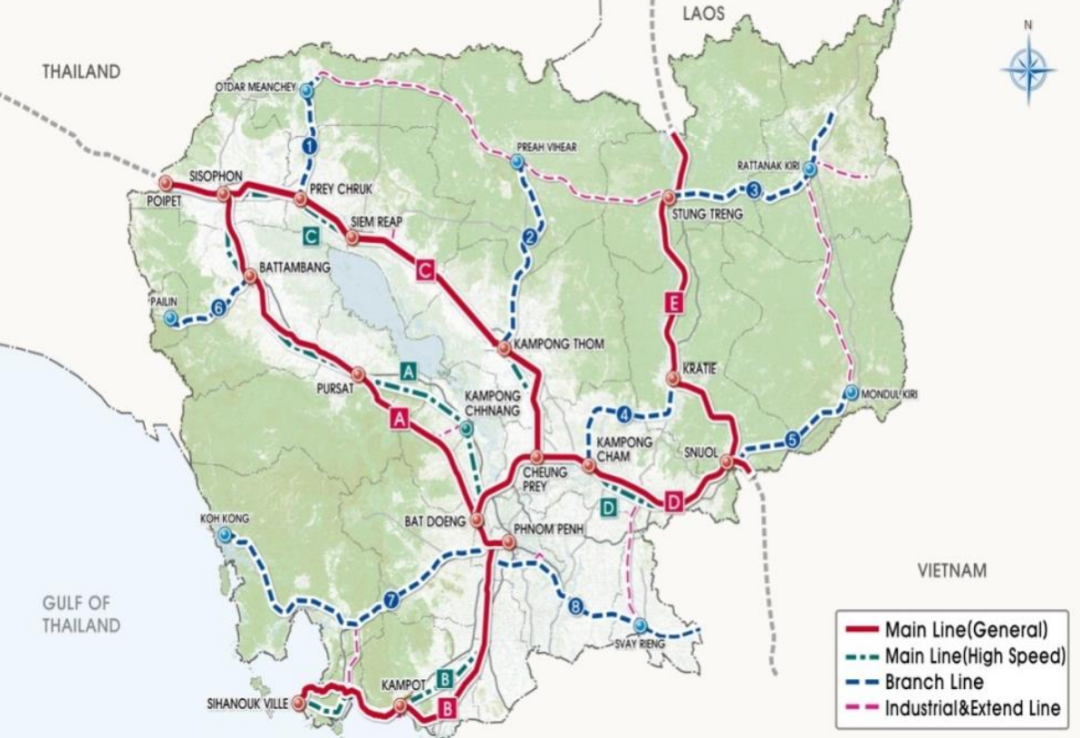
As early as the ASEAN summit in November 2022, Cambodia had discussed the high-speed rail issue with China. On January 23, Sun Zhantuo, Minister of Public Works and Transport of Cambodia, and the CRBC delegation of China Road and Bridge held a meeting via video to discuss the feasibility study of the Phnom Penh-Poipet high-speed rail project. According to preliminary survey results, the project has a total length of 382 kilometers and a total of 33 stations, passing through Kandal, Kampong Chhnang and Battambang provinces, with a width of 1.435 meters. The project is expected to cost 4 billion U.S. dollars, and the construction period is 4 years. After that, the top speed reaches 160 kilometers per hour. After the project is completed, it will become Cambodia's first high-speed railway, which will promote modern logistics and national economic development, and facilitate personnel and trade exchanges between Cambodia and Thailand.
clean energy cooperation
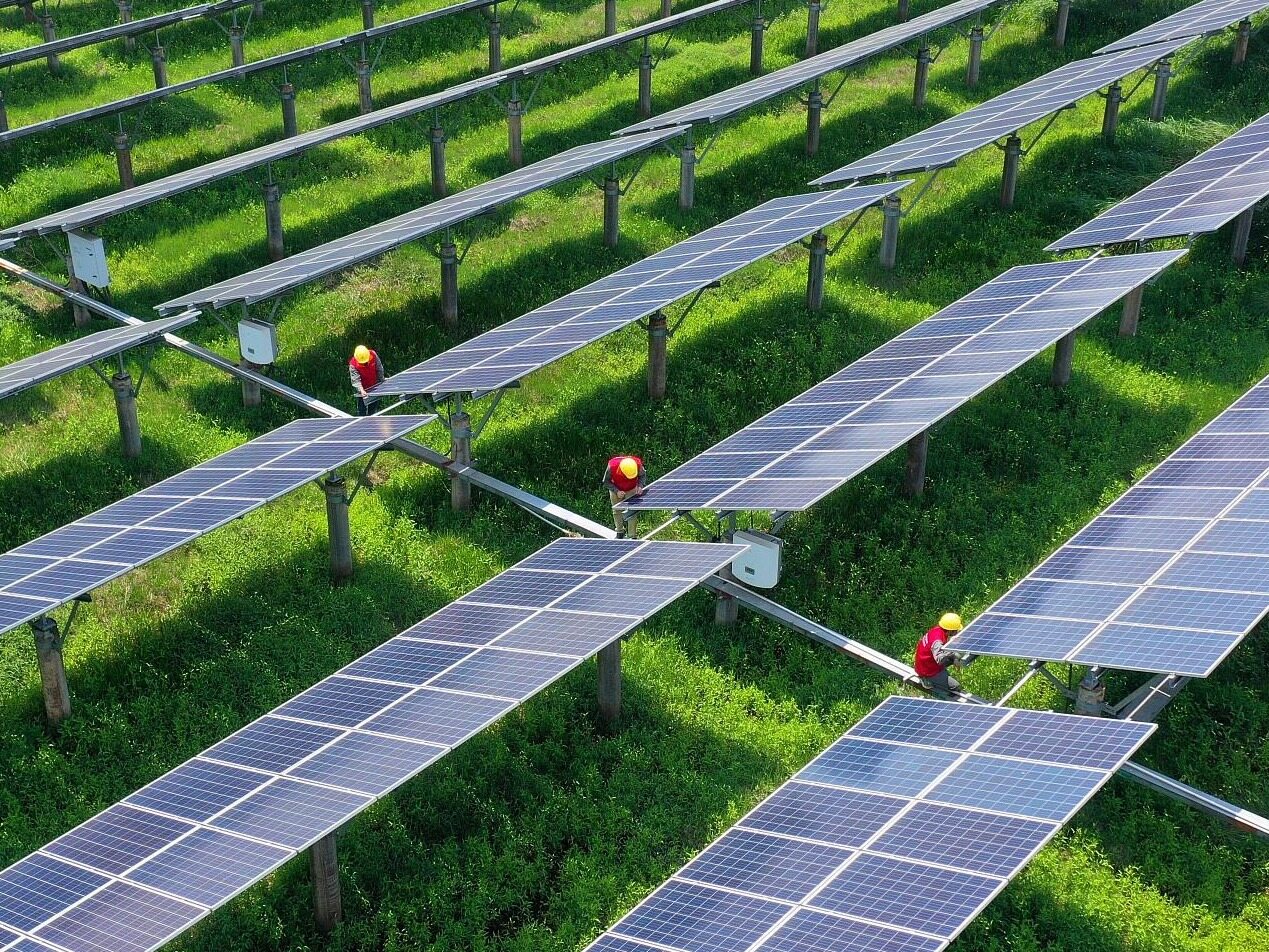
The two sides agreed to increase cooperation in clean energy such as hydropower and photovoltaics, and explore green, stable and reliable energy cooperation solutions. Cambodia is rich in water resources, but due to limited development capacity, it faces the problems of insufficient power supply and dependence on imports for electricity.
Chinese-funded enterprises have undertaken the construction of large-scale hydropower projects such as the Kamchay Hydropower Station, the Sesan River II Hydropower Station, the Tatay Hydropower Station, and the Pursat River Hydropower Station in Cambodia, which have effectively alleviated the power shortage in Cambodia and provided great support for local economic development.
According to statistics, by the end of 2021, the installed capacity of renewable energy in Cambodia will be 1,800MW, including 1,330MW of hydropower installed capacity and about 428MW of photovoltaic installed capacity. Since the establishment of the first new energy biomass, photovoltaic, and wind energy development goals in 2016, Cambodia has updated its energy development strategy several times. In 2020, the Ministry of Energy and Mines of Cambodia issued the "2020-2030 Energy Development Plan", which clarifies the medium and long-term energy structure transformation and development goals. By 2030, the total installed capacity of electricity in Cambodia will reach 15.9GW, of which the installed capacity of centralized photovoltaic will increase from 296MW to 1.8GW.
In 2022, the Cambodian government issued the "2021-2040 Power Development Master Plan", proposing to increase the installed capacity of solar power to 1,000MW by 2030, and further increase to 3,155MW by 2040.
infrastructure
The two sides agreed to implement the "Memorandum of Understanding on the China-Cambodia Development Cooperation Plan (2023-2025)", promote the construction of infrastructure such as roads, reservoirs, sewage treatment, and submarine optical cables, and implement projects such as rural roads, water supply, schools, and medical care in Cambodia. Support the Cambodian side in improving people's livelihood. Since 2004, the Cambodian government has listed the construction and improvement of infrastructure as one of the important tasks of the Four Corners Strategy to accelerate the pace of recovery and reconstruction. Chinese-funded enterprises have strong competitiveness in many fields. In 2021, the value of new contracts signed by Chinese companies in Cambodia will be US$3.299 billion, mainly involving roads, electricity, housing construction and water conservancy construction.
In October 2022, the Jingang Expressway, a key project of China-Cambodia joint construction of the Belt and Road, was officially opened for trial operation. The project has a total length of 187.05 kilometers, two-way four-lane, connecting the capital Phnom Penh and the country's largest seaport Sihanoukville. Cambodia has since entered the era of highways.
In November 2022, CRBC and the Cambodian government jointly signed the "Framework Agreement for the Phnom Penh-Bavet Expressway Project in Cambodia". The project has a total length of 138 kilometers and is the second expressway in Cambodia.
On January 11, 2023, Poly Changda signed a contract with the Ministry of Public Works and Transport of the Kingdom of Cambodia to undertake the construction of the No. 4 National Highway Bridge Project, with a total contract value of about 240 million yuan. After the completion of the project, it will promote Cambodia's international trade business and economic growth, and benefit people's livelihood and well-being.
In addition, China assisted in the construction of Cambodia's first cement plant, thermal power station and the first modern large-scale sports venue - the Cambodian National Stadium.

Cambodia National Stadium
In addition to government appropriations, Cambodia’s infrastructure construction funds are mainly aid and low-interest loans obtained by countries and institutions such as China, Japan, South Korea, the World Bank, and the Asian Development Bank (ADB), as well as corporate BOT investment. China is the largest donor to Cambodia. As of 2019, Cambodia has received US$2.865 billion in infrastructure loans from China, accounting for 90% of the total value of foreign loans provided by Cambodia.
Agriculture, Economic and Trade Cooperation
The two sides agreed to explore the creation of a "fish and rice corridor" centered on the northwestern part of Cambodia and the Tonle Sap Lake area, and develop modern ecological agriculture near the lake. … Make good use of the "Regional Comprehensive Economic Partnership Agreement" and the China-Cambodia Free Trade Agreement, promote the China-ASEAN Free Trade Area 3.0 negotiations, and promote bilateral trade to a new high. Agriculture is one of the important topics of China-Cambodia cooperation, and it is also one of the important areas of Cambodia's "Four Corner Strategy". In recent years, China and Cambodia have actively promoted the export of Cambodian pepper, longan and wild aquatic products to China. Since the implementation of the China-Cambodia Free Trade Agreement and RCEP in January 2022, policy dividends have been continuously released. In April 2022, the second meeting of the China-Cambodia Agricultural Cooperation Steering Committee was held. The meeting summarized the achievements of the agricultural cooperation between the two sides and pointed out the direction for the next stage of cooperation. In November 2022, Tang Renjian, Minister of Agriculture and Rural Affairs of China, and Deng Dina, Minister of Agriculture, Forestry and Fisheries of Cambodia, met and signed important cooperation documents. Premier Li Keqiang visited Cambodia and witnessed the signing of 18 cooperation documents with Hun Sen, including 5 cooperation documents in the agricultural field. In 2022, the trade volume between China and Cambodia will reach US$16.02 billion, a year-on-year increase of 17.5%, setting a record high. China has been Cambodia's largest trading partner for 11 consecutive years. As the economies of the two countries enter the post-epidemic recovery stage, agricultural and economic and trade cooperation will continue to be the highlights of China-Cambodia cooperation. Editor/He Yuting
Comment


 Praise
 Collect
 Comment

 Share
Share


Write something~