 Search


- China's first offshore carbon storage project has accumulated over 100 million cubic meters of carbon dioxide storage
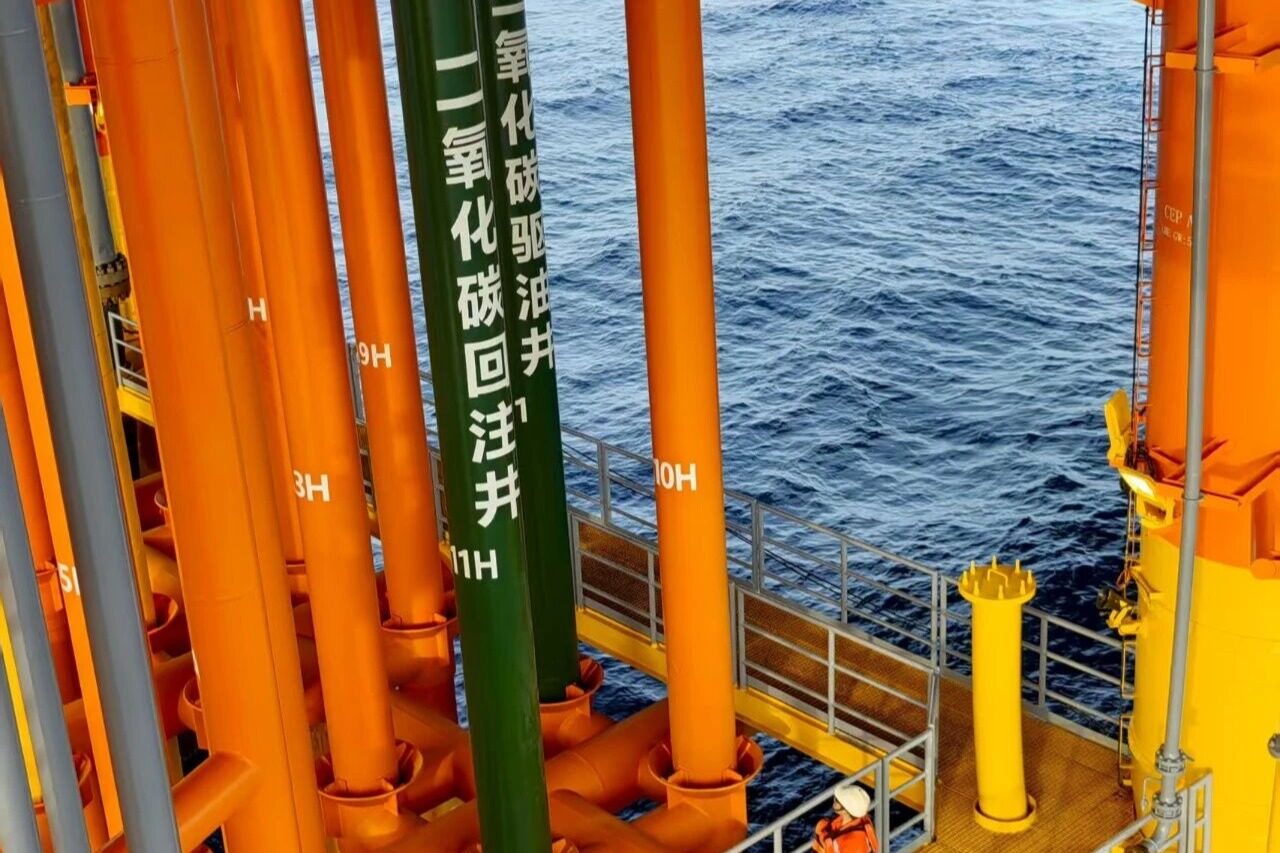
On September 10, 2025, CNOOC announced that the carbon sequestration project of Enping 15-1 Oilfield, located in the the Pearl River Mouth Basin, has stored more than 100 million cubic meters of carbon dioxide, equivalent to the emission reduction effect of 2.2 million trees. This project is China's first offshore carbon dioxide storage project, and its successful operation indicates that China has reached a mature level in offshore carbon dioxide capture, utilization, and storage (CCUS) technology, equipment, and engineering practice, providing key support for achieving the "dual carbon" goal.
Enping 15-1 oilfield, as the first high carbon dioxide oilfield in the eastern South China Sea, if conventional development methods are used, carbon dioxide will accompany crude oil production, not only exacerbating equipment corrosion but also leading to significant emissions. After four years of technological research and development, CNOOC has built China's first offshore carbon dioxide storage (CCS) project in the oil field, with an annual storage capacity of over 100000 tons. In May of this year, China's first offshore CCUS project was officially put into operation here, achieving a full chain technological upgrade. With the innovative model of "carbon driven oil and oil fixed carbon", it not only improves crude oil recovery but also achieves carbon reduction. It is expected that in the next decade, the project will inject over 1 million tons of carbon dioxide, driving an increase of 200000 tons in crude oil production.

Xu Xiaohu, Deputy General Manager of Enping Operations Company of CNOOC Shenzhen Branch, stated that the project has safely operated for over 15000 hours since its launch, with a maximum daily gas injection volume of 210000 cubic meters, providing a replicable and promotable new path for the green development of China's offshore oil and gas fields. China National Offshore Oil Corporation (CNOOC) is promoting the development of CCUS from single point demonstration to cluster, including launching China's first 10 million ton carbon capture and storage cluster project in Huizhou, Guangdong, and planning to build a northern carbon dioxide oil recovery center and a southern carbon dioxide gas recovery center.
Wu Yiming, Production Manager of CNOOC Shenzhen Branch, pointed out that the maturity and application of CCUS technology will effectively promote the green transformation of China's energy industry and provide Chinese solutions for global climate governance. Editor/Yang Beihua
Comment







 Praise
 Collect
 Comment

 Share
Share


Write something~