 Search


- The global energy transition has moved from policy orientation to a new era driven by the economy
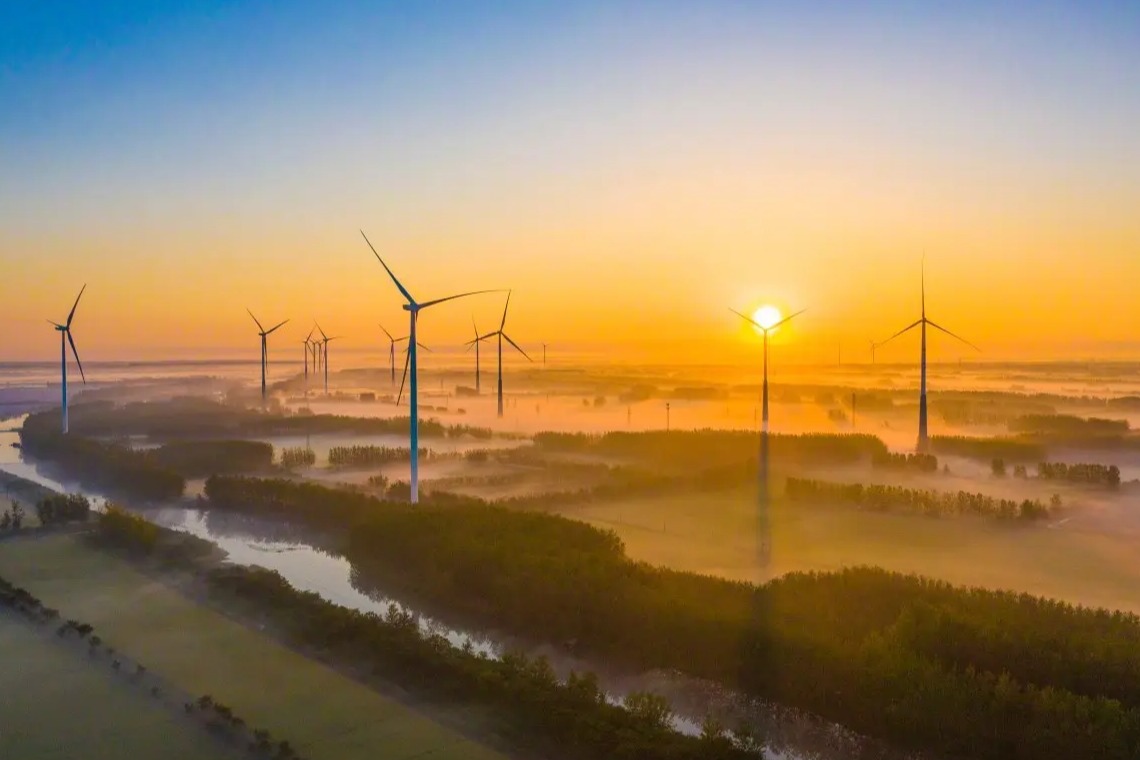
The global transition to clean energy is continuously advancing, and many experts believe that its development speed is unstoppable. Despite the political changes in the United States putting a "sudden brake" on the clean energy policy mechanism, the international energy sector is still moving forward at full speed. Reuters commented on this, 'This is no longer a distant vision, the transition to clean energy has become a reality, and its speed and scale are unimaginable five years ago.' It is worth noting that not only developed economies but also developing countries are playing an increasingly important role in driving this change.
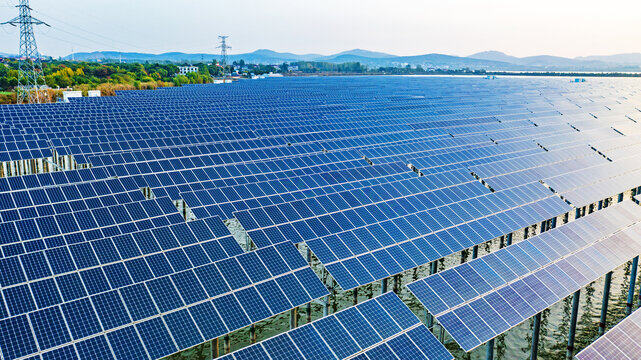
With the continuous decline in clean energy prices, increasing reliability, and the trend towards decentralization, the application of renewable energy and clean energy technologies has become an inevitable choice for many countries. This is no longer just a matter of clean energy policies, but the most fundamental economic consideration. Taking Pakistan as an example, as one of the countries with the largest scale of new solar energy applications in the world, the country is promoting photovoltaic power generation at an unprecedented speed. Due to the frequent occurrence of large-scale power outages caused by the traditional energy model based on imported fossil fuels, the public has long suffered from high electricity prices. More and more residents are turning to rooftop solar energy equipment combined with battery energy storage systems to obtain more economical and stable household power supply.

Pakistan is just one typical case of many emerging economies turning to clean energy technologies to achieve affordable, stable, and reliable localized energy supply. In a recent article, the US news website Vox explicitly stated that "the new generation of wind, solar, battery, and electric vehicle technologies have approached or reached 'escape velocity', about to break free from the fickle political interference. In many regions, especially in the field of power generation, the cleanest option is often the fastest, most economical, and most profitable option. Whether you pay attention to climate change or not, this is an undeniable fact
The latest analysis from Ember think tank provides strong evidence for this. The analysis shows that about two-thirds of emerging and developing economies worldwide are achieving leapfrog development in the transition to clean energy, even surpassing the United States and Europe. The reason for this phenomenon is obvious: the budget analysis in the Enber report shows that 91% of newly built solar and wind power projects have electricity generation costs even lower than the cheapest fossil fuel power plants, after taking into account fuel costs. As a result, up to 87% of energy and power generation investments between emerging economies and China last year went towards clean energy projects.
China has played a key role in helping emerging economies around the world access clean energy. Through the ambitious "the Belt and Road" international infrastructure projects and mature trade relations, China has become a core player in the global clean energy market. The latest report from Yale Environment 360 states: "Since 2018, Kenya, Yemen, Sri Lanka, and Tanzania have imported a large amount of solar equipment from China, which accounts for about half of their respective power grid capacity." It is worth noting that recent US policies have actually strengthened these trade relationships and prompted China to establish closer cooperation with many emerging economies affected by high tariffs.
However, in order to achieve global climate goals, developing countries still need more support in climate financing. Recently, a coalition of developed and developing countries from around the world has drafted an open letter for the United Nations General Assembly in New York, which will be presented at the meeting, urging leaders of all countries to take swift action in this critical decade of addressing climate change. The statement warned: "There is still a significant gap in energy access and investment support. We still need to make more efforts to ensure that the energy transition not only advances globally, but also benefits the people and economies who need it most." Key words: new energy news, new energy information network, the Belt and Road news
This warning is particularly evident on the African continent. Africa is one of the regions with the richest potential for clean energy development in the world, but its access to climate financing is minimal, despite the fact that African people are suffering from the consequences of climate change caused by emissions from countries in the northern hemisphere. Although the transition to clean energy is indeed beneficial for economic development and has achieved "escape velocity" to some extent, scientists emphasize that this process must be significantly accelerated in order to avoid the worst effects of global warming. It is worth noting that while global clean energy projects are expanding in scale, the development of fossil fuel projects is also advancing simultaneously, adding more complexity to the global energy transition. Editor/Xu Shengpeng
Comment



 Praise
 Collect
 Comment

 Share
Share


Write something~