 Search


- This signal reveals new opportunities and huge potential for China's industrial equipment exports to Saudi Arabia

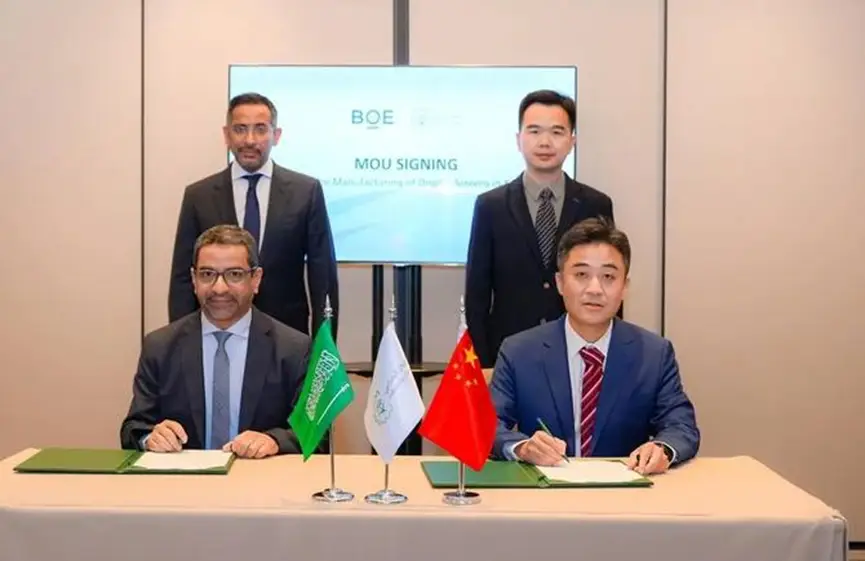
Saudi Arabia and Chinese companies signed 42 investment agreements worth more than $1.74 billion (about 12 billion yuan) at the China-Saudi Arabia Business Forum in Beijing on September 25, 2025, covering cutting-edge fields such as smart vehicles, energy, and medical equipment.
On September 25th, Bandar Alkhorayef, the Minister of Industry and Mineral Resources of Saudi Arabia, oversaw the signing of 42 investment agreements between Saudi and Chinese enterprises, with a total value exceeding $1.74 billion.
From traditional petroleum to green hydrogen energy, we have a comprehensive industrial chain layout
In the energy field, the cooperation between the two sides has further broken through the traditional trade framework and extended to high-end fields such as refining and chemical integration, renewable energy, and hydrogen energy. Saudi Aramco and Sinopec signed the "Cooperation Framework Agreement on Yanbu Refinery Expansion Project", planning to invest more than 10 billion US dollars to expand the Yanbu refinery in Saudi Arabia, adding 1.8 million tons/year of ethylene, 1.5 million tons/year of aromatic hydrocarbon plants and supporting polyolefin production lines, and building the world's first fully digitalized management refining and chemical base. After the project is put into operation, the chemical production capacity of Yanbu refinery will increase by 40%, 60% of high-end products will be supplied to the Chinese market, and the carbon emission intensity will decrease by 12%, becoming a new benchmark for green refining and chemical industry.
Sinopec Engineering Construction Corporation signed a contract for green hydrogen and green ammonia projects
In addition, both parties have made substantial progress in the field of hydrogen energy. Sinopec Engineering Construction Corporation and Saudi ACWA Power signed the world's largest green hydrogen and green ammonia project FEED contract, using the abundant wind and solar energy along the Red Sea coast to build a comprehensive facility with an annual output of 400,000 tons of green hydrogen and 2.8 million tons of green ammonia, which is expected to be commercially operated in 2030. At the same time, China's hydrogen technology enterprise Suzhou Xinsichuang signed a contract with Saudi Moaj company to build 6 hydrogen refueling stations along the Riyadh-Jeddah highway in Saudi Arabia, of which 3 are equipped with on-site green hydrogen production devices, using 750kW electrolyzer technology, to help build Saudi Arabia's hydrogen energy infrastructure network.
A milestone from crude oil trade to deep industry integration
Sino-Saudi energy cooperation can be traced back to the early days of diplomatic relations established in 1990. The two parties started with crude oil trade and gradually formed a three-dimensional cooperation pattern of "oil and gas + chemical industry + new energy". In 2007, the Yanbu refinery jointly constructed by China and Saudi Arabia was put into operation, processing 430,000 barrels of Saudi heavy crude oil daily, becoming a landmark project in the early stage of the Belt and Road Initiative. In 2023, Saudi Aramco invested 24.6 billion yuan to acquire shares in Rongsheng Petrochemical, securing a long-term crude oil supply channel and promoting the restart of the Panjin refinery project, opening up a new cooperation model of "investment for market".
In recent years, both parties have continued to increase their investment in the field of refining and chemical integration. The second phase of the Gulei Refining and Chemical Project in Fujian, which started construction in November 2024, has a total investment of 71.1 billion yuan and is jointly constructed by Sinopec, Saudi Aramco, and Fujian Refining and Chemical. It covers a 16 million tons/year oil refining and 1.5 million tons/year ethylene plant, and will provide 5 million tons/year of raw materials for the Gulei petrochemical base after commissioning, driving nearly 200 billion yuan of investment in the middle and lower reaches. At the same time, Saudi Aramco and Sinopec are advancing the "refinery +" project in Yanbu, Saudi Arabia, exploring petroleum conversion technology and promoting the diversification of Saudi Arabia's industry.
Innovative practices in photovoltaic, hydrogen energy and low-carbon technologies
In the context of global energy transformation, China-Saudi Arabia cooperation is accelerating towards the field of clean energy. The Sinopec Middle East Research and Development Center was opened to the public for the first time on World Earth Day in 2025, showcasing innovative achievements such as photovoltaic-hydrogen energy integration sand table and carbon neutrality interactive wall. It also established a joint laboratory with Saudi Aramco and Sabic to tackle key technologies such as green hydrogen production and desert water conservation. Saudi International Power and Water Company (ACWA Power) launched a 1 GW renewable energy project in China and set up an innovation center in Shanghai, focusing on research and development in the fields of photovoltaics, energy storage, and seawater desalination.
In addition, both parties have explored in the field of digital transformation. The expansion project of Yanbu Refinery has introduced the "smart refinery" technology system, combining China's advantages in automation and Internet of Things to achieve a 15% increase in energy utilization and a 12% reduction in carbon emission intensity. Saudi Aramco has also invested in Chinese startups such as hydrogen energy preparation and carbon fiber materials through a $2 billion sustainable development fund to promote the commercial application of technology.
From energy complementarity to deep cooperation in global governance
Sino-Saudi energy cooperation has always been closely aligned with the Belt and Road Initiative and Saudi Arabia's "Vision 2030". As the Middle East hub of the Belt and Road Initiative, Saudi Arabia has deepened its collaboration with China in the energy industry chain through projects such as the Yanbu Refinery and the Guraimah Petrochemical Base. China, on the other hand, leverages its technological and market advantages to assist Saudi Arabia in achieving economic diversification and low-carbon transformation. For example, in the third phase expansion project of Saudi Arabia's national natural gas pipeline network, China Petroleum Engineering & Construction Corporation and Power Construction Corporation of China won contracts worth USD 1.699 billion and USD 1.5 billion respectively, enhancing the energy supply efficiency of the western economic belt in Saudi Arabia.
The cooperation between the two sides is not only limited to the business field, but also forms a consensus at the level of global governance. At the overseas press conference of the 2025 China Energy and Chemical Industry Development Series Report, Chinese and Saudi experts jointly discussed the path of energy transformation, emphasizing the need to address climate change through technological cooperation. The president of Saudi Aramco said that China is the most important strategic market for Saudi Arabia, and the two sides will continue to increase investment in refining, hydrogen energy, digitalization and other fields to jointly shape a new global energy order.Editor/Huang li Jun
Comment



 Praise
 Collect
 Comment

 Share
Share


Write something~