 Search


- The project will fully apply a digital intelligent management system, by deploying over 5000 sensors inside the tunnel
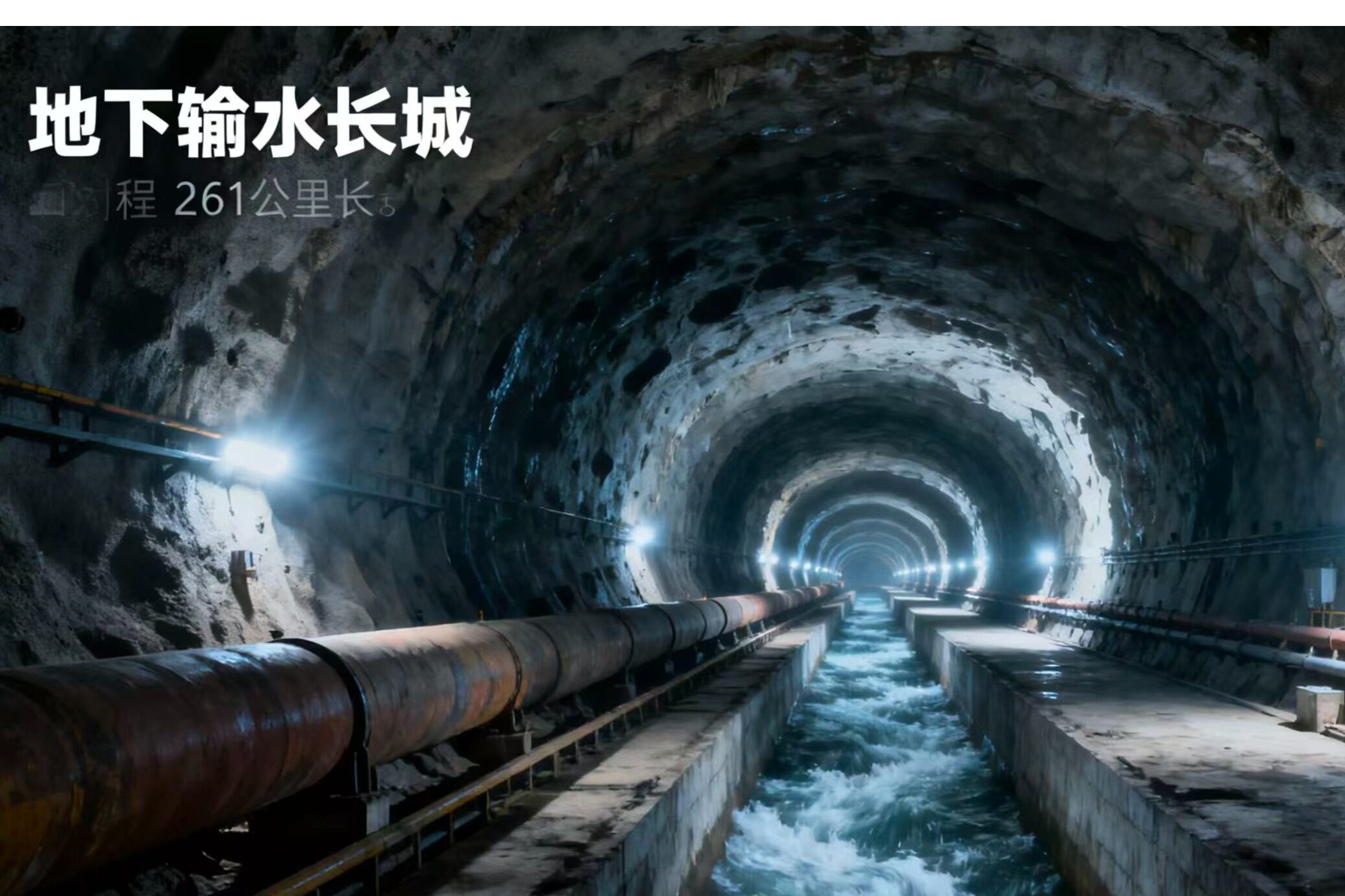
The highly anticipated national water network backbone project, the Yinda Jimin Project, has officially launched the bidding process, and the super project with a total investment of 57.5 billion yuan has entered the substantive promotion stage. As the "Number One Water Conservancy Project" in Sichuan, the project is planned to take 8 years to construct. It will mainly consist of 261 kilometers of underground water conveyance tunnels, connecting the three major river basins of Minjiang, Tuojiang, and Fujiang, and building the "Underground Water Conveyance Great Wall" spanning the Sichuan Basin.
The core water transmission line of the project will pass through complex geological areas such as the Longmen Mountain fault zone, overcoming three world-class technical challenges: high ground stress, large-scale water inflow, and ultra long distance excavation. The length and construction difficulty of each tunnel are among the top in China. After the completion of the project, 4 billion cubic meters of water will be diverted annually from the Dadu River and Minjiang River, equivalent to the water volume of 300 West Lakes, completely ending the water resource security risks of "single source dependence" in core areas such as the Chengdu Plain.

This bidding covers core sections such as tunnel excavation, pump station construction, and pipeline laying, attracting leading enterprises in the field of water conservancy construction across the country to participate in competition. The bidding announcement clearly requires the construction unit to have experience in ultra large diameter shield tunneling under complex geological conditions, while strictly implementing ecological protection requirements to achieve harmonious coexistence between engineering construction and ecologically sensitive areas such as the Giant Panda National Park.
According to the project leader, the Da Ji Min Project is not only a water conservancy project, but also a multiple integration of livelihood engineering, ecological engineering, and economic engineering. The project will directly benefit a population of 34.13 million in 43 counties and 8 cities including Chengdu, Deyang, and Mianyang, providing stable water resources guarantee for the Chengdu Chongqing economic circle, supporting the expansion and upgrading of pillar industries such as electronic information and equipment manufacturing, and effectively improving the ecological environment of the Tuojiang River Basin, helping to build an ecological barrier in the upper reaches of the Yangtze River. With the start of the bidding work, this "underground water vein" that crosses mountains and rivers is about to break ground, injecting a continuous stream of "water conservancy energy" into the high-quality development of Sichuan.
After the bidding work is launched, the first batch of core sections to enter the site will focus on the construction of the Longmenshan Tunnel Group. It is planned to invest 12 ultra large diameter shield tunneling machines for synchronous excavation. Among them, the "Chuanshu" shield tunneling machine customized for fault zone geology will have core functions such as adaptive rock deformation and intelligent water inflow prevention and control. It is expected that the daily excavation efficiency of a single equipment can reach 15 meters, ensuring the timely progress of the tunnel project. To reduce the impact of construction on the ecological environment, all sections are equipped with special ecological restoration projects. The construction waste will be converted into building materials through resource utilization treatment. The tunnel entrance adopts a "vegetation cover+ecological slope protection" design to maximize the protection of the biodiversity of the peripheral protected area of the Giant Panda National Park.
At the level of water resource allocation, the project will construct a water transmission network with "one main and two auxiliary, multi-point connectivity". The main tunnel will be responsible for backbone water transmission, and the branch pipeline network will extend to key development areas such as Chengdu Tianfu New Area and Deyang Tianfu Jingcheng. 17 booster pump stations and 3 regulating reservoirs will be built simultaneously to achieve a dynamic balance of "water storage during the wet season and water replenishment during the dry season". In response to industrial water demand, the project will reserve dedicated water supply interfaces to provide stable water sources for industrial parks such as Chengdu Economic Development Zone and Mianyang Science and Technology City. It is expected to support an annual increase in industrial output value of over 200 billion yuan and help upgrade the industrial clusters in the Chengdu Chongqing economic circle.

It is worth noting that the project will comprehensively apply a digital intelligent management system, which will deploy more than 5000 sensors in the tunnel to monitor key data such as water quality, flow rate, and rock stability in real time. Combined with AI algorithms, intelligent optimization of water delivery scheduling will be achieved. At the same time, the construction project will drive over 100000 job opportunities, with local migrant workers accounting for no less than 60%. In addition, a water conservancy technology talent training program will be launched to cultivate a group of high-quality water conservancy construction and management talents for Sichuan. With the advancement of the 8-year construction cycle, this "underground water transmission Great Wall" will not only break through the water resource bottleneck in the Sichuan Basin, but also become a super engineering model integrating water supply guarantee, ecological restoration, and industrial empowerment, writing a brilliant chapter for the high-quality development of the Yangtze River Economic Belt,Editor/Bian Wenjun
Comment

 Praise
 Collect
 Comment

 Share
Share


Write something~