 Search


- This high-speed railway will deeply connect the northwest region of Hunan to the national high-speed railway network
- This project is a decisive step in filling the key gaps in the northern section of the Hu'nan Corridor in the national eight vertical and eight horizontal high-speed railway network, north of Yiyang
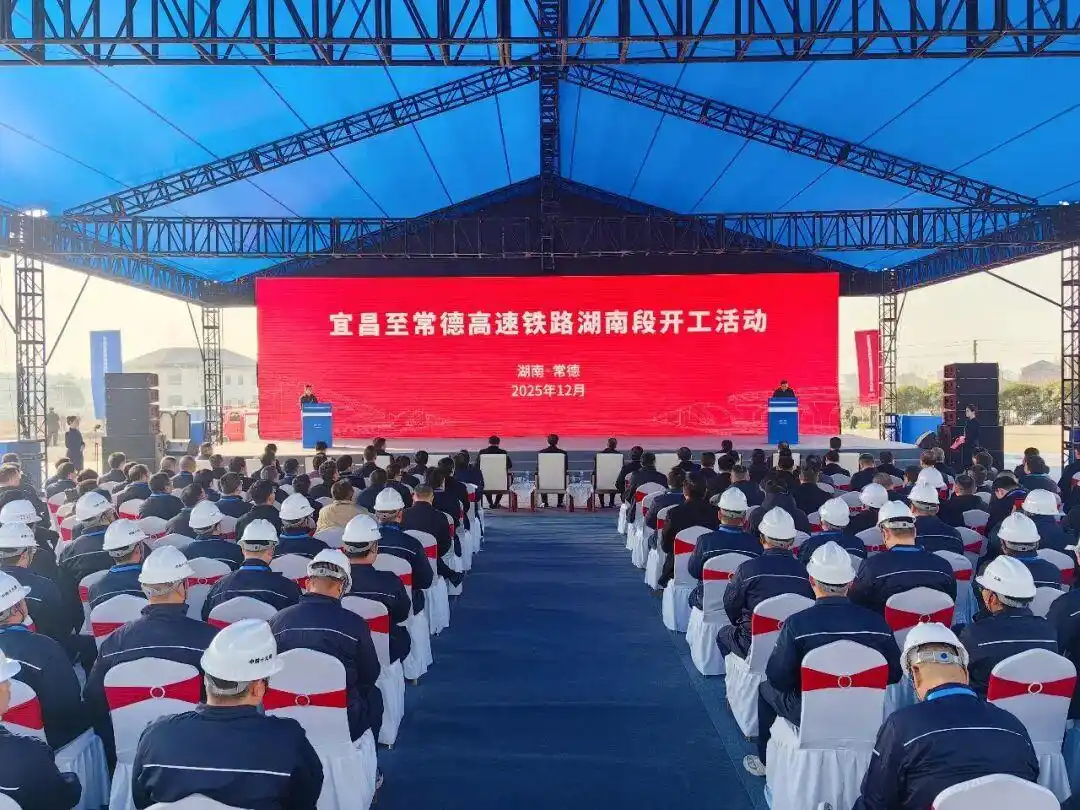
December 26, 2025, is destined to be a memorable day for the development of China's high-speed railway network and even the entire middle reaches of the Yangtze River region. On the same day, following the official opening and operation of the Wuhan Yichang section of the Shanghai Chongqing Chengdu high-speed railway and the addition of the Wuhan super meter shaped hub, the Hunan section of the Yichang Changde high-speed railway located on its southern wing also officially broke ground. This continuation of the north and south not only marks the synchronous and efficient linkage of the construction of the two major arteries along the Yangtze River and the Hunan Provincial Highway in the national eight vertical and eight horizontal high-speed railway backbone network, but also vividly interprets the profound transformation of reshaping the development pattern of the central region through modern infrastructure interconnection under the national regional coordinated development strategy. As the first stop of the Hu Nan Passage from Hubei to Hunan, the long-awaited key link of the Yichang High speed Railway has finally landed. It will not only completely end the history of Lixian and Linli not being connected by high-speed railways, but also mean that a major transportation artery running through the north and south of China has taken a decisive step towards the full line connection.
Tackle 72% bridge tunnel ratio
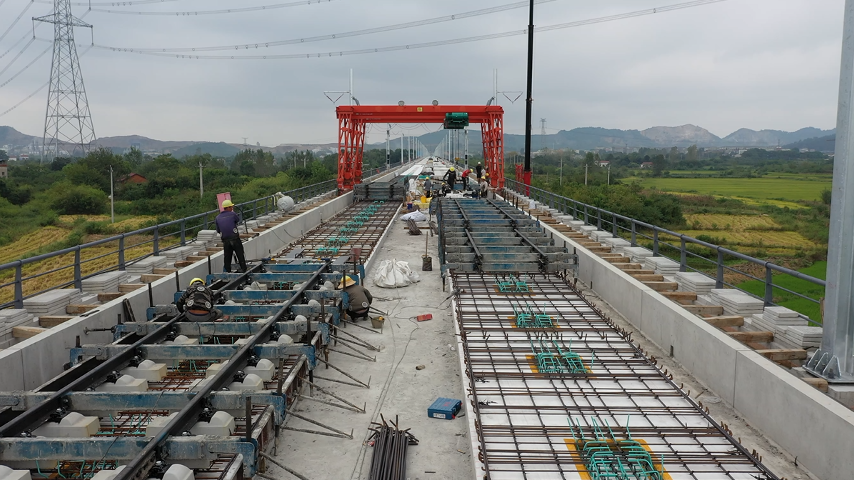
The construction of Yichang high-speed railway is a precise game with nature. The total length of the newly built main line of the project is 185.741 kilometers, including 98.466 kilometers in the Hunan section. Most of the lines need to cross the complex terrain of typical hills and rivers and lakes in northwest Hunan. This directly results in a bridge tunnel ratio of up to 72%, meaning that this high-speed railway designed for a speed of 350 kilometers per hour is more like a steel corridor embedded in mountains and rivers.
Among many technical challenges, the Lixian Lishui Railway Extra Large Bridge has been established as a control project for the entire line, and its smooth progress is the key to determining the overall construction period; As a key and difficult project, the construction difficulty of the Linli Road Water Extra Large Bridge also tests the technical strength of China's infrastructure. The project plans to build two high-speed railway stations, Lixian Station and Linli East Station, within Hunan Province, and connect them to the existing Changde Station. The planned construction period for the project is 4 years, and it is expected to be completed and open to traffic by the end of 2029. At that time, the two counties will be connected to the national high-speed rail network for the first time, forming a high-speed rail economic circle that takes half an hour to Yichang and one hour to Changsha, fundamentally changing the transportation pattern of the Hunan Hubei border and injecting strong impetus into the economic development of the counties.
Connect the "Ren Du Two Channels" of the national road network
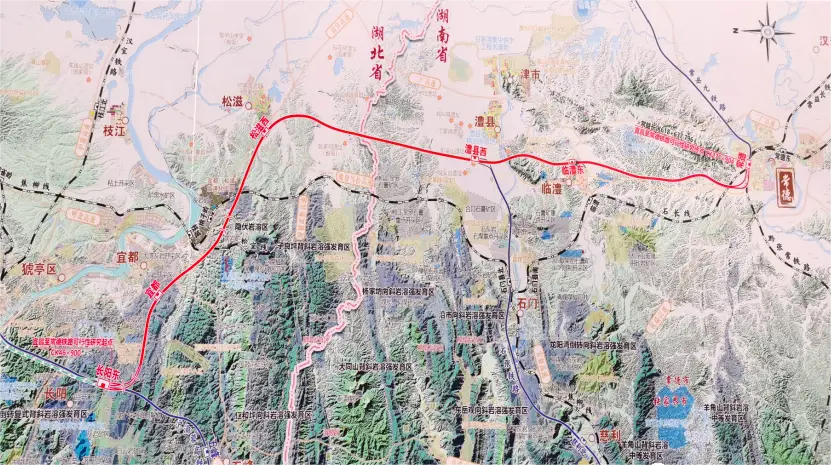
The strategic value of the Yichang high-speed railway far exceeds that of a regional connecting line. It is a core component of the Hu Nan Passage in the national "Medium - and Long Term Railway Network Plan", undertaking the key mission of connecting the south and north. Its route connects to the Shanghai Chongqing Chengdu high-speed railway to the north and is linked to the Yixing high-speed railway through a hub; It is connected to the Changyi Changsha high-speed railway and the Qianzhang Changzhou railway in the south.
After the completion of this channel, it will effectively connect the efficient new channel for the southward movement of Yichang and western Hubei regions with the northward movement of Changde and western Hunan regions. According to predictions, after the opening of the Yichang Changde high-speed railway, the travel time from Yichang to Changde will be significantly reduced from the current about 3.5 hours to about 1.5 hours, and the time from Yichang to Changsha is also expected to be shortened to about 2.5 hours, saving nearly half of the time compared to circumnavigating Wuhan. This will greatly promote efficient interaction of people, logistics, and information flow within the urban agglomeration of the middle reaches of the Yangtze River, especially in the western Hubei and western Hunan regions. Keywords: traffic news, construction news
From a longer perspective, with the construction of the Yichang high-speed railway and the subsequent advancement of projects such as the Yilou high-speed railway, it is clear that the entire Hulunbuir corridor has been fully connected. This north-south artery will be connected to multiple east-west high-speed railways, not only linking multiple national level city clusters, but also has the potential to extend to the Guangdong Hong Kong Macao Greater Bay Area through the Yongqing Guangzhou high-speed railway project in the future, further amplifying its radiation and driving effect, providing solid transportation support for major strategies such as the rise of the central region of the country and the development of the Yangtze River Economic Belt.Editor/Cheng Liting
Comment

 Praise
 Collect
 Comment

 Share
Share


Write something~